
Visual baseline
Record the initial appearance of leaves and stems.
Plant health as a supporting feature
Plant care guidesOne visual sign can have several causes. Watering, light, history, and change over time provide more context than an isolated image.
Published by Grovia · Updated: August 22, 2026
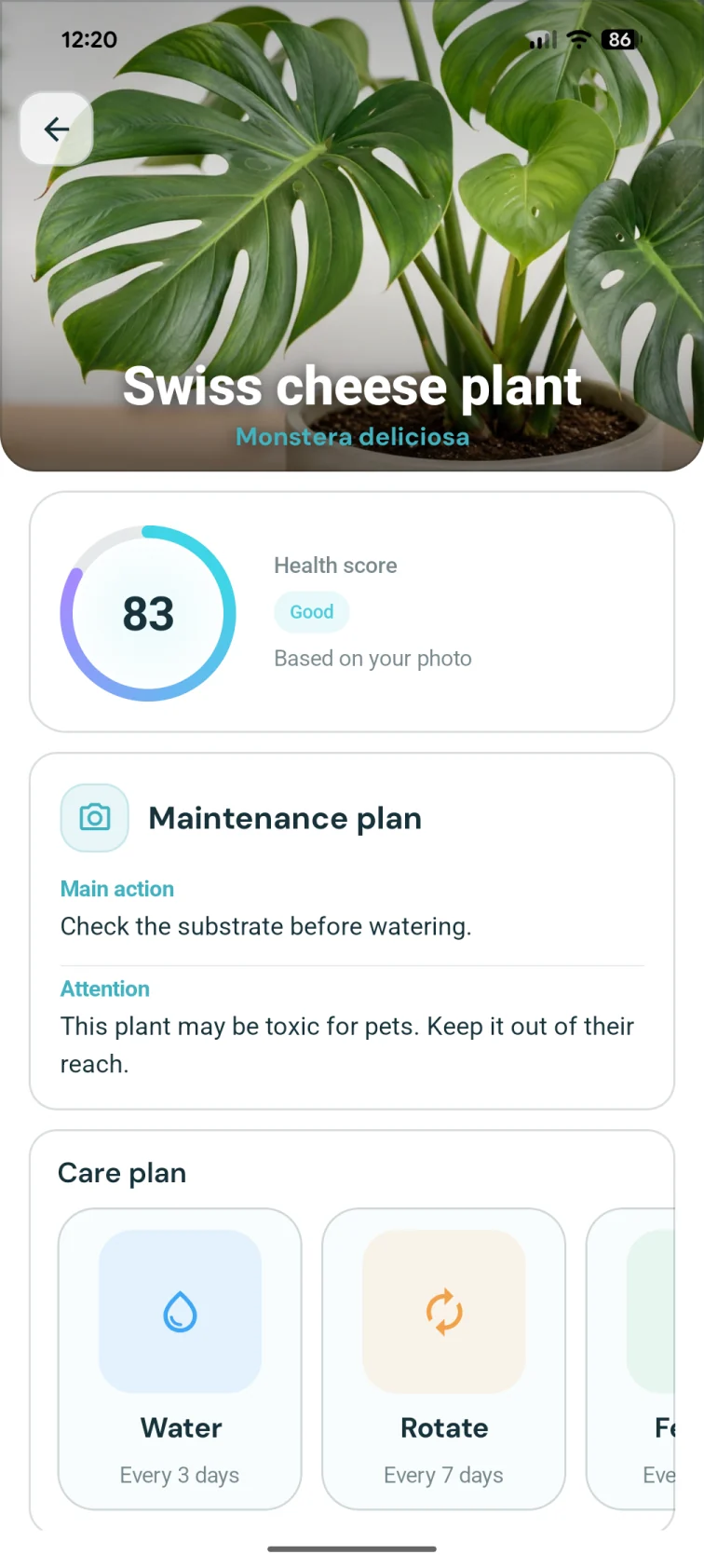
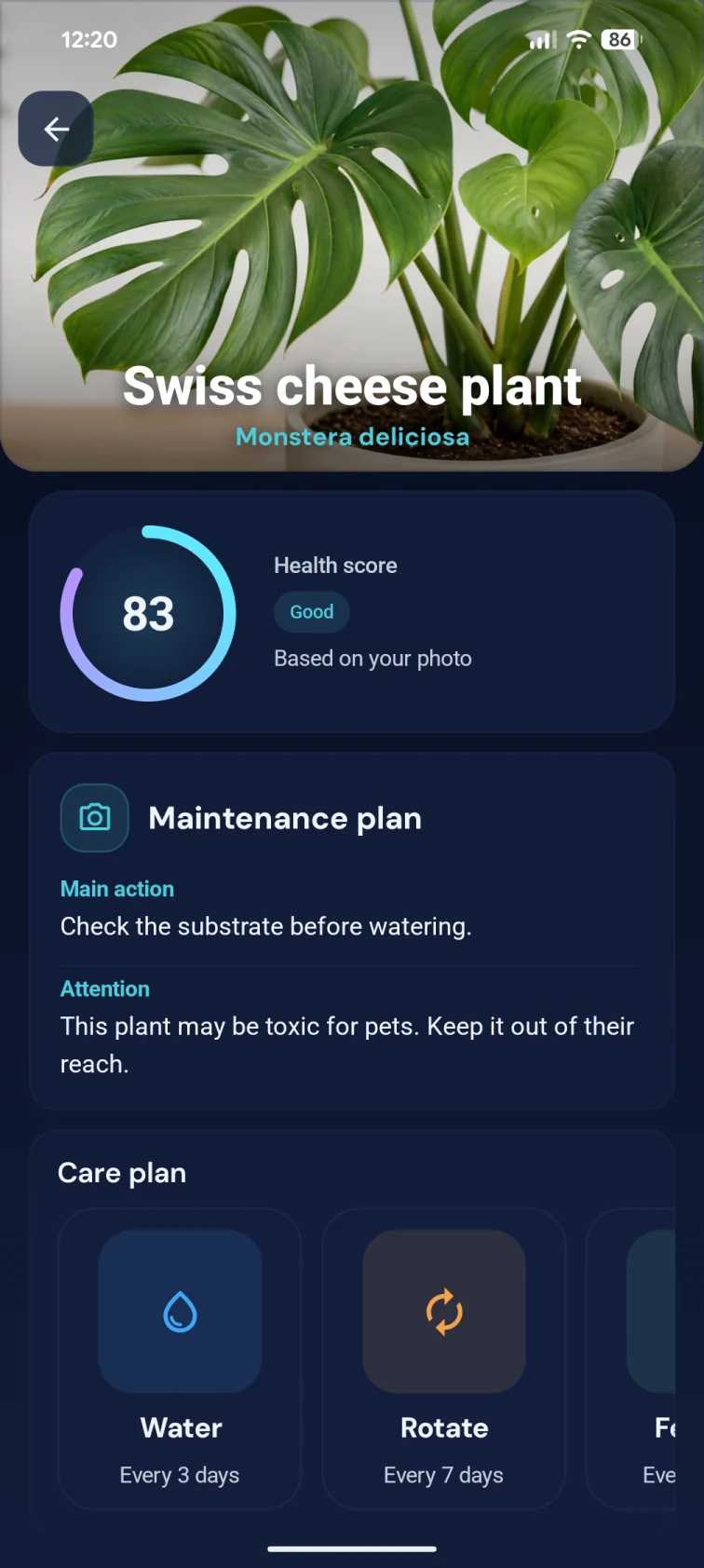
Record the initial appearance of leaves and stems.
Connect the sign with watering, light, and recent changes.
Check whether the issue spreads or stabilizes.
Change one variable at a time when possible.
Yellowing, spots, and dry edges may relate to water, light, humidity, temperature, physical damage, or natural aging. A photo describes the sign but does not prove a cause.
Review the substrate, location, and recent changes. Save a comparable photo and avoid changing watering, light, pot, and fertilizer all at once.
If deterioration is rapid, affects much of the plant, or suggests pests, toxicity, or rot, seek specialist assessment. Grovia does not replace that diagnosis.
01
Photograph the sign in good light.
02
Review watering, location, and recent history.
03
Record changes and compare before further action.
No. Different causes can produce similar visible signs.
That usually makes it harder to know what helped or harmed the plant.
No. It organizes observations and offers practical guidance.
Start today
Download Grovia and build your plant library with personalized care plans.