Plants
Carnation care: light, water & problems
Scientific name: Dianthus caryophyllus · Common name: Carnation
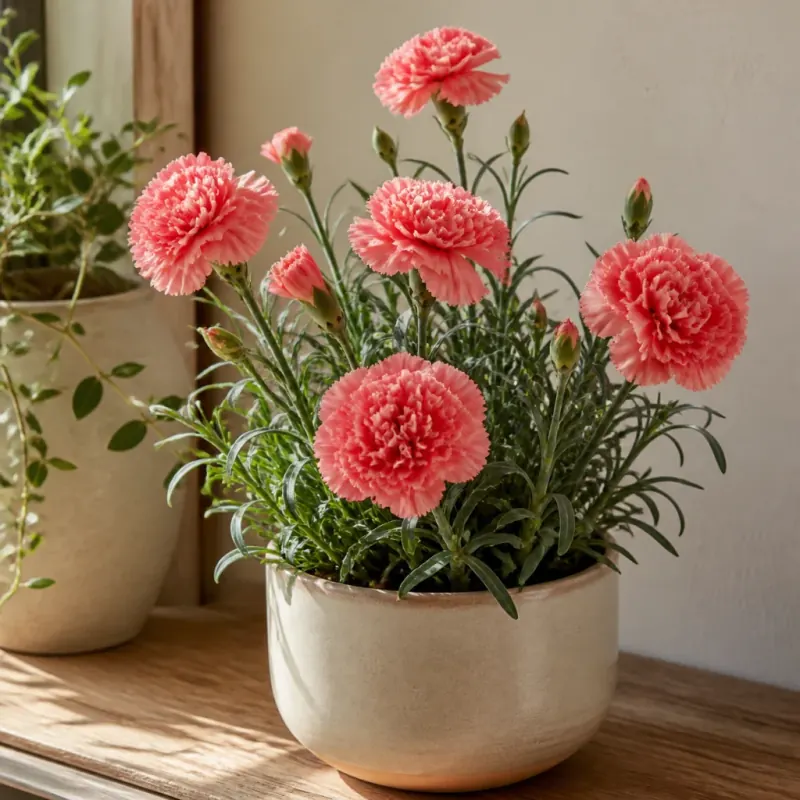
Carnation (Dianthus caryophyllus): full direct sun. Moderate watering, allowing the well-drained soil to dry out between applications.
Editorial revision:
Care at a glance
Light
Full direct sun. Constant direct sunlight is crucial for upright, sturdy flower stalks and abundant bloom production.
Watering
Moderate watering, allowing the well-drained soil to dry out between applications. Excellent drainage is vital to avoid root rot.
Conditions vary with pot, season and location. Always check the mix and your plant's response.
How to identify it
Tufted perennial with slender blue-grey glaucous linear foliage and intensely fragrant fringed flowers with a sweet clove-like scent.
Environment and placement
Prefers airy, open locations with moderate temperatures and low humidity. Frost-hardy in temperate zones.
Your living Carnation in your pocket
In the Grovia mobile app, every species comes with an interactive 3D digital twin that thrives as you care for it. Track waterings, get smart light alerts, and watch your plant grow in your pocket garden.
Potting mix and feeding
Keep drainage open and observe how long this particular pot takes to dry.
There is no universal feeding dose: fertilise only during healthy growth, following the label and a confirmed identification.
Problems to check
Fungal rust spots when leaves stay wet; spindly weak stems that flop over from insufficient sun exposure.
Specialized diagnostic guide
How to assess brown tips and edges
Cats and dogs
ASPCA lists this species as toxic to cats and dogs. Keep pets from chewing it; contact a veterinarian if ingestion is suspected.
ASPCACommon question
How do I keep potted carnations flowering?
Deadhead spent blooms down to a set of healthy leaves to prevent seed formation and trigger vigorous repeat flowering.
Botanical source
Related species
 🐾 Pet safe


 🐾 Pet safe