Plants
Night-blooming jasmine care: light, water & problems
Scientific name: Cestrum nocturnum · Common name: Night-blooming jasmine
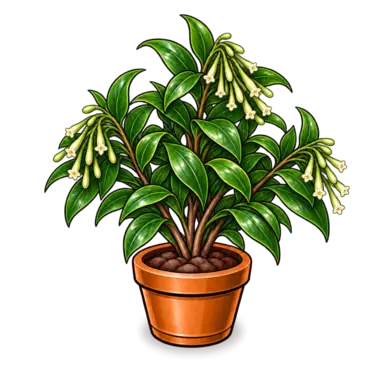
Scrambling shrub with smooth green leaves and clusters of tubular, greenish-yellow flowers.
Editorial revision:
Care at a glance
- Light
- Bright light with several hours of direct sun, preferably in the morning.
- Watering
- Water generously in summer, letting the surface dry slightly. Water sparingly in winter.
How to identify it
Scrambling shrub with smooth green leaves and clusters of tubular, greenish-yellow flowers.
Light
Bright light with several hours of direct sun, preferably in the morning.
Watering
Water generously in summer, letting the surface dry slightly. Water sparingly in winter.
Conditions vary with pot, season and location. Always check the mix and your plant's response.
Environment and placement
A warm-climate outdoor plant. It blooms on warm summer nights, releasing an intensely powerful scent.
Potting mix and feeding
Use a draining mix that retains some moisture, matched to pot size and the drying rate in your home.
During active growth, follow a suitable feed label. First check light, water and roots if the plant is declining.
Problems to check
Widespread yellowing is usually due to excessive cold, lack of sun, or a constantly waterlogged mix.
How to assess yellow leavesCats and dogs
ASPCA lists this species as toxic to cats and dogs. Keep pets from chewing it; contact a veterinarian if ingestion is suspected.
ASPCACommon question
Why doesn't it smell during the day?
Its flowers only open and release their fragrance at night to attract the pollinating moths.