Plants
Venus flytrap care: light, water & feeding
Scientific name: Dionaea muscipula · Common name: Venus flytrap
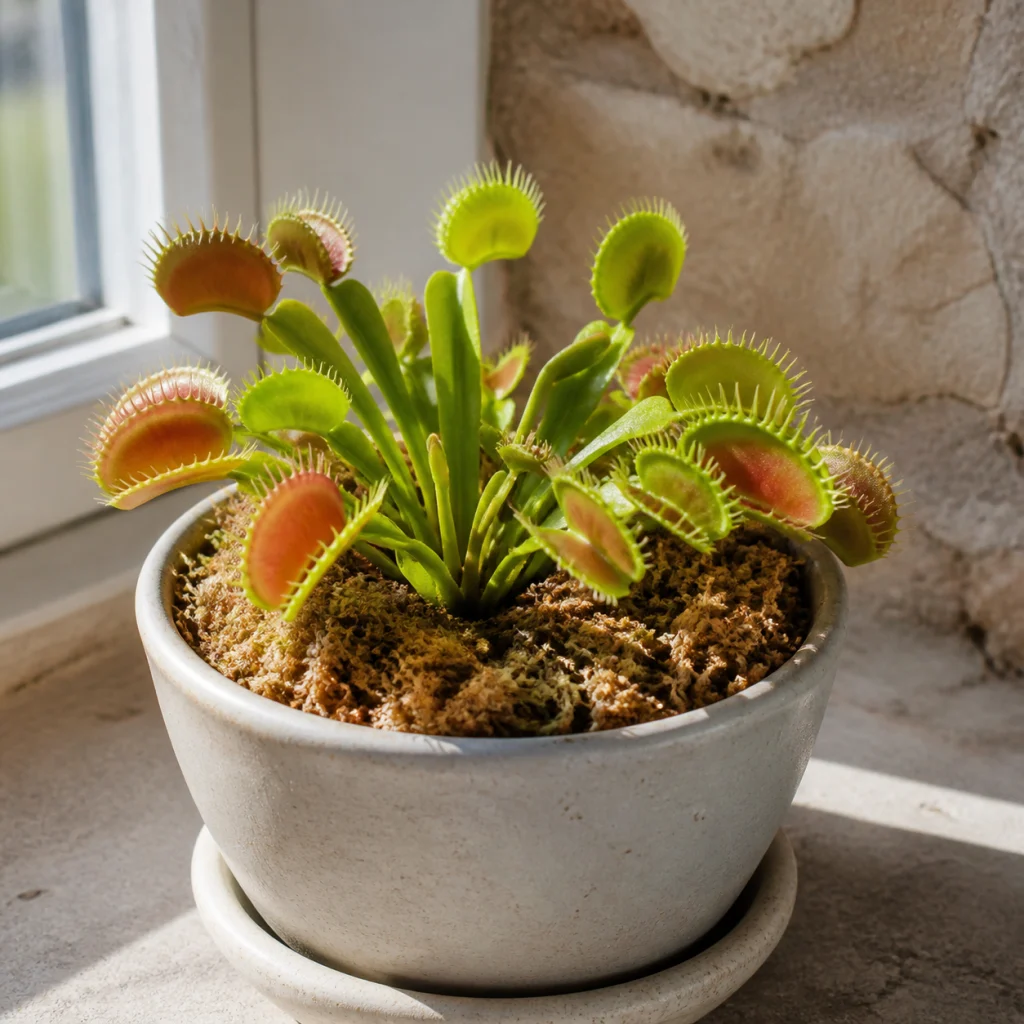
Its traps close after trigger hairs are stimulated; it is not an ordinary tropical foliage houseplant.
Editorial revision:
Care at a glance
- Light
- Give a very bright position; acclimatise a greenhouse-grown plant gradually to stronger sun.
- Watering
- Use rainwater and a nutrient-poor acidic medium kept moist. Do not apply the dry-down rule used for many houseplants.
How to identify it
Its traps close after trigger hairs are stimulated; it is not an ordinary tropical foliage houseplant.
Light
Give a very bright position; acclimatise a greenhouse-grown plant gradually to stronger sun.
Watering
Use rainwater and a nutrient-poor acidic medium kept moist. Do not apply the dry-down rule used for many houseplants.
Conditions vary with pot, season and location. Always check the mix and your plant's response.
Environment and placement
It needs winter dormancy; check suitable temperatures for your climate before leaving it outdoors.
Potting mix and feeding
Use a nutrient-poor acidic medium suitable for carnivorous plants. Ordinary compost and mineral-rich water can harm it.
Do not apply ordinary fertiliser: these plants obtain nutrients from prey and need different care from foliage houseplants.
Problems to check
An isolated black trap can be ageing; if the entire plant declines, check water, light and medium.
How to assess yellow leavesCommon question
Must every trap be fed?
No. Avoid triggering them for amusement or adding ordinary fertiliser.