Cape sundew
Drosera capensisUpdated
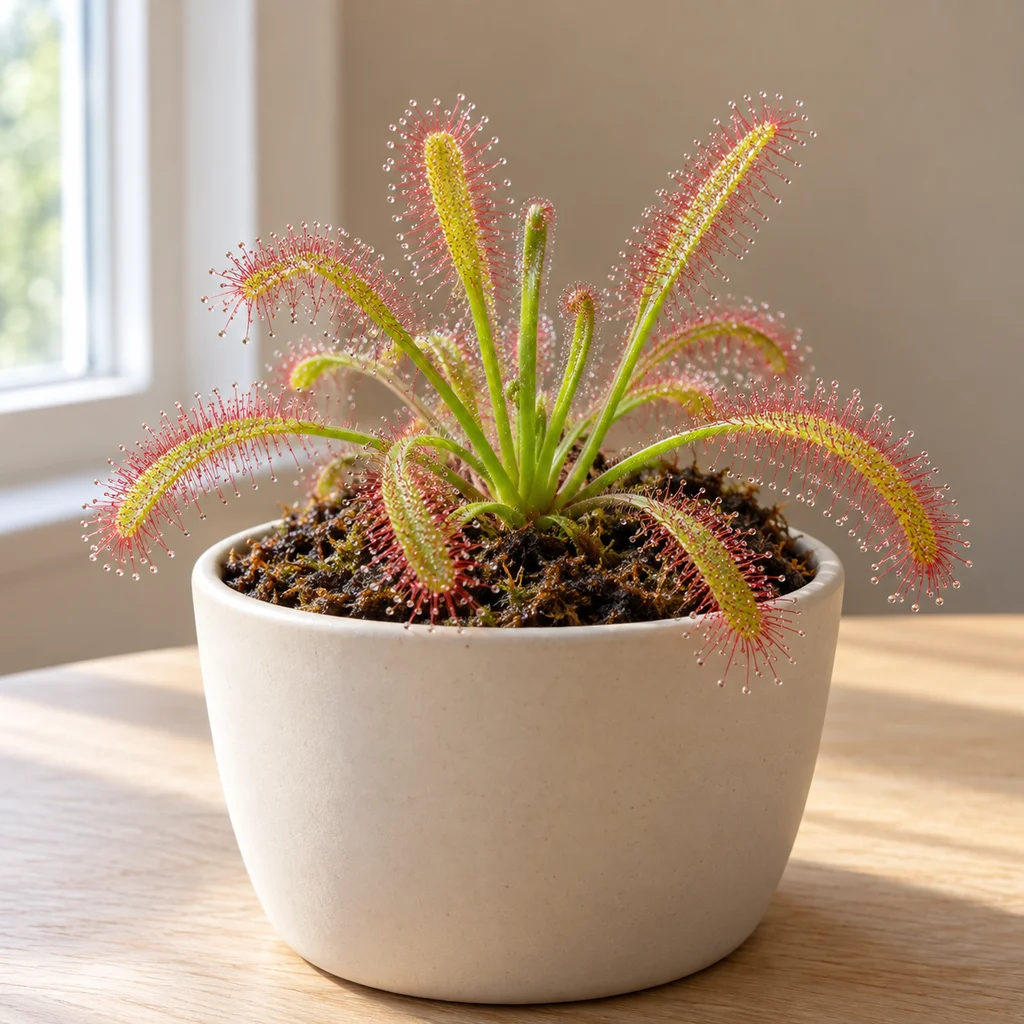
Cape sundew (Drosera capensis): it needs strong light. Keep a nutrient-poor acidic medium continually moist with rainwater.
Essential care to help it thrive
Light and placement
It needs strong light; under glass, shield unacclimatised plants from scorching sun.
Climate and season
Avoid ordinary fertiliser and rich compost; its needs differ from a tropical pot plant.
Soil and repotting
Use a nutrient-poor acidic medium suitable for carnivorous plants. Ordinary compost and mineral-rich water can harm it. Do not apply ordinary fertiliser: these plants obtain nutrients from prey and need different care from foliage houseplants.
Conditions vary with pot, season and location. Always check the mix and your plant's response.
Cape sundew: when to check the soil
Keep a nutrient-poor acidic medium continually moist with rainwater.
Let Grovia remind you when to check your Cape sundewSave the plant, get watering reminders and adjust the rhythm as the seasons change. Free on iPhone and Android.
See table by pot size
| Ø | Summer | Winter |
|---|---|---|
| 10 cm | 1–2 days | 1–3 days |
| 15 cm | 1–2 days | 1–3 days |
| 25 cm | 1–2 days | 1–3 days |
How to identify it
A rosette of long leaves covered in glistening insect-trapping glands; the ‘dew’ is not misting water.
Botanical sheet
- Family
- Droseraceae
- Origin
- South Africa (Cape)
- Size
- 10–30 cm
- Climate
- 15–25 °C · ≥ 5 °C
What's wrong with your plant?
Pet safety Toxicity unverified
There is no species-specific toxicity verification for this plant on ASPCA. Check with your veterinarian or search the ASPCA directory before keeping it within reach of pets.
Open the toxicity checkerCommon questions
Should the mix dry out?
No. RHS advises keeping it moist, even standing it in a saucer of rainwater.