Plants
Panda plant (Chocolate soldier) care: light, water & problems
Scientific name: Kalanchoe tomentosa · Common name: Panda plant (Chocolate soldier)
Panda plant care: direct sun for chocolate edges, keeping velvety leaves dry and gritty soil. Botanical sources.
Editorial revision:
Care at a glance
Light
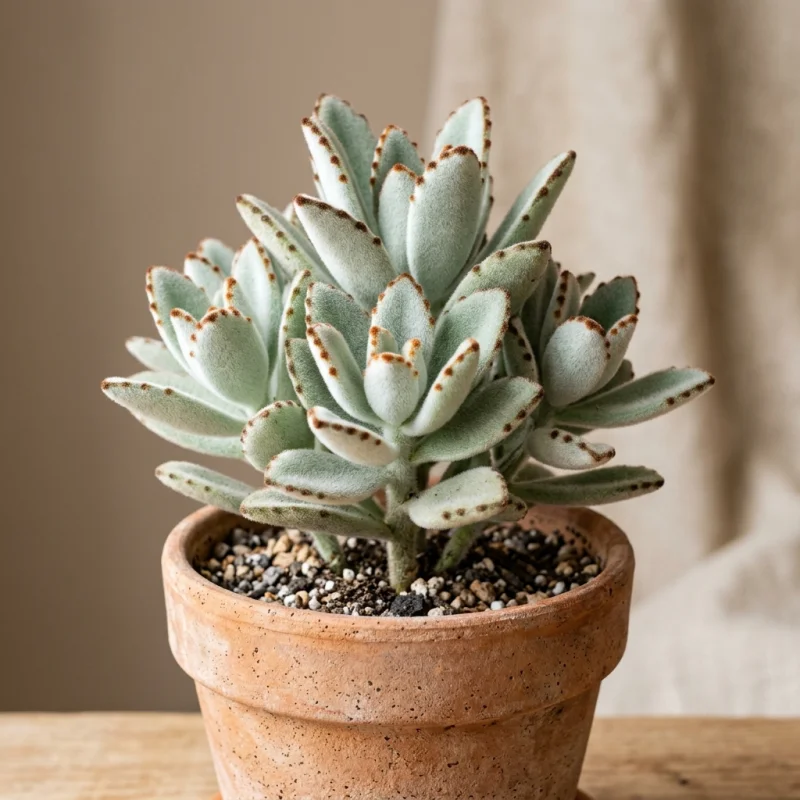
Full sun to bright indirect light. Direct sunlight deepens the distinctive dark stitching along leaf margins.
Watering
Soak and dry method; water only when potting mix is bone dry. Never wet the velvety foliage to prevent rot.
Conditions vary with pot, season and location. Always check the mix and your plant's response.
How to identify it
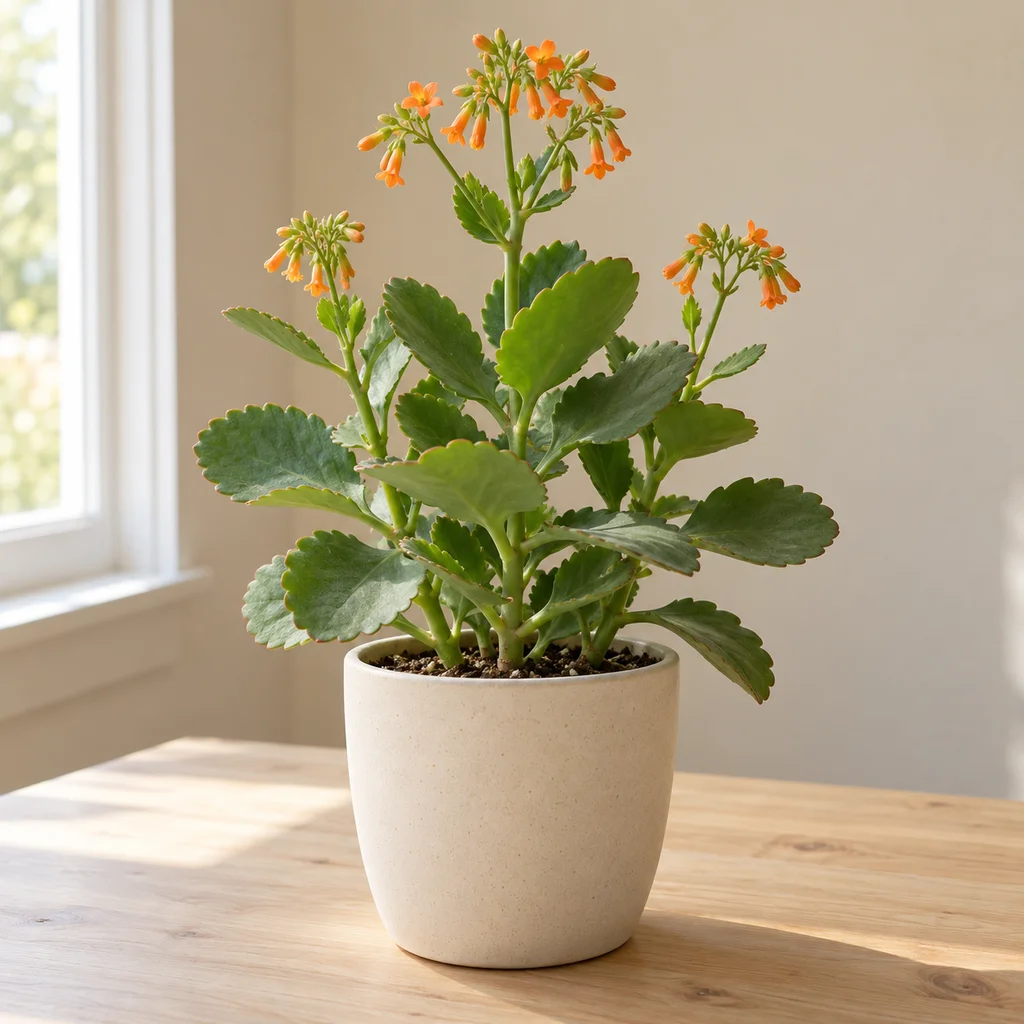
Charming shrubby succulent covered in plush silvery-white felt, accented by rich chocolate-brown dashed margins.
Environment and placement
Warm and arid (15-26 °C / 59-79 °F). Thrives in dry household air with good ventilation.
Your living Panda plant (Chocolate soldier) in your pocket
In the Grovia mobile app, every species comes with an interactive 3D digital twin that thrives as you care for it. Track waterings, get smart light alerts, and watch your plant grow in your pocket garden.
Potting mix and feeding
Prioritise a very free-draining mix and a pot with holes. Heavy mix that remains wet for weeks raises root risk.
Feed sparingly during active growth if needed; do not fertilise a plant weakened by overwatering.
Problems to check
Leaf drop and rotting stems if velvety foliage gets wet; stretched leggy growth in low light.
Specialized diagnostic guide
How to assess overwatering
Cats and dogs
ASPCA lists this species as toxic to cats and dogs. Keep pets from chewing it; contact a veterinarian if ingestion is suspected.
ASPCACommon question
Why are the leaves fuzzy?
The dense white hairs reflect harsh sun rays and trap humidity close to the leaf surface in rocky desert habitats.
Botanical source
Related species