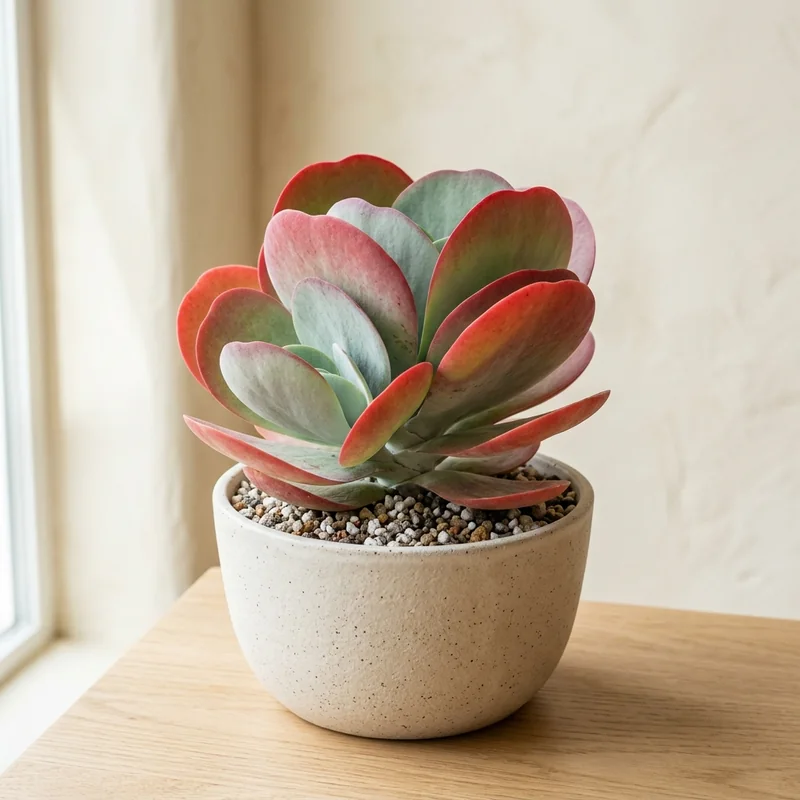
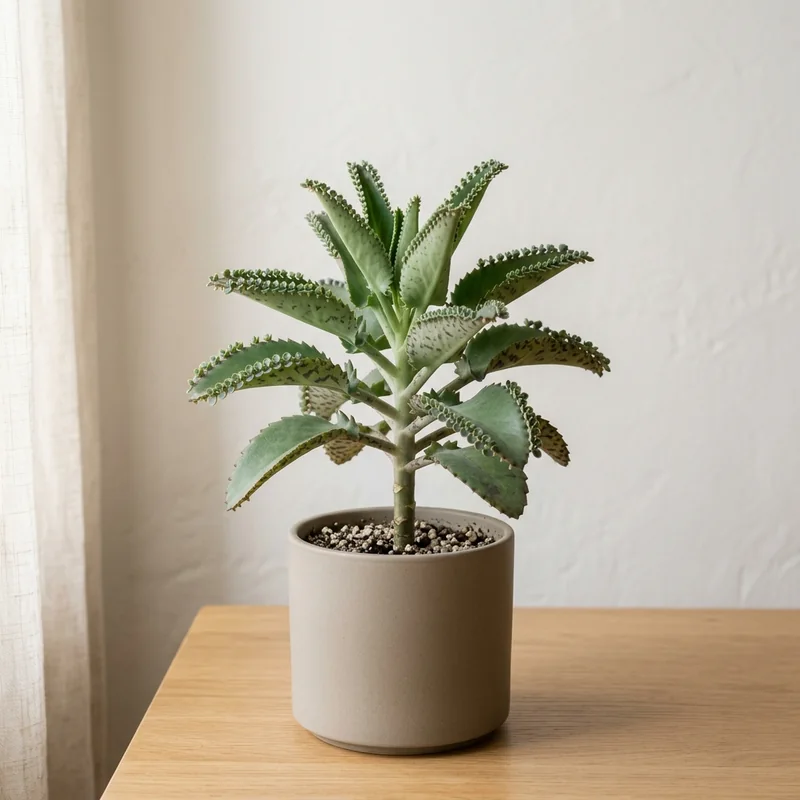
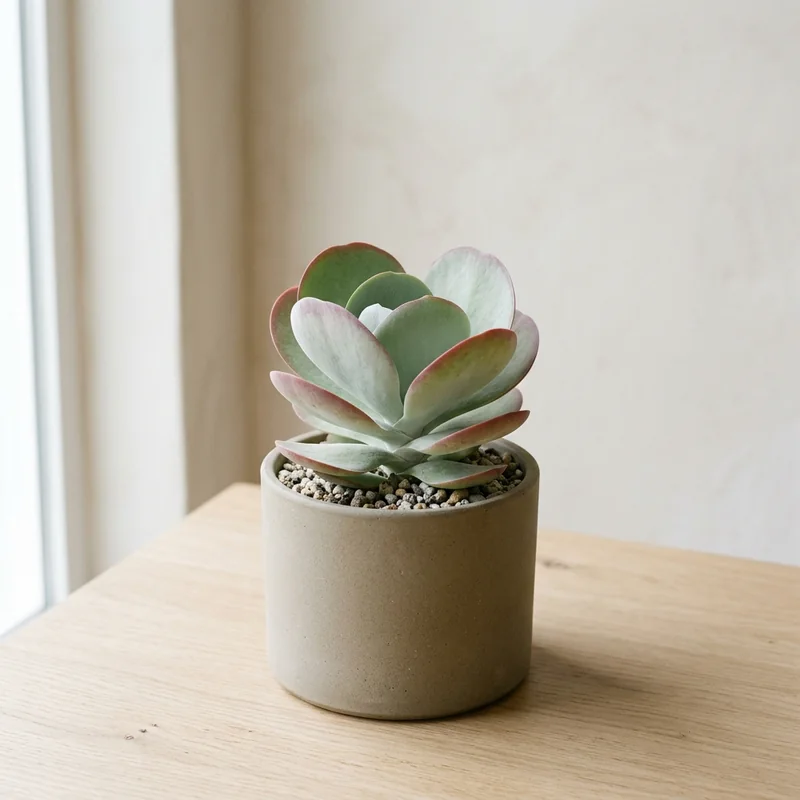
Scalloped kalanchoe
Kalanchoe crenataUpdated
Kalanchoe crenata care: succulent light, drought tolerance, watering and propagation tips. In summer, check the soil every 9–12 days.
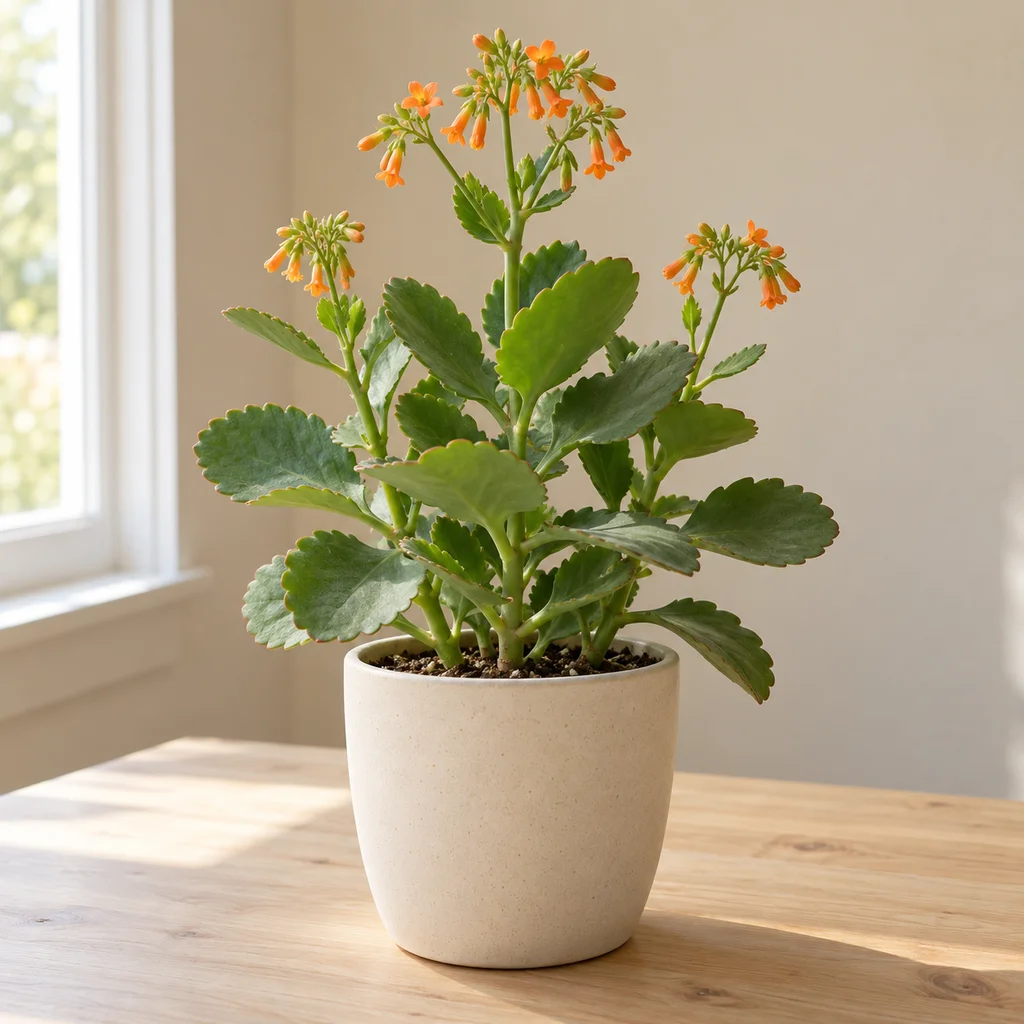
Essential care to help it thrive
Light and placement
Full direct sun to very bright filtered light. Sunlight maintains compact, sturdy growth and strong foliage margins.
Climate and season
Warm, dry climate (16-26 °C / 60-78 °F). Frost-tender and easily damaged by cold wet winter conditions.
Soil and repotting
Prioritise a very free-draining mix and a pot with holes. Heavy mix that remains wet for weeks raises root risk. Feed sparingly during active growth if needed; do not fertilise a plant weakened by overwatering.
Conditions vary with pot, season and location. Always check the mix and your plant's response.
Scalloped kalanchoe: when to check the soil
Soak and dry method; allow the gritty potting mix to dry out almost completely between waterings.
Let Grovia remind you when to check your Scalloped kalanchoeSave the plant, get watering reminders and adjust the rhythm as the seasons change. Free on iPhone and Android.
See table by pot size
| Ø | Summer | Winter |
|---|---|---|
| 10 cm | 7–10 days | 14–19 days |
| 15 cm | 9–12 days | 17–24 days |
| 25 cm | 11–16 days | 23–32 days |
How to identify it
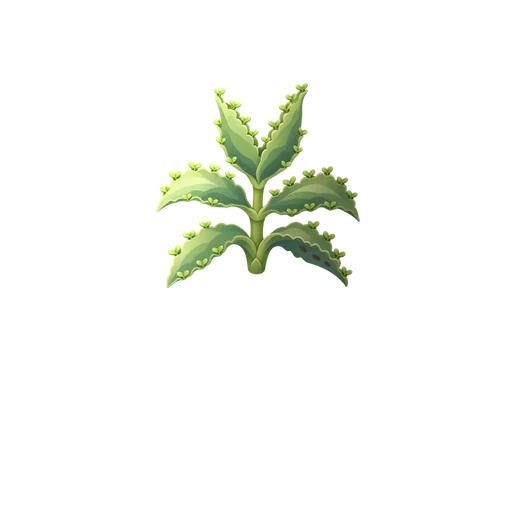
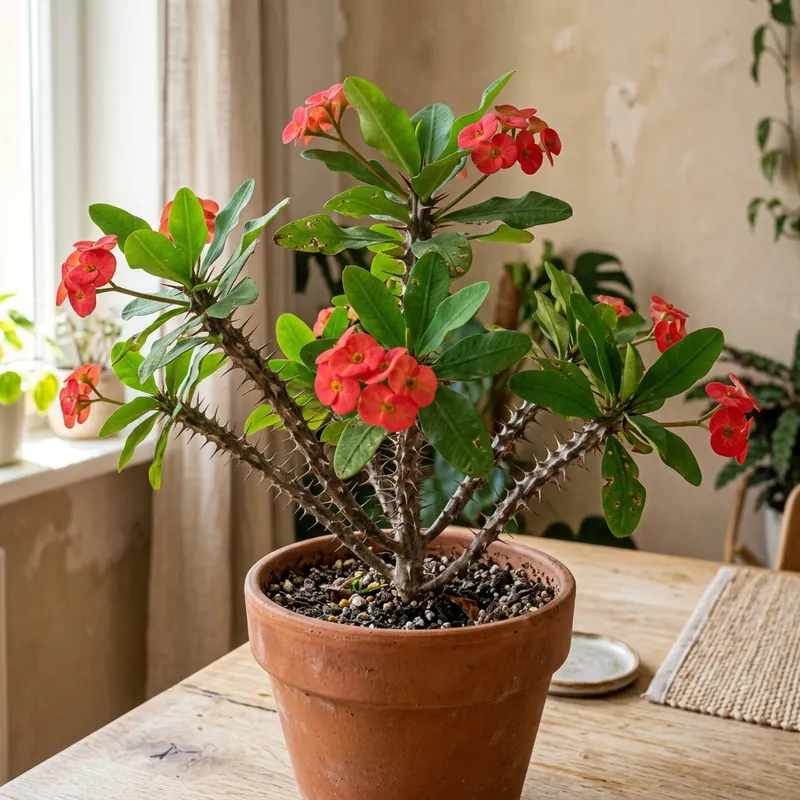
Upright fleshy succulent perennial featuring thick, scalloped oval leaves and terminal clusters of bright yellow to orange tubular flowers.
Botanical sheet
- Family
- Crassulaceae
- Origin
- Tropical Africa · Arabia
- Size
- 40–100 cm
- Climate
- 15–28 °C · ≥ 10 °C
What's wrong with your plant?
Pet safety Toxicity unverified
There is no species-specific toxicity verification for this plant on ASPCA. Check with your veterinarian or search the ASPCA directory before keeping it within reach of pets.
Open the toxicity checkerCommon questions
How do you easily propagate this succulent?
It roots effortlessly from stem cuttings or single mature leaves placed on top of dry succulent soil.