Plants
Bunny ears cactus (Polka-dot cactus) care: light, water & problems
Scientific name: Opuntia microdasys · Common name: Bunny ears cactus (Polka-dot cactus)
Bunny ears cactus care: full sun for rounded pads, minimal watering and handling with tongs or paper. Botanical sources.
Editorial revision:
Care at a glance
Light
Full direct sun. Generous daily direct sun prevents weak elongation and keeps pads nicely rounded.
Watering
Water sparingly; soak the gritty mineral mix only when completely dry. Keep virtually dry throughout winter.
Conditions vary with pot, season and location. Always check the mix and your plant's response.
How to identify it
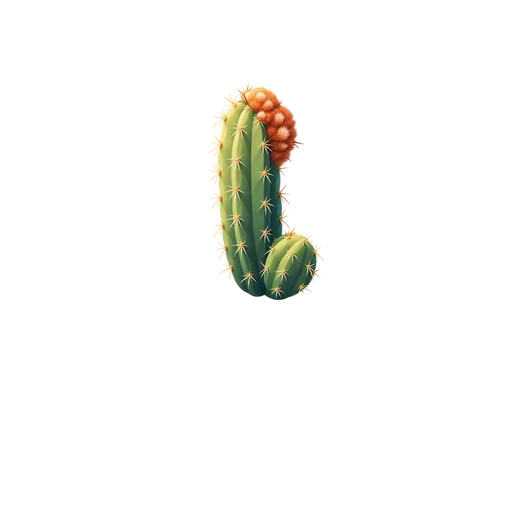
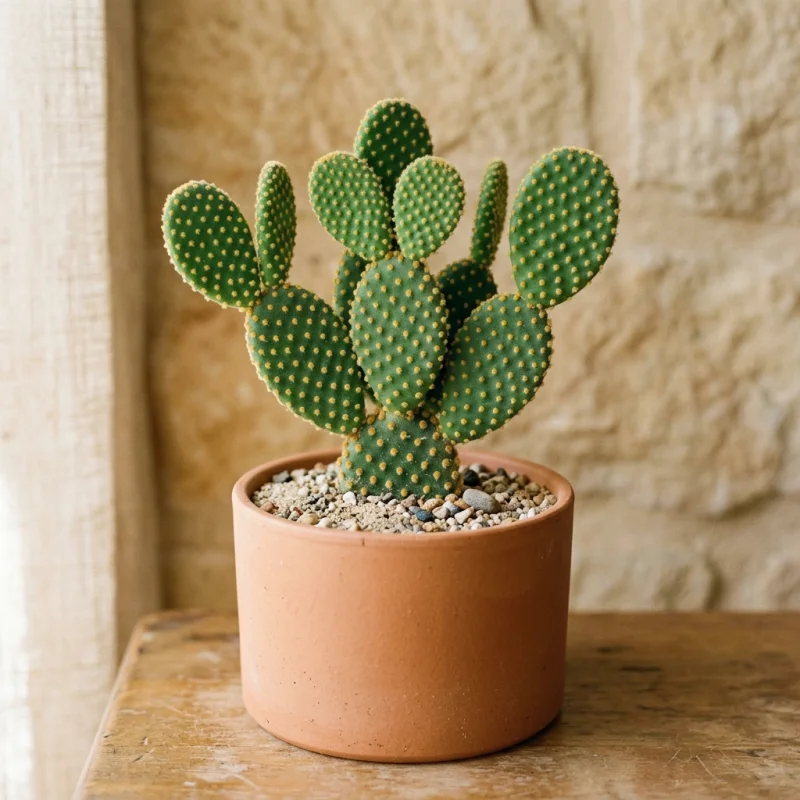
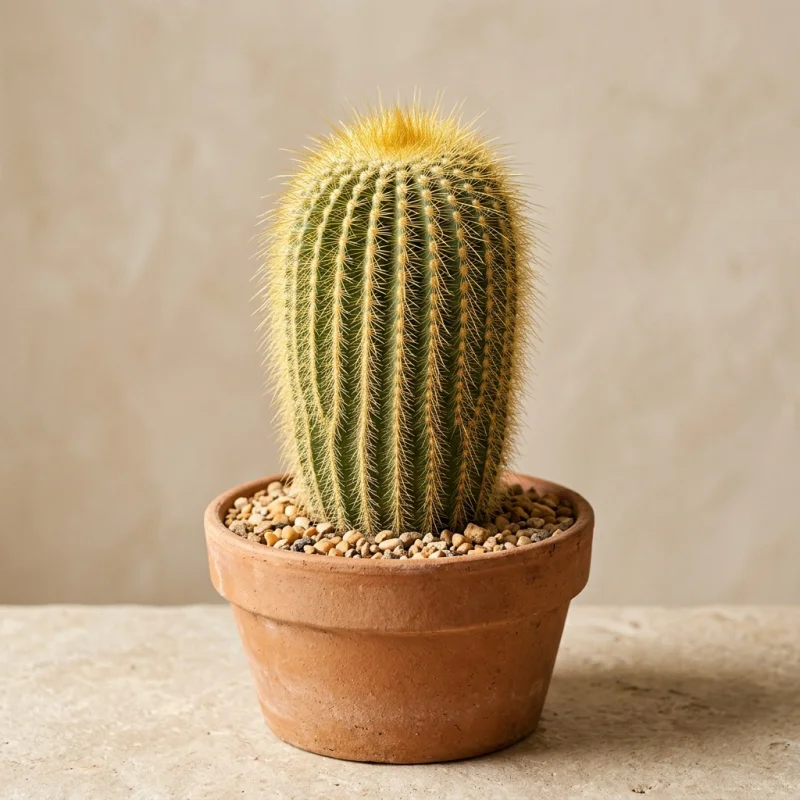
Popular branching cactus forming pairs of paddle pads dotted with neat polka-dot clusters of golden-yellow glochids.
Environment and placement
Warm, arid conditions (14-30 °C / 57-86 °F). Well-adapted to low indoor humidity and bright sunny windowsills.
Your living Bunny ears cactus (Polka-dot cactus) in your pocket
In the Grovia mobile app, every species comes with an interactive 3D digital twin that thrives as you care for it. Track waterings, get smart light alerts, and watch your plant grow in your pocket garden.
Potting mix and feeding
Prioritise a very free-draining mix and a pot with holes. Heavy mix that remains wet for weeks raises root risk.
Feed sparingly during active growth if needed; do not fertilise a plant weakened by overwatering.
Problems to check
Etiolation (thin, elongated pads) in weak light; fine barbed glochids irritate skin upon contact.
Specialized diagnostic guide
How to assess overwatering
Cats and dogs
ASPCA lists this species as toxic to cats and dogs. Keep pets from chewing it; contact a veterinarian if ingestion is suspected.
ASPCACommon question
How do you safely handle bunny ears cactus?
Use tongs or folded newspaper collars rather than garden gloves, as the micro-barbed glochids easily pierce fabric.
Botanical source
Related species
 🐾 Pet safe
 🐾 Pet safe