
Plants
Moth orchid care: light, water & problems
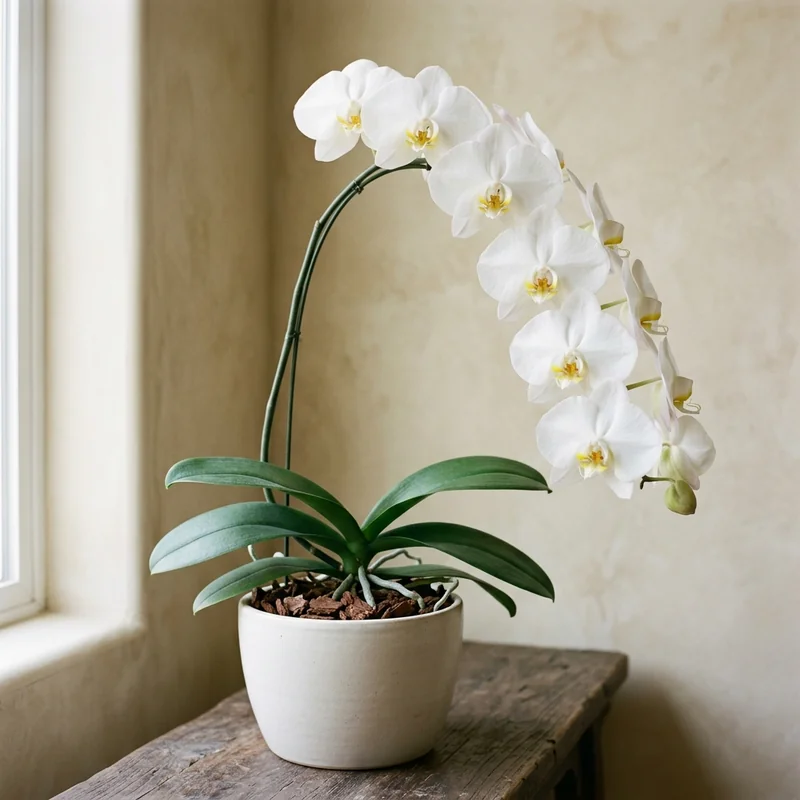
Scientific name: Phalaenopsis amabilis · Common name: Moth orchid
Moth orchid (Phalaenopsis amabilis): bright indirect or filtered light. Water by soaking when the roots inside the clear pot turn silvery-grey.
Editorial revision:
Care at a glance
Light
Bright indirect or filtered light. Direct sun quickly scorches the thick leaves; an east-facing windowsill provides ideal gentle light.
Watering
Water by soaking when the roots inside the clear pot turn silvery-grey; drain thoroughly and never leave water sitting in the saucer.
Conditions vary with pot, season and location. Always check the mix and your plant's response.
How to identify it
Epiphytic monopodial orchid with plump silvery-green aerial roots, broad leathery leaves, and arching sprays of graceful wing-like blooms.
Environment and placement
Warm household temperatures (18-26 °C / 65-78 °F) with moderate to high humidity. Never let water pool in the central leaf crown.
Your living Moth orchid in your pocket
In the Grovia mobile app, every species comes with an interactive 3D digital twin that thrives as you care for it. Track waterings, get smart light alerts, and watch your plant grow in your pocket garden.
Potting mix and feeding
Use a draining mix that retains some moisture, matched to pot size and the drying rate in your home.
During active growth, follow a suitable feed label. First check light, water and roots if the plant is declining.
Problems to check
Crown rot from water resting in the leaf axils; mushy brown root rot caused by poor drainage or overwatering in degraded bark.
Specialized diagnostic guide
How to assess yellow leaves
Common question
How do you know exactly when to water a moth orchid?
Look at the roots through the clear plastic pot: if they are rich green, they have plenty of moisture; if they are silvery-grey, it is time to soak.
Botanical source
Related species







 🐾 Pet safe