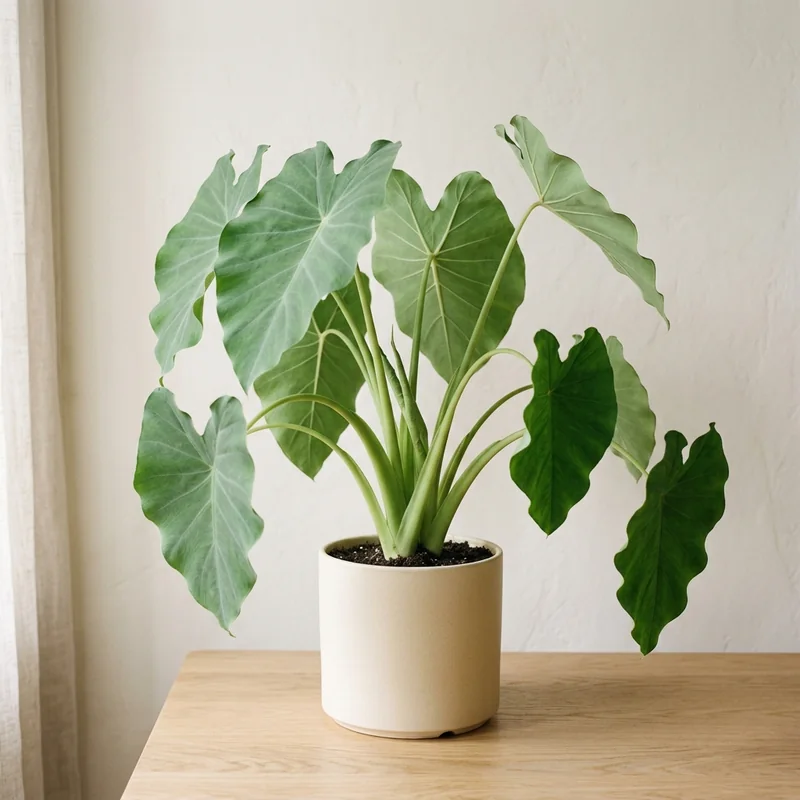
Peace lily
Spathiphyllum wallisiiUpdated
Prized for white spathes and clear wilt cues when thirsty. Thrives in filtered shade with evenly moist, well-drained soil.
Essential care to help it thrive
Light and placement
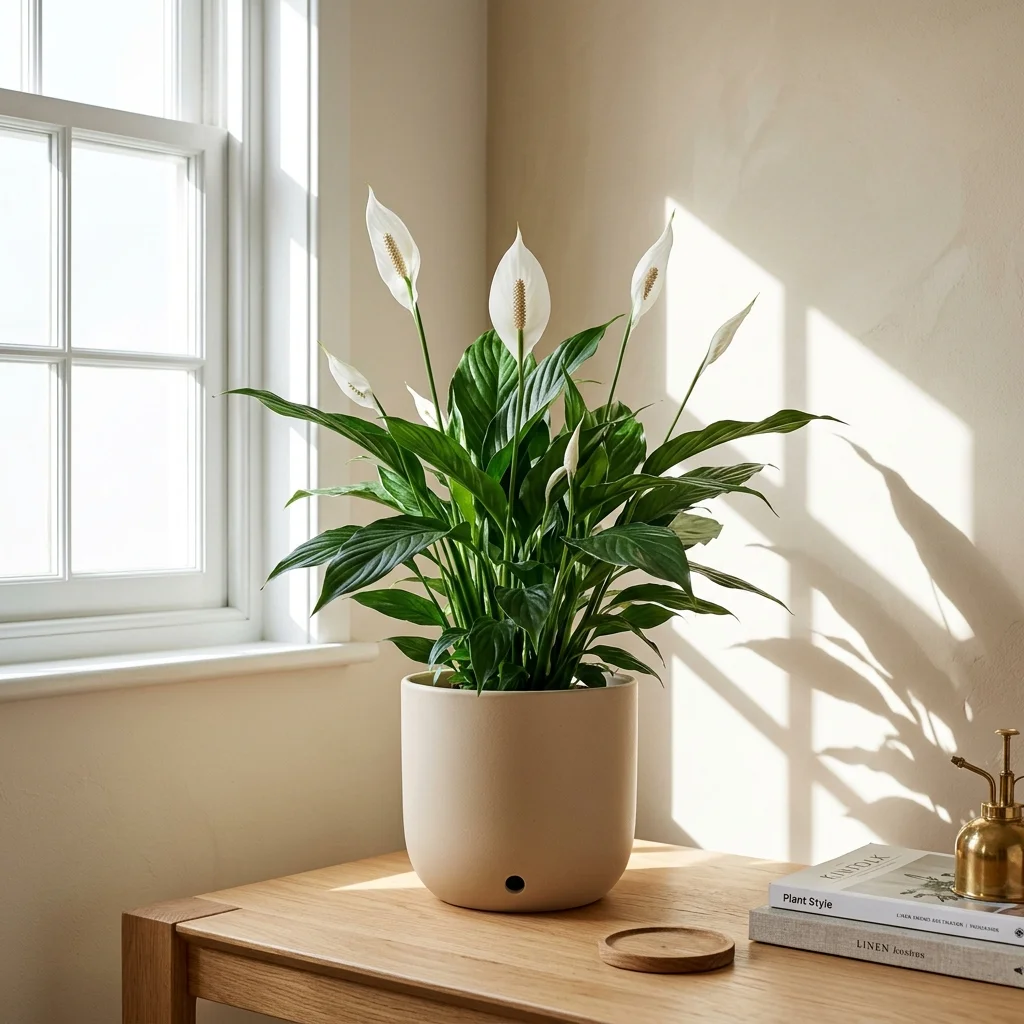
Bright indirect light near a curtained window without harsh midday sun; move closer to light in dark winter months.
Climate and season
Appreciates elevated humidity (50–70%) and steady warmth away from cold draughts.
Soil and repotting
Loamy yet breathable mix; Peace lilies flower better slightly root-bound.
Conditions vary with pot, season and location. Always check the mix and your plant's response.
Peace lily: when to check the soil
Keep evenly moist through warm seasons and let the top 2–3 cm dry in winter. Use filtered or rested low-mineral water.
Let Grovia remind you when to check your Peace lilySave the plant, get watering reminders and adjust the rhythm as the seasons change. Free on iPhone and Android.
See table by pot size
| Ø | Summer | Winter |
|---|---|---|
| 10 cm | 3–4 days | 5–7 days |
| 15 cm | 3–5 days | 7–9 days |
| 25 cm | 4–6 days | 9–12 days |
How to identify it
Herbaceous plant with glossy, dark green lance-shaped leaves and white flowers featuring a spathe wrapped around a spadix.
Botanical sheet
- Family
- Araceae
- Origin
- Colombia · Venezuela
- Size
- 45–65 cm clumper
- Climate
- 18–24 °C · 50–70% RH
What's wrong with your plant?
Pet safety Toxic to pets
ASPCA lists this species as toxic to cats and dogs. Keep pets from chewing it; contact a veterinarian if ingestion is suspected.
Toxic principles and clinical signs quoted from the ASPCA database.
See the ASPCA entryCommon questions
Why are its flowers turning green?
The white spathes naturally age and turn green before fading — trim them cleanly at the base.
Why won't my peace lily bloom?
Most often insufficient indirect daylight or heavy feeding; give brighter filtered light in spring.
How often should I water in winter?
Check the top 3 cm for dryness first — reduced daylight cuts water demand sharply.