Plants
ZZ plant care: light, water & problems
Scientific name: Zamioculcas zamiifolia · Common name: ZZ plant
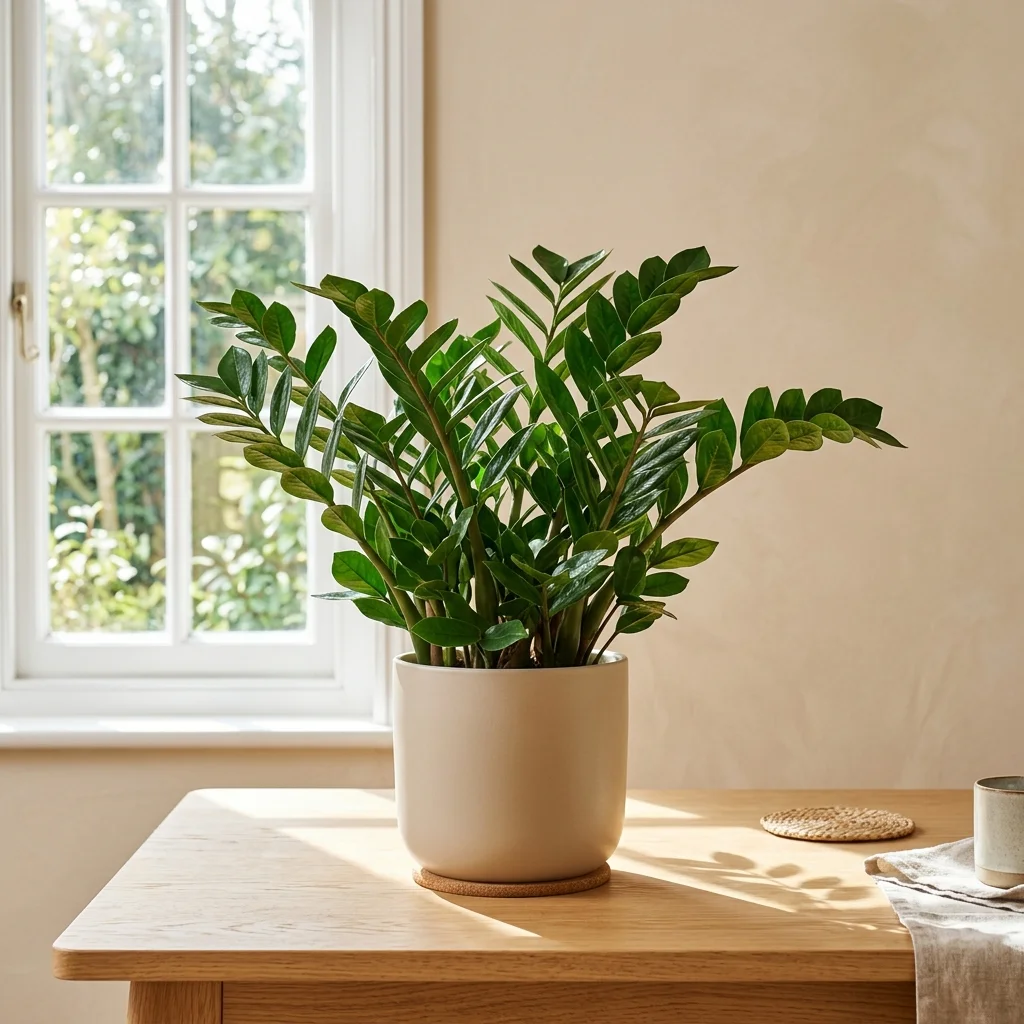
Thick, fleshy stems arising from underground rhizomes, bearing opposite, very glossy dark green leaflets.
Editorial revision:
Care at a glance
- Light
- It tolerates low light levels but grows denser in bright, indirect light. Avoid strong direct sun.
- Watering
- Its rhizomes store water. Let the mix dry completely before watering again; overwatering causes rot.
How to identify it
Thick, fleshy stems arising from underground rhizomes, bearing opposite, very glossy dark green leaflets.
Light
It tolerates low light levels but grows denser in bright, indirect light. Avoid strong direct sun.
Watering
Its rhizomes store water. Let the mix dry completely before watering again; overwatering causes rot.
Conditions vary with pot, season and location. Always check the mix and your plant's response.
Environment and placement
It prefers average warm temperatures. Standard household humidity is adequate.
Potting mix and feeding
Use an airy, draining mix and a pot with drainage holes. Match pot size to the root ball so excess mix does not remain wet.
Feed only during active growth and follow the product label. Correct damaged roots or poor light before fertilising.
Problems to check
Yellow leaves and mushy stems indicate overwatering and root rot.
How to assess yellow leavesCats and dogs
ASPCA lists this species as toxic to cats and dogs. Keep pets from chewing it; contact a veterinarian if ingestion is suspected.
ASPCACommon question
Why is my ZZ plant not growing?
It might be dormant due to very low light or water, or it may be focusing energy on its underground rhizomes.