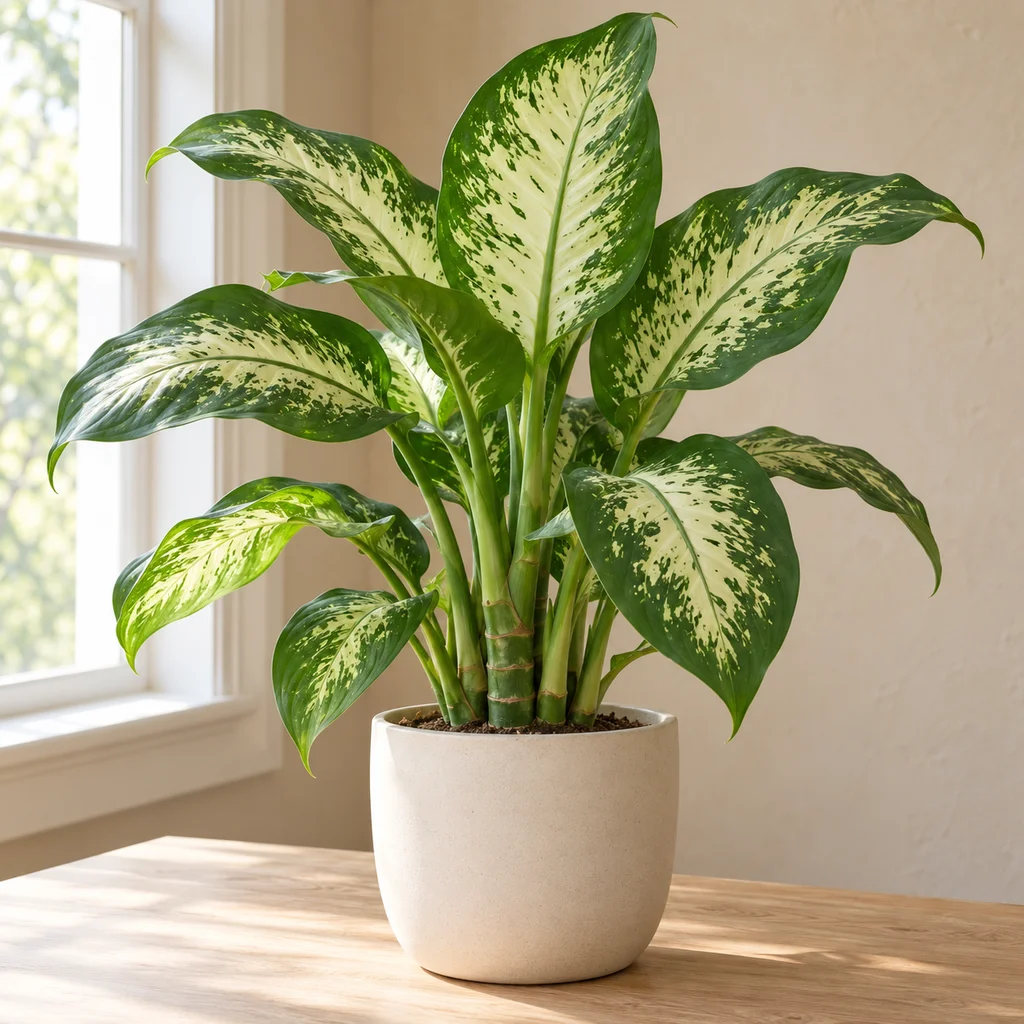
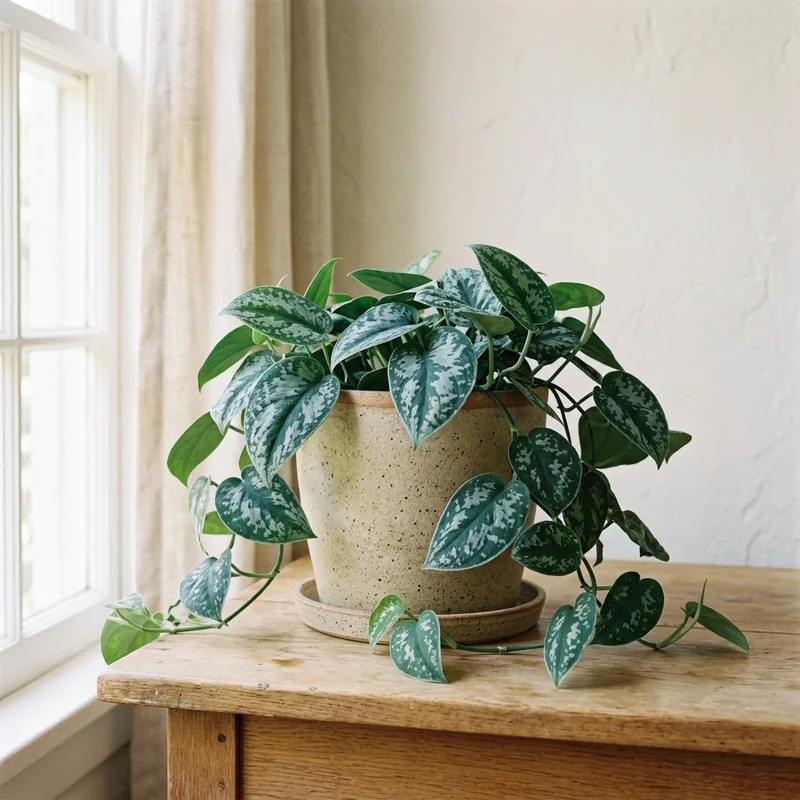
Golden pothos
Epipremnum aureumUpdated
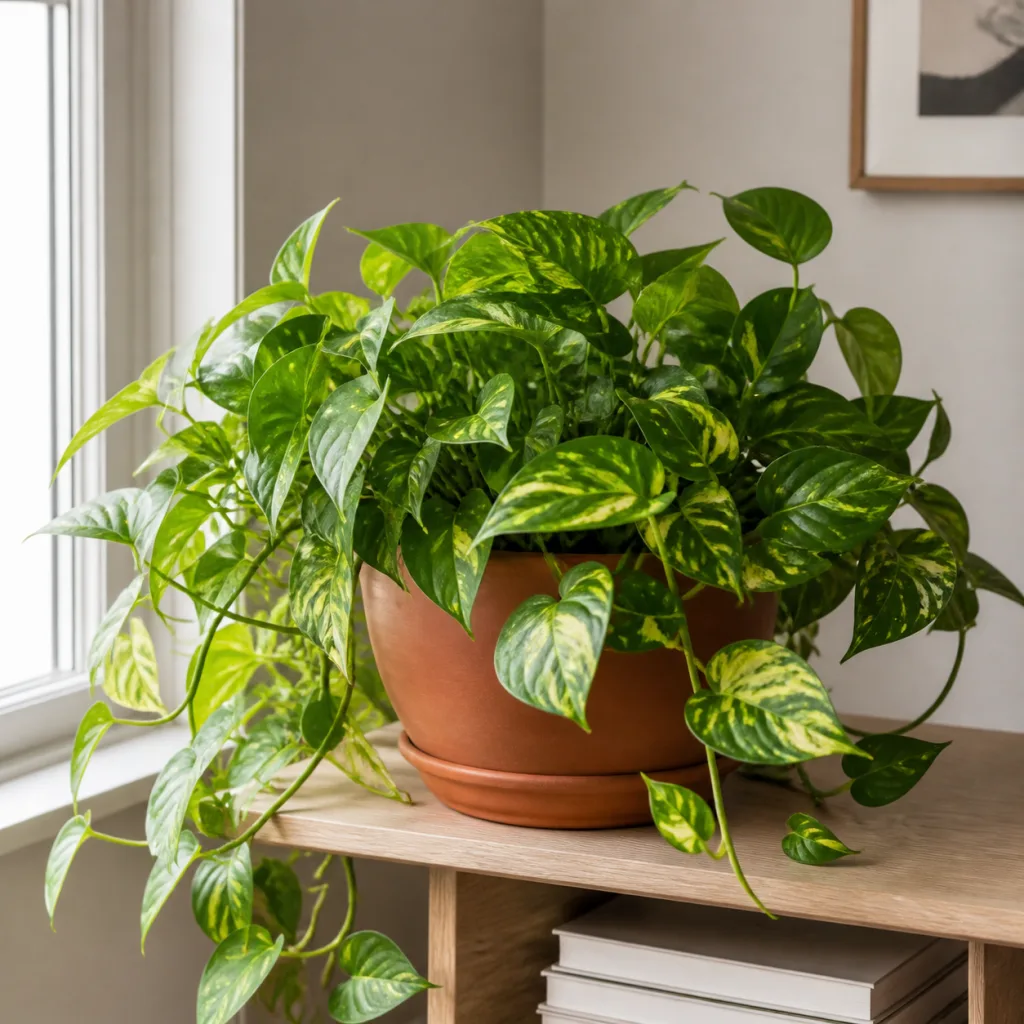
Vigorous tropical trailing aroid. Forgiving of occasional neglect, it achieves peak golden variegation in bright indirect light with partial dry-downs.
Essential care to help it thrive
Botanical reference sheet. Open step-by-step care guide →
Light and placement
Choose bright filtered light; deep shade can reduce growth and variegation.
Climate and season
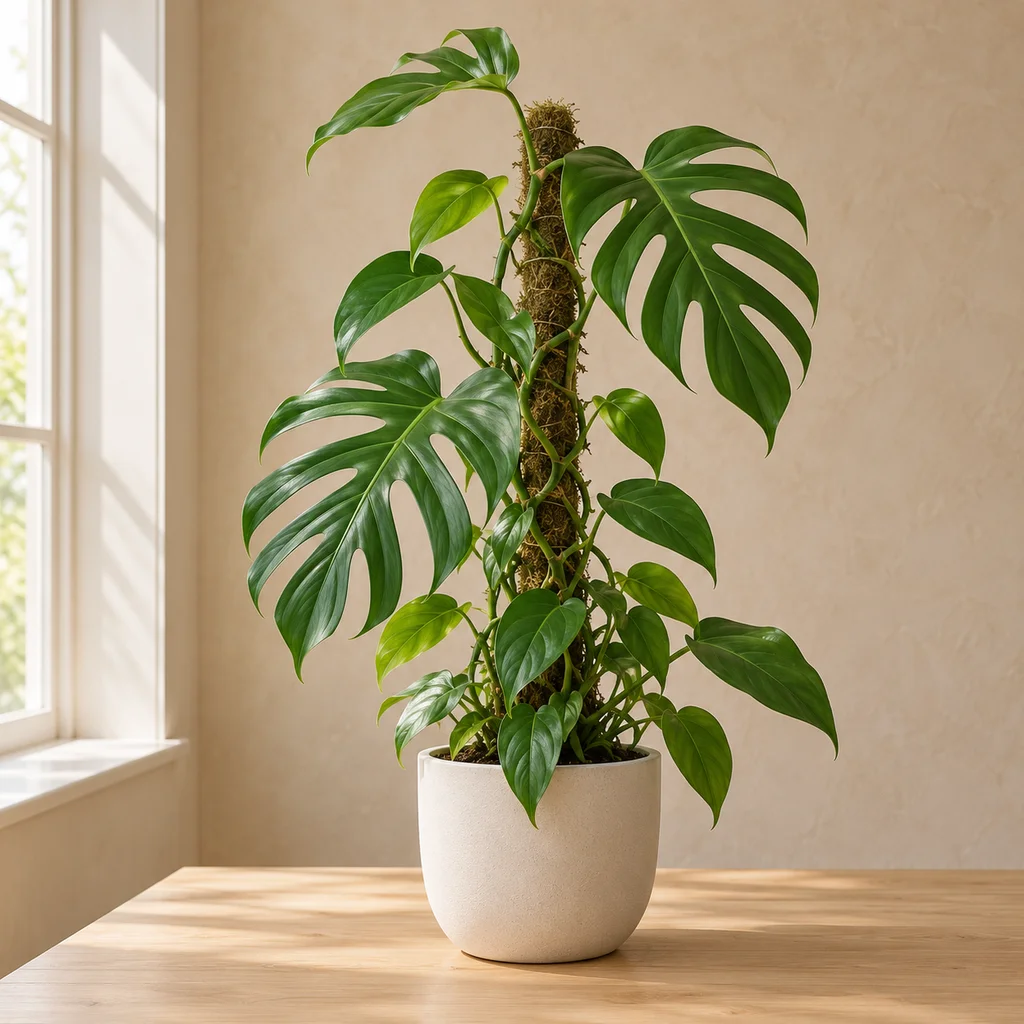
Protect it from cold draughts; it can trail or climb a support.
Soil and repotting
Chunky, airy aroid mix in a nursery pot with generous drainage holes.
Conditions vary with pot, season and location. Always check the mix and your plant's response.
Golden pothos: when to check the soil
Check the mix before watering and reduce watering as growth slows in winter. Avoid standing water.
Let Grovia remind you when to check your Golden pothosSave the plant, get watering reminders and adjust the rhythm as the seasons change. Free on iPhone and Android.
See table by pot size
| Ø | Summer | Winter |
|---|---|---|
| 10 cm | 4–6 days | 8–12 days |
| 15 cm | 5–7 days | 11–15 days |
| 25 cm | 7–10 days | 14–20 days |
How to identify it
A climber with heart-shaped leaves, often green with yellow markings. Do not identify every cultivar as Epipremnum pinnatum without checking it.
Botanical sheet
- Family
- Araceae
- Origin
- Society Islands
- Size
- 1.5–3 m climbing
- Climate
- 18–26 °C · min. 10 °C
What's wrong with your plant?
Pet safety Toxic to pets
ASPCA lists this species as toxic to cats and dogs. Keep pets from chewing it; contact a veterinarian if ingestion is suspected.
Toxic principles and clinical signs quoted from the ASPCA database.
See the ASPCA entryCommon questions
Can pothos climb?
Yes. Train the stems on a support or let them trail from a raised pot.
How do you propagate golden pothos cuttings?
Cut a 10–15 cm vine section just below a node with an aerial root nub, remove lower leaves, and place in water or moist potting mix for 2–3 weeks.
Why are my indoor pothos leaves staying small?
Trailing vines produce small juvenile foliage; training stems vertically up a moist moss pole with generous indirect light triggers mature leaf growth.