Plants
Japanese maple (Palmate maple bonsai) care: light, water & problems
Scientific name: Acer palmatum · Common name: Japanese maple (Palmate maple bonsai)
Japanese maple care: partial shade, evenly moist well-drained bonsai mix and outdoor cold dormancy. Botanical sources.
Editorial revision:
Care at a glance
Light
Dappled sunlight or partial shade. Harsh midday sun quickly scorches the tips of its thin, tender palmate leaves.
Watering
Keep root zone evenly moist with open porous bonsai soil; never permit the root ball to dry out completely.
Conditions vary with pot, season and location. Always check the mix and your plant's response.
How to identify it
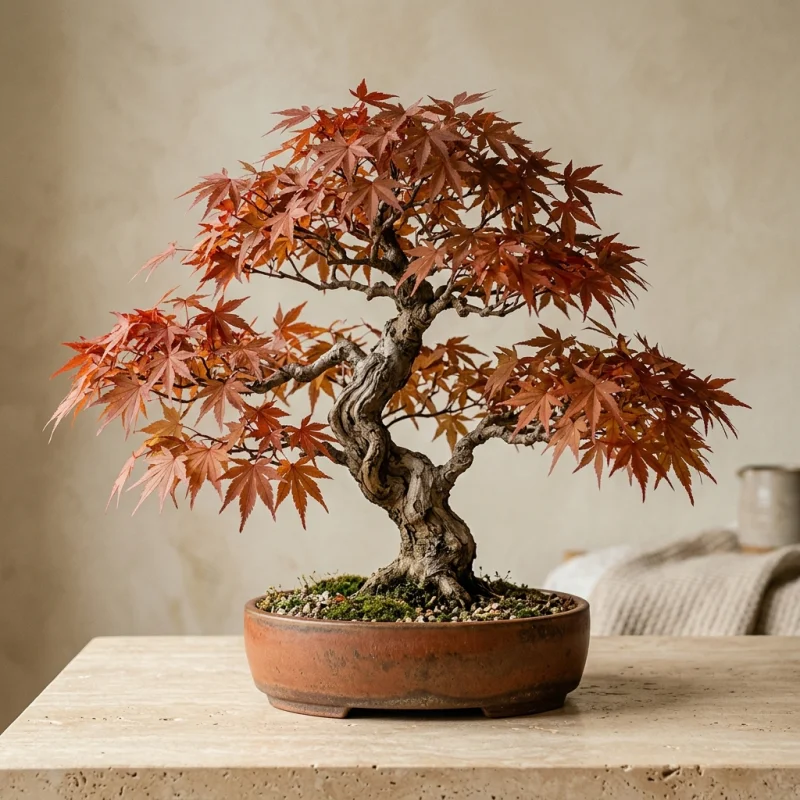
Delicate deciduous tree revered for gracefully layered branches and deeply lobed leaves blazing in autumn reds and coppers.
Environment and placement
Outdoor temperate conditions; requires natural seasonal winter dormancy and protection from drying desiccating winds.
Your living Japanese maple (Palmate maple bonsai) in your pocket
In the Grovia mobile app, every species comes with an interactive 3D digital twin that thrives as you care for it. Track waterings, get smart light alerts, and watch your plant grow in your pocket garden.
Potting mix and feeding
Choose a stable draining pot and a mix that resists compaction. A larger container changes how long it takes to dry.
Feed during active growth only when light and root conditions are suitable; follow label rates.
Problems to check
Crispy leaf scorch from dry winds or hot afternoon sun; leaf burn from alkaline hard municipal water.
Specialized diagnostic guide
How to assess brown tips and edges
Common question
Can Japanese maples live indoors permanently?
No. They require outdoor cold winter dormancy to reset their seasonal rhythm and will decline if kept indoors year-round.
Botanical source
Related species