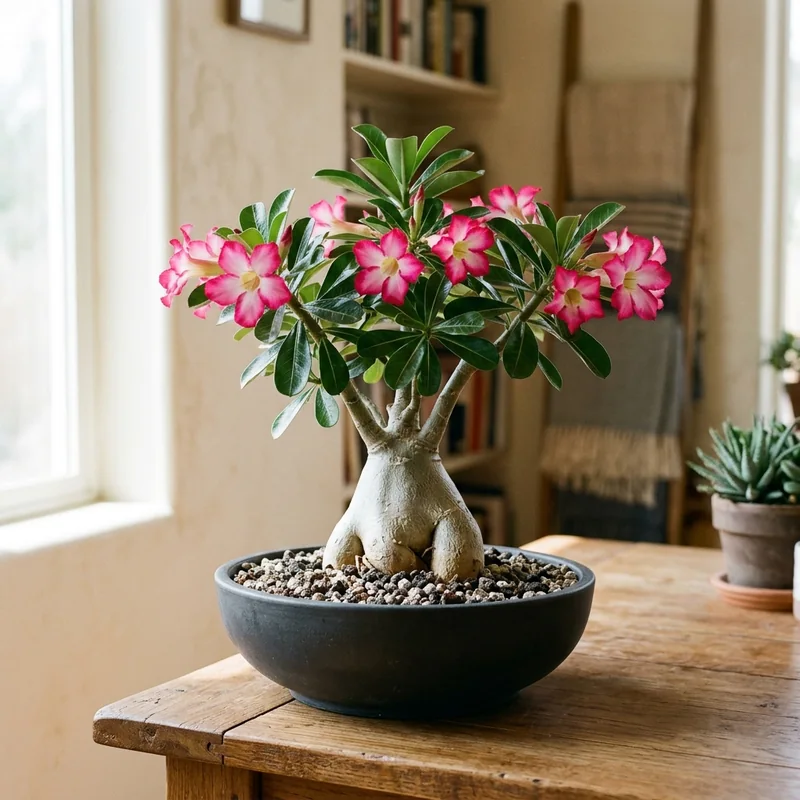
Desert rose (Adenium obesum)
Adenium obesumUpdated
Bottle-trunked succulent shrub prized for sculpted caudex bases and showy pink or crimson trumpet blooms. Goes leafless in winter; toxic to pets.
Essential care to help it thrive
Light and placement
Grow in full bright light indoors with gentle shelter from scorching summer midday sun behind glass; ample light keeps branches sturdy and floriferous.
Climate and season
Needs steady year-round warmth above 15 °C (18–32 °C preferred) and dry airflow. Frost-intolerant and easily damaged by cool dampness.
Soil and repotting
Use a peat-free loam-based compost heavily amended with 45–50% sharp sand, pumice or grit inside a shallow, wide draining container.
Conditions vary with pot, season and location. Always check the mix and your plant's response.
Desert rose (Adenium obesum): when to check the soil
Soak thoroughly in warm growth only once the gritty mix dries out completely; keep near-dry through winter dormancy when leafless.
Let Grovia remind you when to check your Desert rose (Adenium obesum)Save the plant, get watering reminders and adjust the rhythm as the seasons change. Free on iPhone and Android.
See table by pot size
| Ø | Summer | Winter |
|---|---|---|
| 10 cm | 7–10 days | No water |
| 15 cm | 9–12 days | No water |
| 25 cm | 11–16 days | No water |
How to identify it
Deciduous succulent perennial with a swollen bottle-shaped caudex, terminal clusters of simple leathery leaves, and showy salver-shaped pink or white blooms.
Botanical sheet
- Family
- Apocynaceae
- Origin
- Arabia · Tropical Africa
- Size
- 1–1.5 m caudex shrub
- Climate
- 18–32 °C · min. 15 °C
What's wrong with your plant?
Pet safety Toxic to pets
ASPCA lists this species as toxic to cats and dogs. Keep pets from chewing it; contact a veterinarian if ingestion is suspected.
Toxic principles and clinical signs quoted from the ASPCA database.
See the ASPCA entryCommon questions
Why did my desert rose drop all its leaves in winter?
Adenium obesum is naturally deciduous and enters dormancy in cool or shorter days; keep it above 15 °C and nearly dry until spring buds emerge.
Is desert rose toxic to cats, dogs and horses?
Yes: ASPCA lists it as toxic to dogs, cats and horses due to cardiac glycosides; wear gloves when pruning and keep well out of reach.
Can you save an Adenium with a soft rotting caudex?
Unpot immediately, carve away all mushy brown rot to healthy white flesh with a clean blade, let dry several days, then pot in dry grit.