Plants
Giant taro (Upright elephant ear) care: light, water & problems
Scientific name: Alocasia macrorrhizos · Common name: Giant taro (Upright elephant ear)
Giant taro care: bright filtered light, steady moisture in warm months and yellowing leaf causes. Identification and botanical sources.
Editorial revision:
Care at a glance
Light
Bright indirect light or gentle morning sun. Needs generous filtered light indoors to maintain upright posture.
Watering
Water thoroughly when top 2 inches dry out; maintain consistently moist but well-draining soil in warm months.
Conditions vary with pot, season and location. Always check the mix and your plant's response.
How to identify it
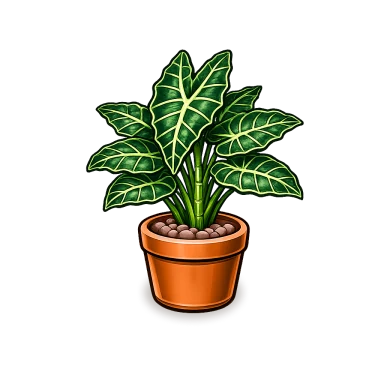
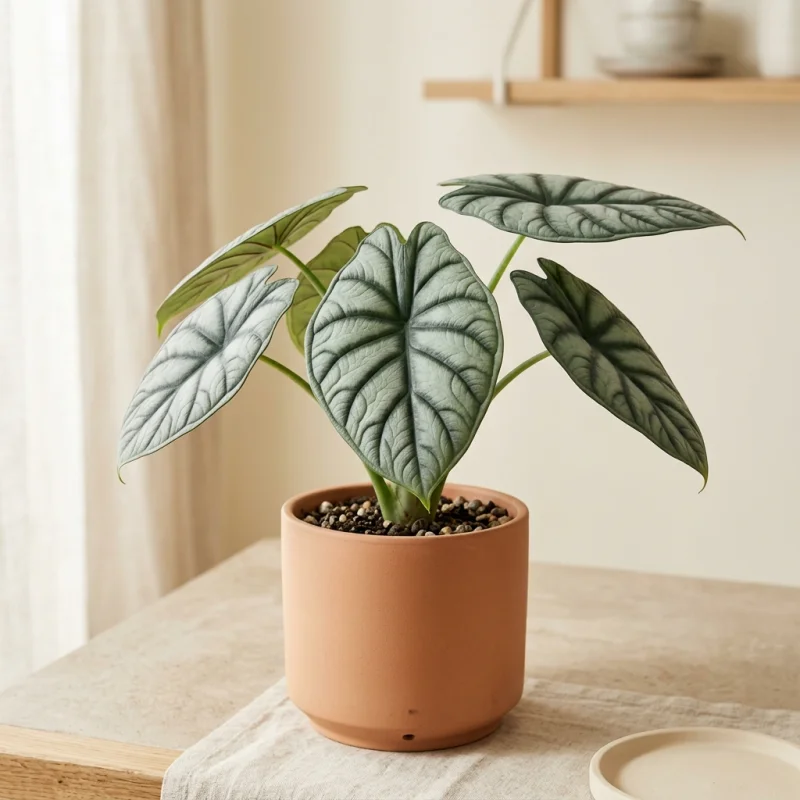
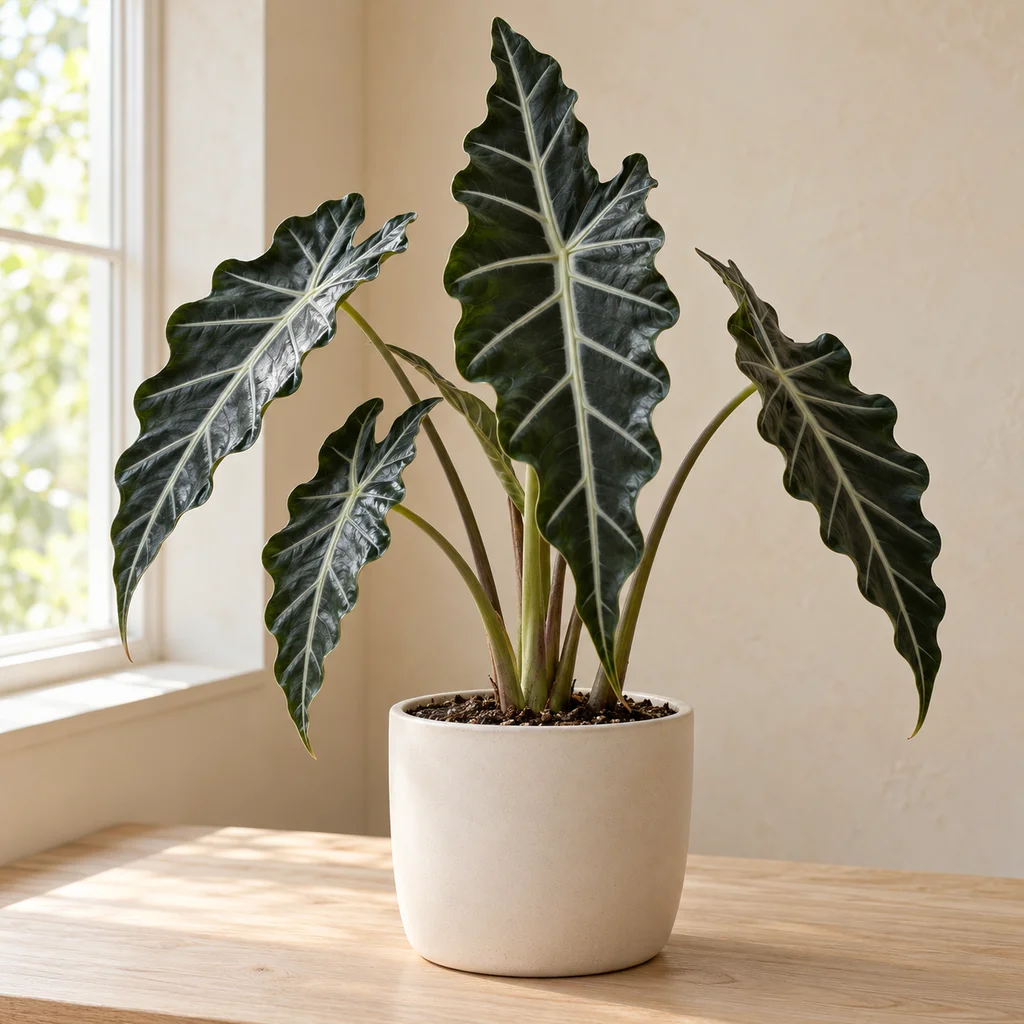
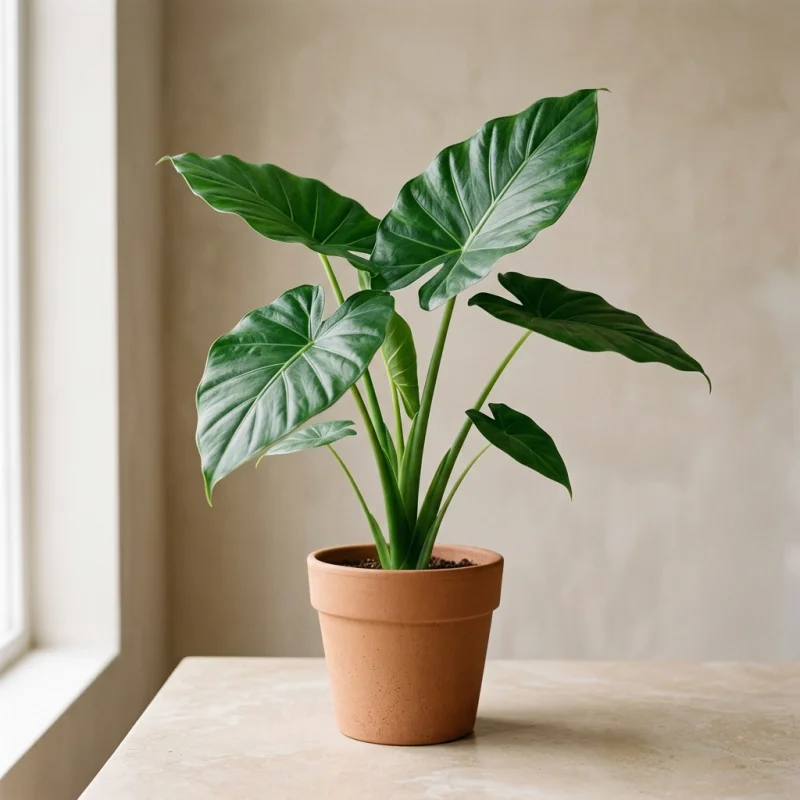
Dramatic architectural aroid producing massive, erect glossy green paddle leaves with prominent sculpted veins.
Environment and placement
Warm and humid (18-28 °C / 65-82 °F). Requires plenty of floor space and shelter from chilly drafts below 15 °C.
Your living Giant taro (Upright elephant ear) in your pocket
In the Grovia mobile app, every species comes with an interactive 3D digital twin that thrives as you care for it. Track waterings, get smart light alerts, and watch your plant grow in your pocket garden.
Potting mix and feeding
Use an airy, draining mix and a pot with drainage holes. Match pot size to the root ball so excess mix does not remain wet.
Feed only during active growth and follow the product label. Correct damaged roots or poor light before fertilising.
Problems to check
Yellowing lower leaves from erratic watering; spider mites when relative humidity drops below 40%.
Specialized diagnostic guide
How to assess yellow leaves
Cats and dogs
ASPCA lists this species as toxic to cats and dogs. Keep pets from chewing it; contact a veterinarian if ingestion is suspected.
ASPCACommon question
How large does it grow indoors?
In indoor planters it typically reaches 5 to 7 feet tall when given bright filtered light and steady moisture.
Botanical source
Related species