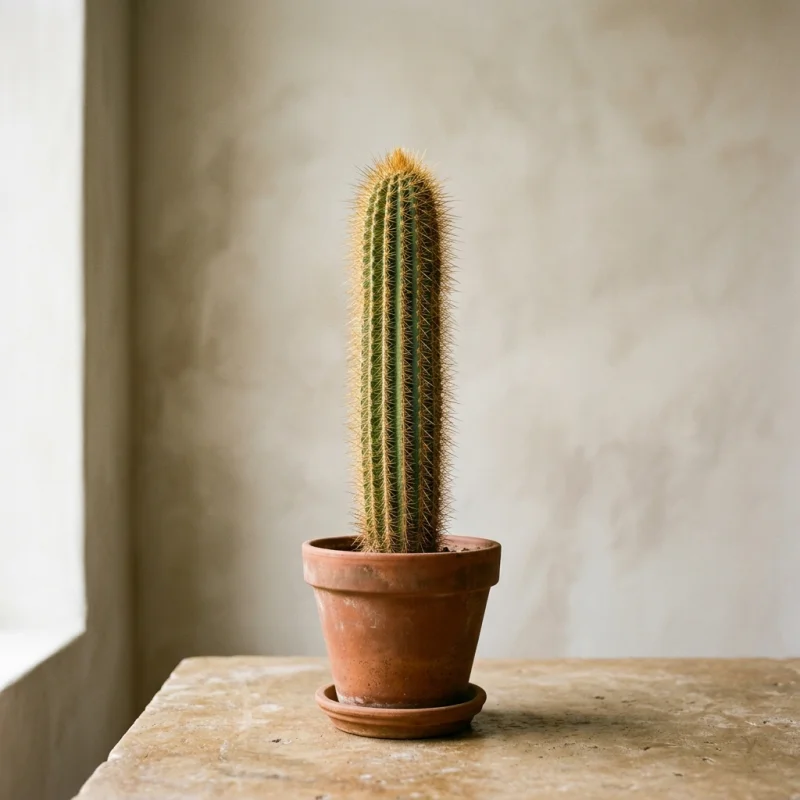
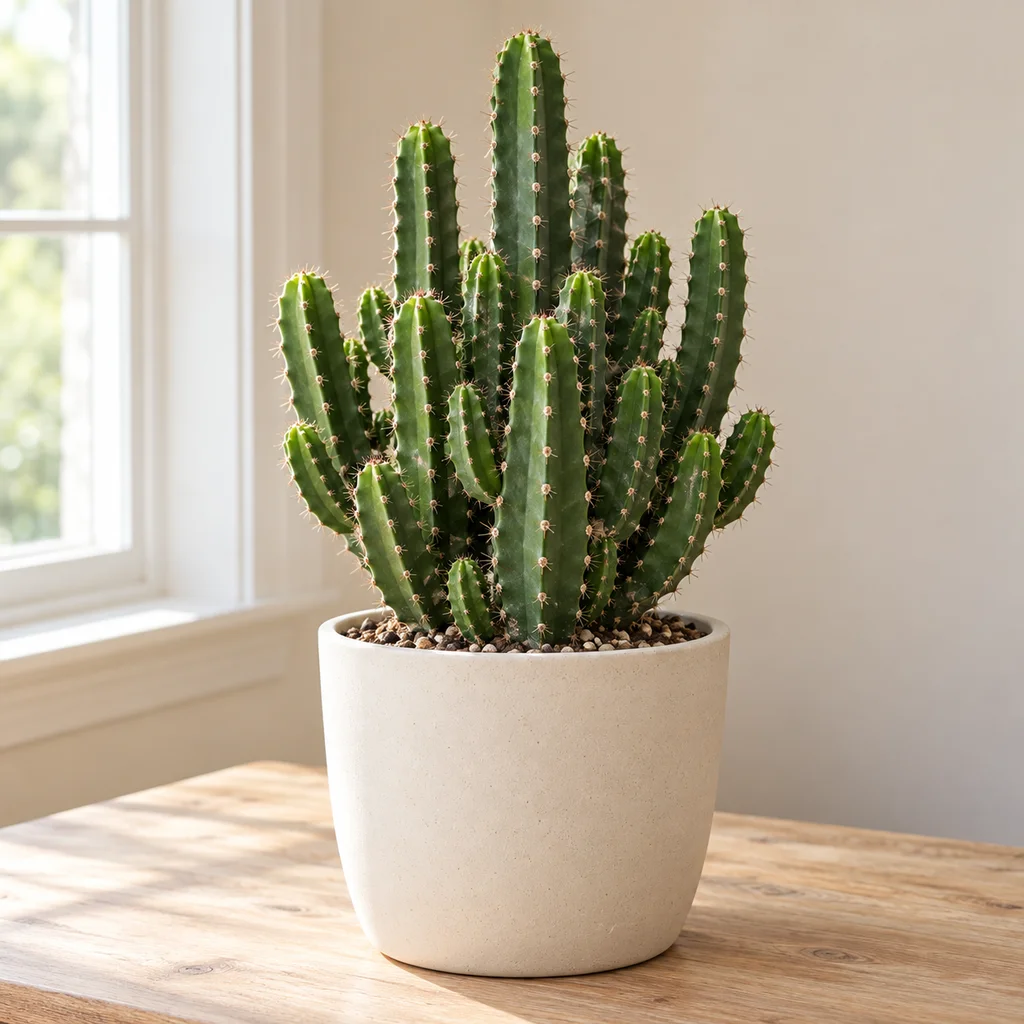
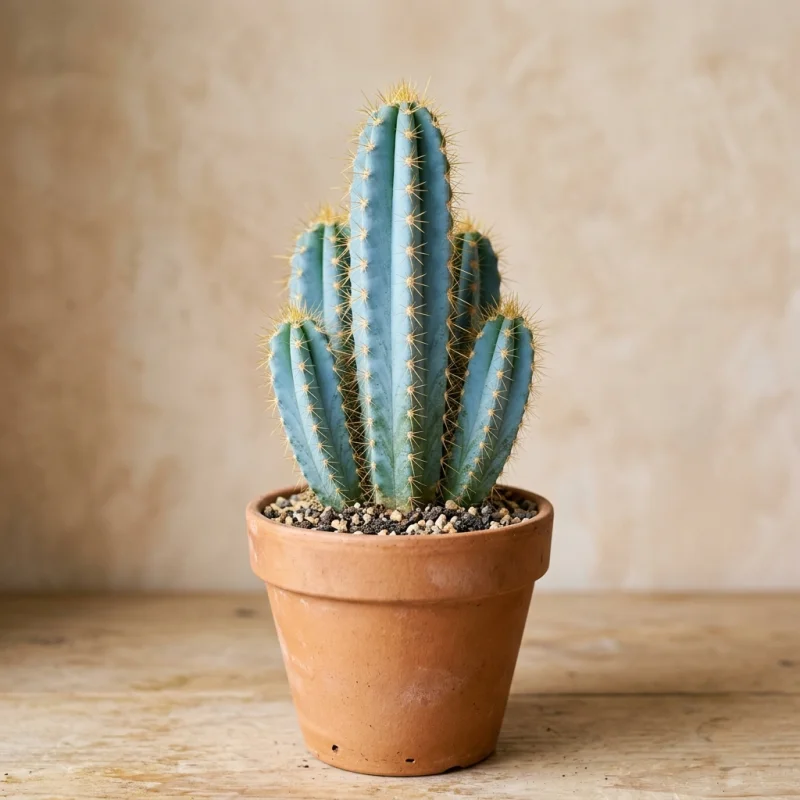
Peruvian apple cactus (Cereus)
Cereus repandusUpdated
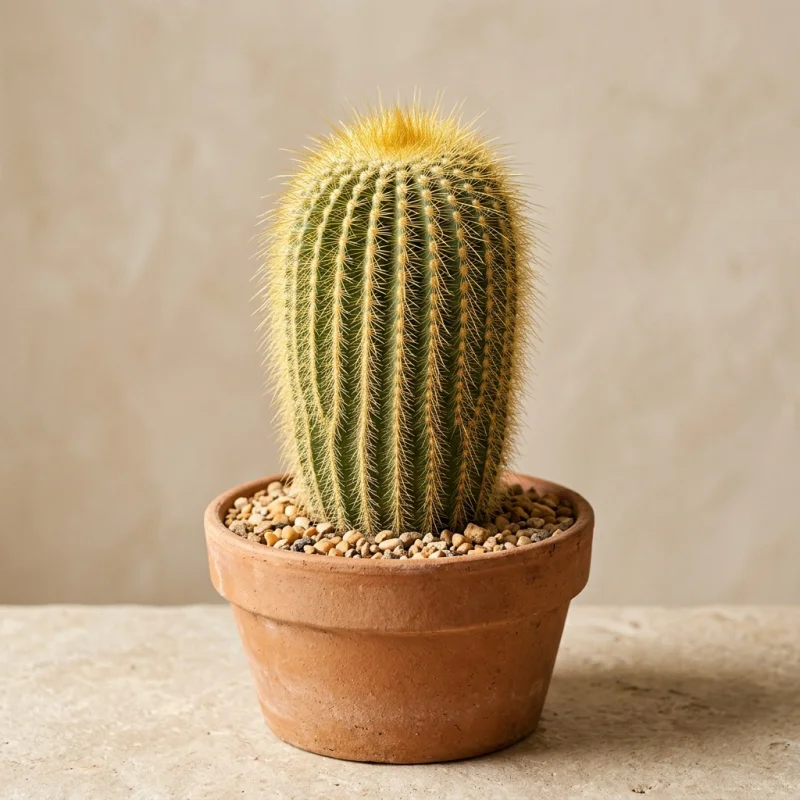
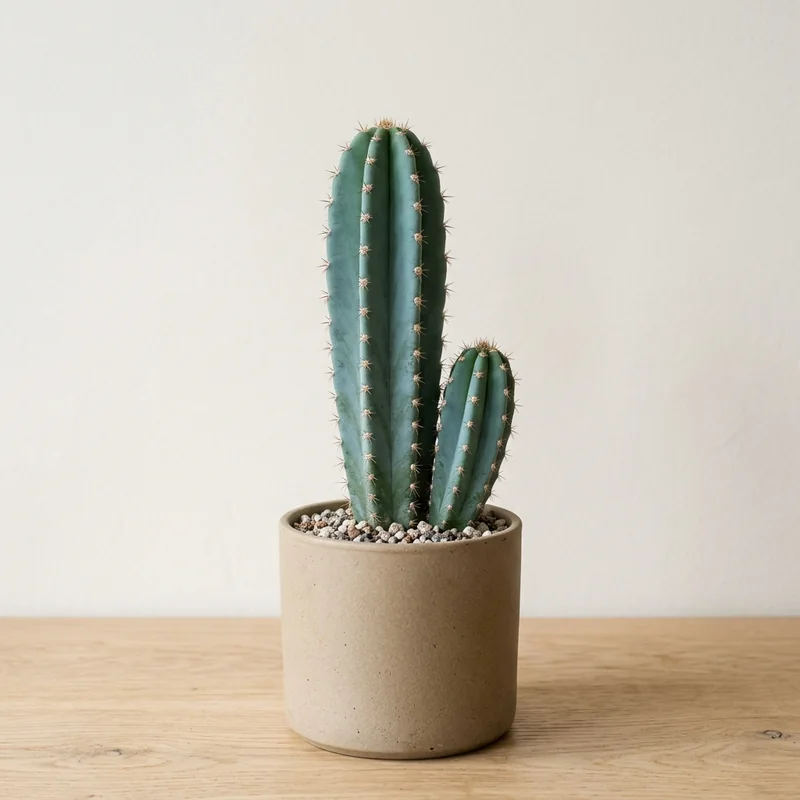
Sculptural blue-green ribbed columnar cactus bearing dramatic night-blooming white flowers. Demands maximum sunlight, fast mineral grit, and dry winter dormancy.
Essential care to help it thrive
Light and placement
Place in your sunniest south or west window or summer patio sun. Low indoor brightness irreversibly narrows the growing crown into skinny pale tips.
Climate and season
Loves dry summer warmth at 15–32 °C and benefits from a bright cool frost-free winter pause (down to 5 °C dry) to prevent weak winter stretching.
Soil and repotting
Heavy drained terracotta pot packed fifty-fifty with coarse cactus compost and pumice, scoria, or crushed grit.
Conditions vary with pot, season and location. Always check the mix and your plant's response.
Peruvian apple cactus (Cereus): when to check the soil
Soak gritty mineral compost only once dry through top to bottom during warm spring and summer growth, keeping the pot completely dry over winter rest.
Let Grovia remind you when to check your Peruvian apple cactus (Cereus)Save the plant, get watering reminders and adjust the rhythm as the seasons change. Free on iPhone and Android.
See table by pot size
| Ø | Summer | Winter |
|---|---|---|
| 10 cm | 10–13 days | No water |
| 15 cm | 12–17 days | No water |
| 25 cm | 16–22 days | No water |
How to identify it
Upright branching gray-blue columnar stems with eight to thirteen deep ribs and nocturnal creamy blooms; still commonly sold as Cereus peruvianus.
Botanical sheet
- Family
- Cactaceae
- Origin
- Southern Caribbean, Venezuela, and Colombia
- Size
- 1–2 m potted (8–12 m outdoors)
- Climate
- 15–32 °C · min 5 °C
What's wrong with your plant?
Pet safety Toxicity unverified
There is no species-specific toxicity verification for this plant on ASPCA. Check with your veterinarian or search the ASPCA directory before keeping it within reach of pets.
Open the toxicity checkerCommon questions
Why must Cereus repandus stay bone-dry throughout winter indoors?
Dark short winter days cannot support balanced thick rib growth; watering while dormant either rots resting roots or forces thin ugly etiolated growth.
How does species Cereus repandus differ from Cereus 'Monstrosus'?
Species specimens raise straight ribbed blue-green columns, whereas 'Monstrosus' forms lumpy twisted rocky crests under the exact same sunny dry care.
Will Peruvian apple cactus reach giant size inside a home pot?
Confined pots hold plants comfortably around 1–2 m tall for years, though RHS notes frost-free outdoor trees soar up to 8–12 m.