Hardy fuchsia
Fuchsia magellanicaUpdated
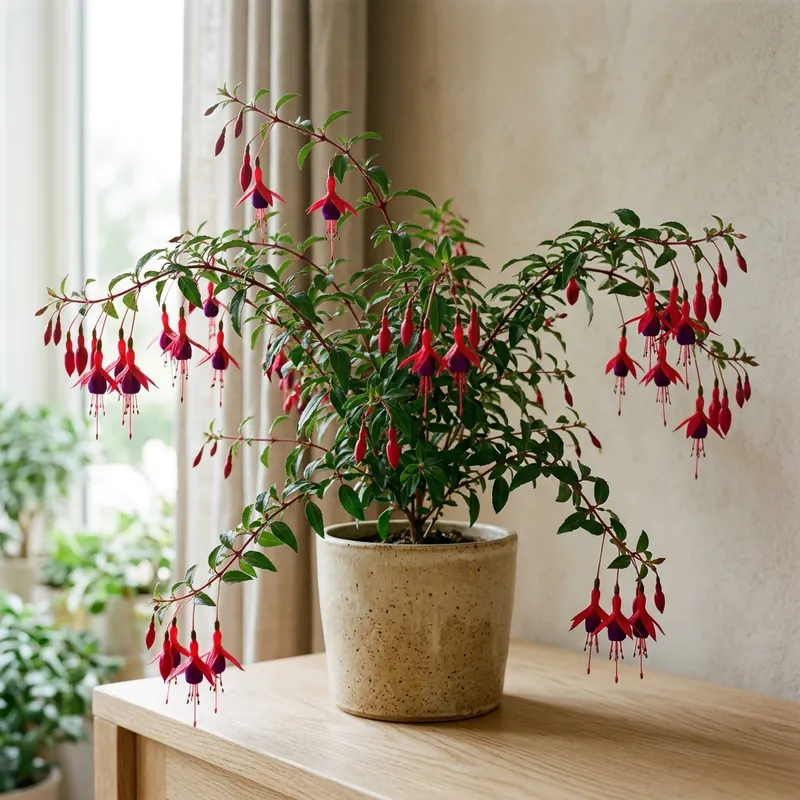
Graceful Patagonian shrub hung with scarlet and purple pendant blooms. Thrives in moist fertile soil through summer and needs sparing water in winter.
Essential care to help it thrive
Light and placement
Give full sun in mild climates or light partial shade where summers run hot, shielding foliage from scorching afternoon rays.
Climate and season
Hardy to around -10 °C when planted 5 cm deeper with a thick winter mulch and shelter from cold drying winds; stays semi-evergreen in mild areas.
Soil and repotting
Plant in moist, fertile, well-draining soil enriched with organic matter; outdoors sink the stem base 5 cm deeper and add a deep winter mulch.
Conditions vary with pot, season and location. Always check the mix and your plant's response.
Hardy fuchsia: when to check the soil
Keep soil or container compost evenly moist throughout active spring-summer growth; water sparingly in winter so cold roots never sit sodden.
Let Grovia remind you when to check your Hardy fuchsiaSave the plant, get watering reminders and adjust the rhythm as the seasons change. Free on iPhone and Android.
See table by pot size
| Ø | Summer | Winter |
|---|---|---|
| 10 cm | 3–4 days | 5–7 days |
| 15 cm | 3–5 days | 7–9 days |
| 25 cm | 4–6 days | 9–12 days |
How to identify it
Bushy deciduous or semi-evergreen shrub with opposite or whorled leaves and dangling tubular flowers bearing 4 spreading sepals and 4 erect petals.
Botanical sheet
- Family
- Onagraceae
- Origin
- Chile · Argentina
- Size
- 1,5–2,5 m
- Climate
- 8–24 °C · min. -10 °C
What's wrong with your plant?
Pet safety Toxicity unverified
There is no species-specific toxicity verification for this plant on ASPCA. Check with your veterinarian or search the ASPCA directory before keeping it within reach of pets.
Open the toxicity checkerCommon questions
How do I help it survive freezing winters?
Set the stem base 5 cm deeper in soil, apply a deep winter mulch and shelter from cold drying winds.
When should a hardy fuchsia be pruned?
Wait until spring frost risk passes, then cut frost-damaged or weak shoots back to healthy low buds.
Are the dark berries safe or grown as fruit?
RHS notes berries are edible though sparse and bland, so treat it strictly as an ornamental shrub.