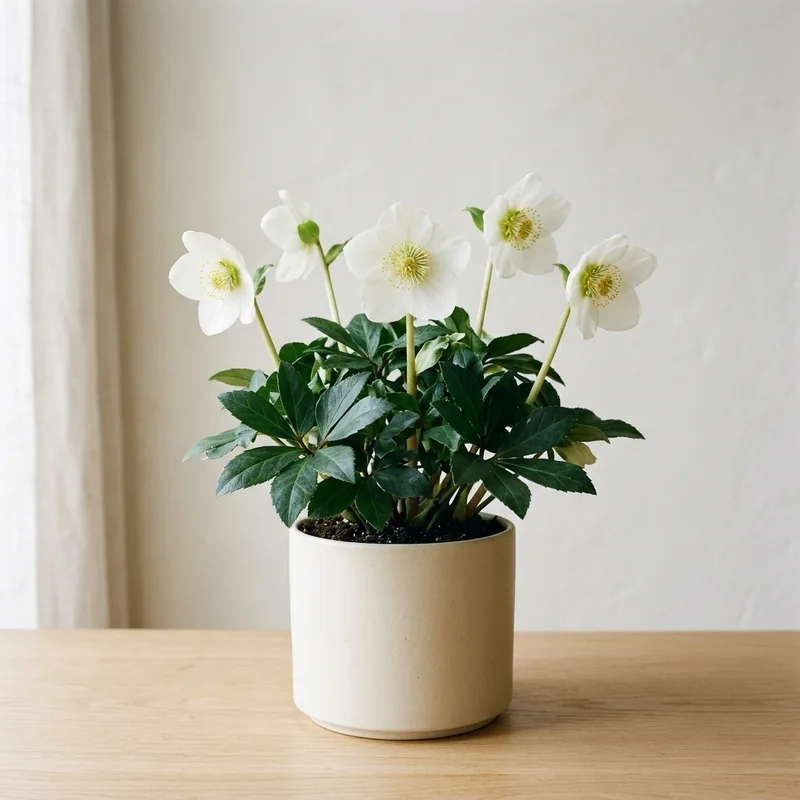
Christmas rose (Helleborus niger)
Helleborus nigerUpdated
Hardy Alpine winter bloomer with snow-white bowl flowers over leathery dark leaves. Needs cool outdoor air (2–18 °C) and pet safety isolation.
Essential care to help it thrive
Light and placement
Thrives in bright dappled shade or gentle winter sunshine outdoors; shield from fierce summer sun under shrubs or open north/east balconies.
Climate and season
Ultra hardy outdoors below -20 °C (RHS H7): keep away from dry heated indoor living rooms above 18 °C, shifting promptly outdoors onto cool balconies after holidays.
Soil and repotting
Loamy moisture-retentive humus compost cut with 25% coarse grit or perlite for crisp drainage.
Conditions vary with pot, season and location. Always check the mix and your plant's response.
Christmas rose (Helleborus niger): when to check the soil
Check the upper 2–3 cm every 5–8 days to hold rich compost steadily cool and lightly moist, avoiding waterlogged winter pots that rot thick roots.
Let Grovia remind you when to check your Christmas rose (Helleborus niger)Save the plant, get watering reminders and adjust the rhythm as the seasons change. Free on iPhone and Android.
See table by pot size
| Ø | Summer | Winter |
|---|---|---|
| 10 cm | 4–5 days | 7–10 days |
| 15 cm | 5–6 days | 9–13 days |
| 25 cm | 6–9 days | 12–17 days |
How to identify it
Clump of tough leathery dark-green leaves divided into 7–9 toothed leaflets bearing stout stalks of wide white bowl-shaped blooms flushed pink with age.
Botanical sheet
- Family
- Ranunculaceae
- Origin
- Central & Southern Europe (Alps · Apennines · Balkans)
- Size
- 25–30 cm evergreen
- Climate
- 2–18 °C · min -20 °C
What's wrong with your plant?
Pet safety Toxic to pets
ASPCA lists this species as toxic to cats and dogs. Keep pets from chewing it; contact a veterinarian if ingestion is suspected.
Toxic principles and clinical signs quoted from the ASPCA database.
See the ASPCA entryCommon questions
Can I keep a Christmas Rose as a permanent houseplant?
No: it handles warm indoor rooms only briefly over the holidays at 10–15 °C; plant outdoors in bright shade afterward where it thrives reliably for decades.
Why is Christmas Rose toxic to pets and irritating to skin?
ASPCA lists Helleborus niger as toxic to dogs, cats and horses (cardiac glycosides, saponins, protoanemonin), and RHS notes sap causes skin irritation—always wear gloves.
Why do the white petals gradually turn green or blush pink?
True hellebore 'petals' are persistent sepals that stay fresh for months after blooming, naturally aging to rosy-pink or soft lime-green.