Queensland umbrella tree
Heptapleurum actinophyllumUpdated
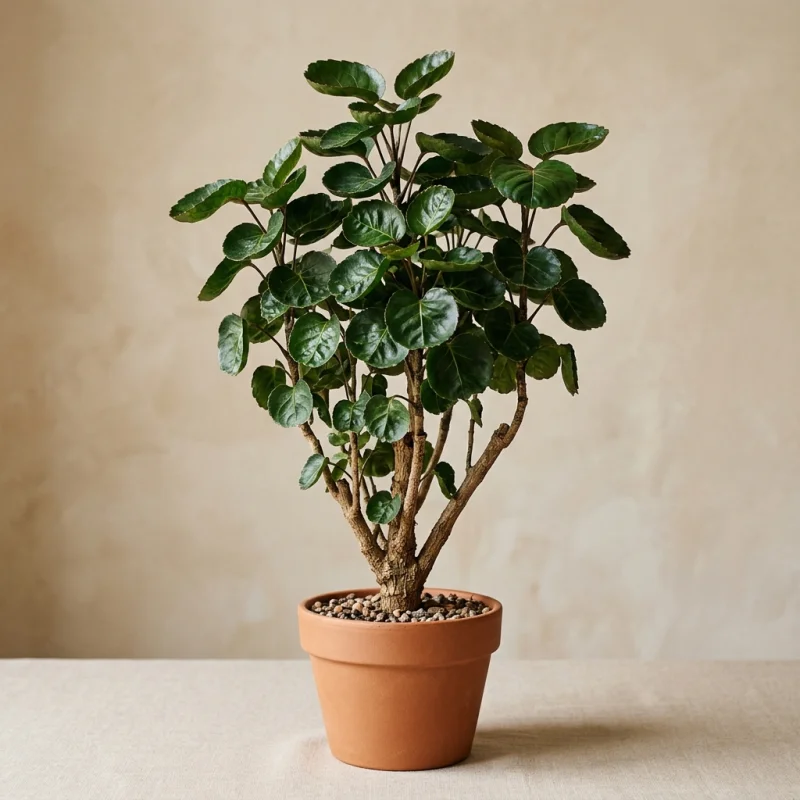
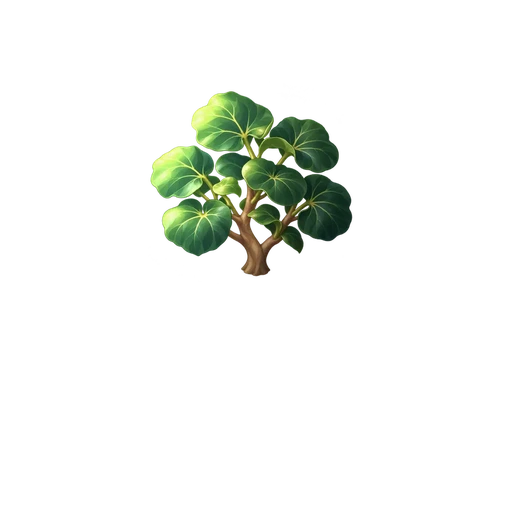
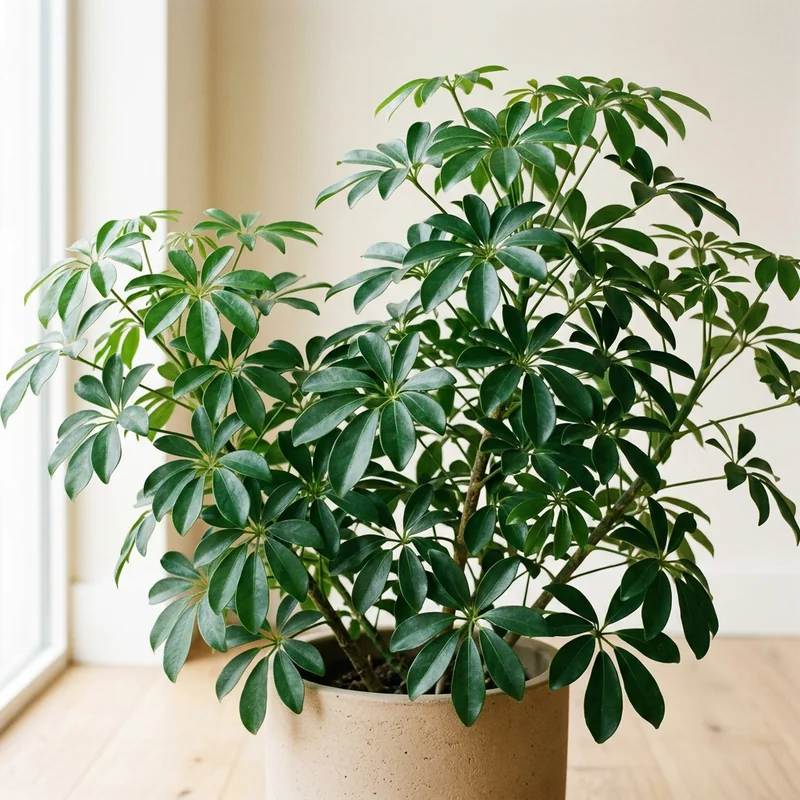
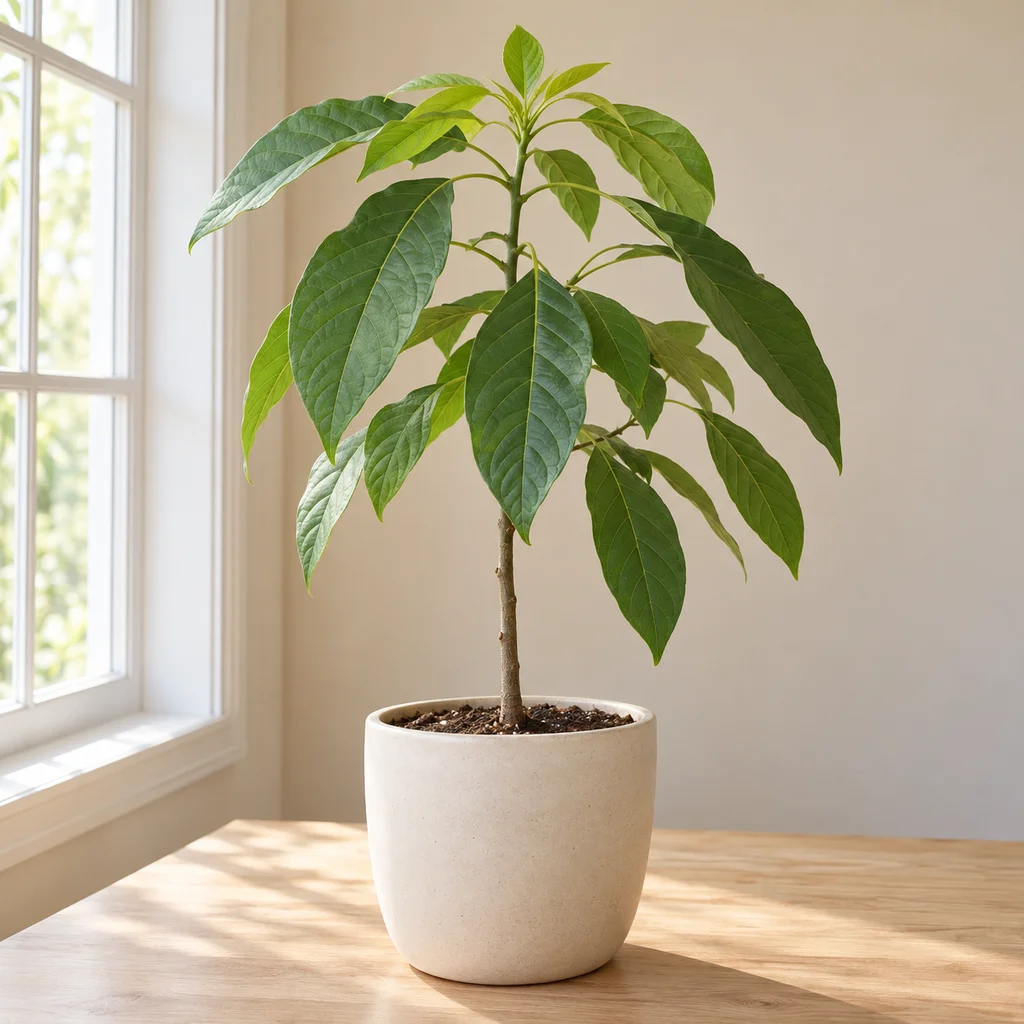
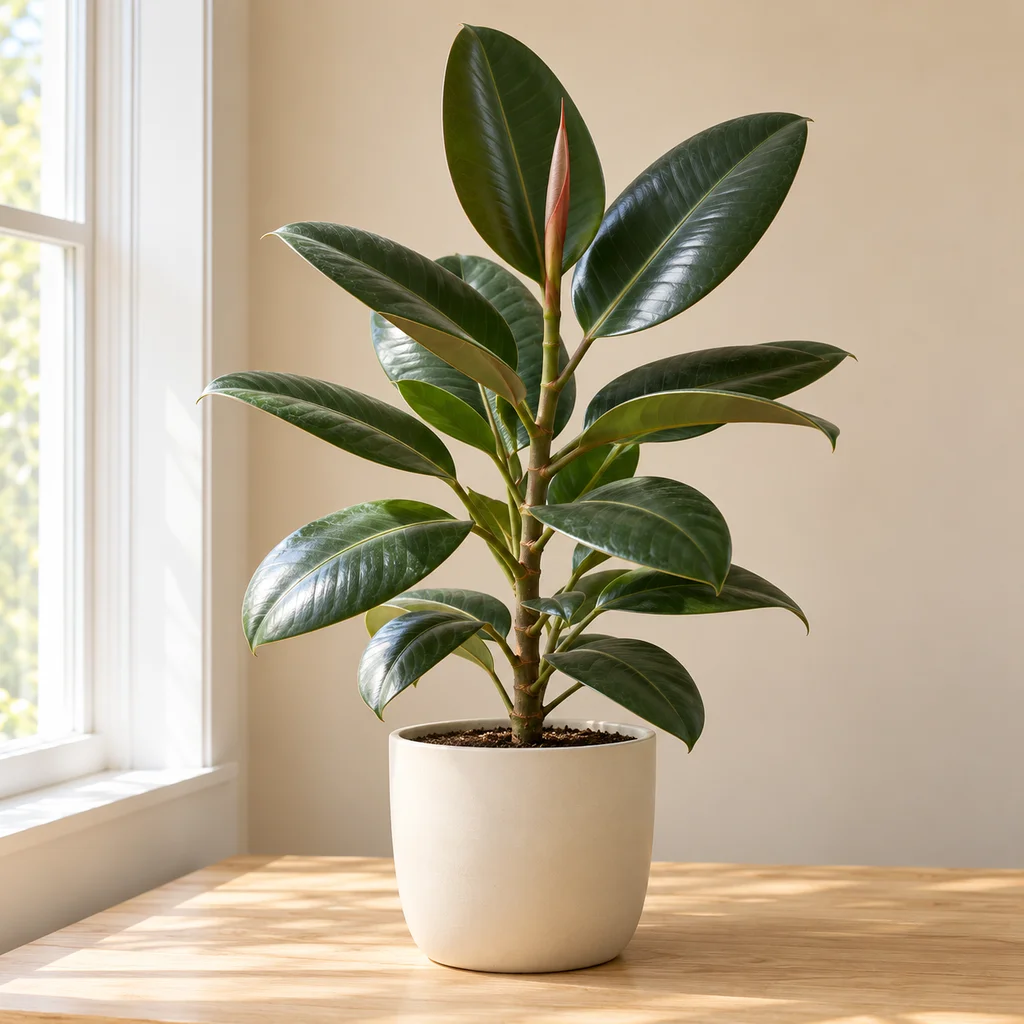
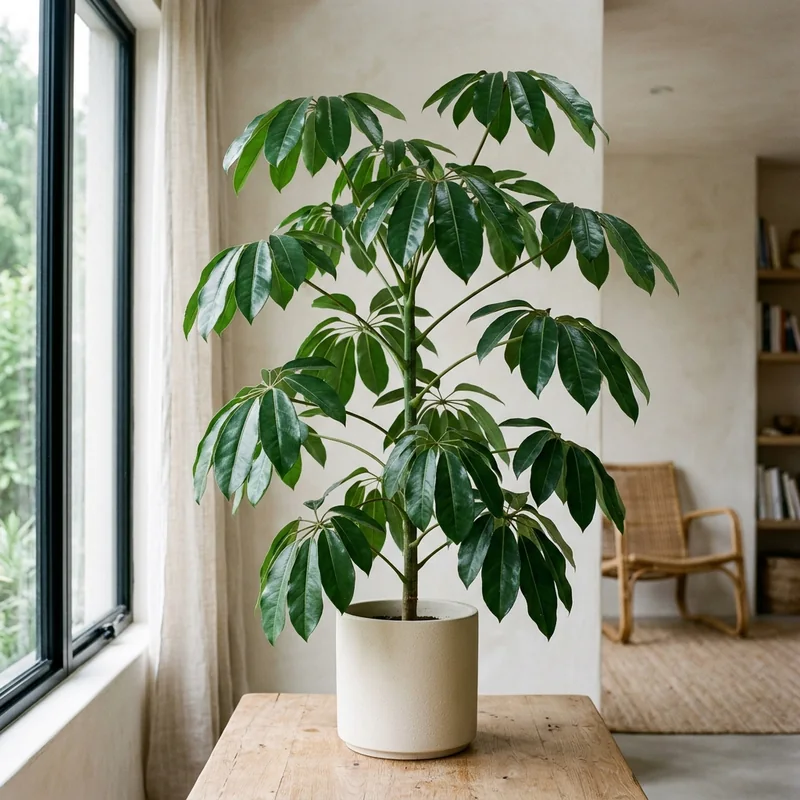
Bold architectural houseplant bearing glossy, drooping palmate leaflets arranged like umbrellas. Thrives in bright indirect light, airy soil and moderate watering.
Essential care to help it thrive
Light and placement
Give bright filtered daylight near a sunny window. Medium shade works, though dim corners trigger leggy stems and harsh summer midday sun scorches leaflets.
Climate and season
Prefers steady indoor warmth (15–26 °C), safely above 10 °C, with moderate humidity and clean airflow away from cold window drafts or radiator blasts.
Soil and repotting
Plant in a sturdy draining container with a peat-free loam-based potting mix lightened with perlite and fine bark for dependable root aeration.
Conditions vary with pot, season and location. Always check the mix and your plant's response.
Queensland umbrella tree: when to check the soil
Check the upper 3–4 cm every 6–9 days in summer (10–14 days in winter), soaking deeply once dry and draining the saucer promptly so woody roots breathe.
Let Grovia remind you when to check your Queensland umbrella treeSave the plant, get watering reminders and adjust the rhythm as the seasons change. Free on iPhone and Android.
See table by pot size
| Ø | Summer | Winter |
|---|---|---|
| 10 cm | 5–7 days | 10–13 days |
| 15 cm | 6–8 days | 12–17 days |
| 25 cm | 8–11 days | 16–22 days |
How to identify it
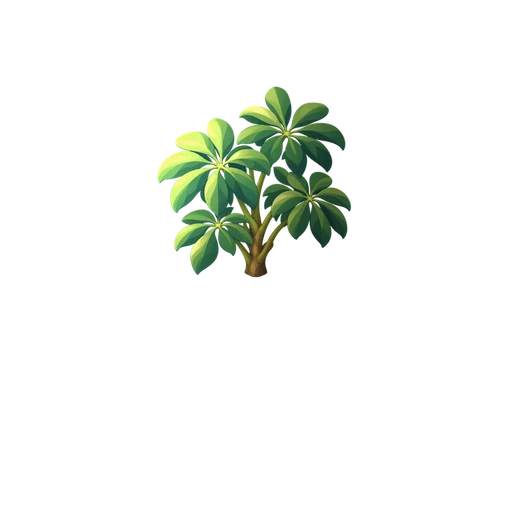
Palmate compound leaves carrying 7 to 12 large glossy leaflets far broader than dwarf H. arboricola. Widely labelled as Schefflera or Brassaia actinophylla.
Botanical sheet
- Family
- Araliaceae
- Origin
- Australia · New Guinea
- Size
- 1.5–4 m indoors
- Climate
- 15–26 °C · min. 10 °C
What's wrong with your plant?
Pet safety Toxic to pets
ASPCA lists this species as toxic to cats and dogs. Keep pets from chewing it; contact a veterinarian if ingestion is suspected.
Toxic principles and clinical signs quoted from the ASPCA database.
See the ASPCA entryCommon questions
How is Queensland umbrella tree different from dwarf schefflera?
Heptapleurum actinophyllum grows much larger, drooping glossy leaflets (often 12–20 cm long) and taller upright trunks than compact bushy H. arboricola.
Can I prune a tall umbrella tree indoors?
Yes, cut overgrown stems cleanly just above a leaf node in spring to keep size in check and encourage denser branching.
Is Heptapleurum actinophyllum toxic to dogs and cats?
Yes. ASPCA lists Brassaia actinophylla as toxic to dogs and cats due to insoluble oxalates, saponins and terpenoids.