Plants
Chinese hibiscus care: light, water & problems
Scientific name: Hibiscus rosa-sinensis · Common name: Chinese hibiscus
Chinese hibiscus: full direct sun. Generous watering during warm blooming periods, keeping soil evenly moist with free drainage.
Editorial revision:
Care at a glance
Light
Full direct sun. Requires at least 4 to 6 hours of direct daily sunlight to produce abundant, continuous exotic blossoms.
Watering
Generous watering during warm blooming periods, keeping soil evenly moist with free drainage; scale back watering in winter.
Conditions vary with pot, season and location. Always check the mix and your plant's response.
How to identify it
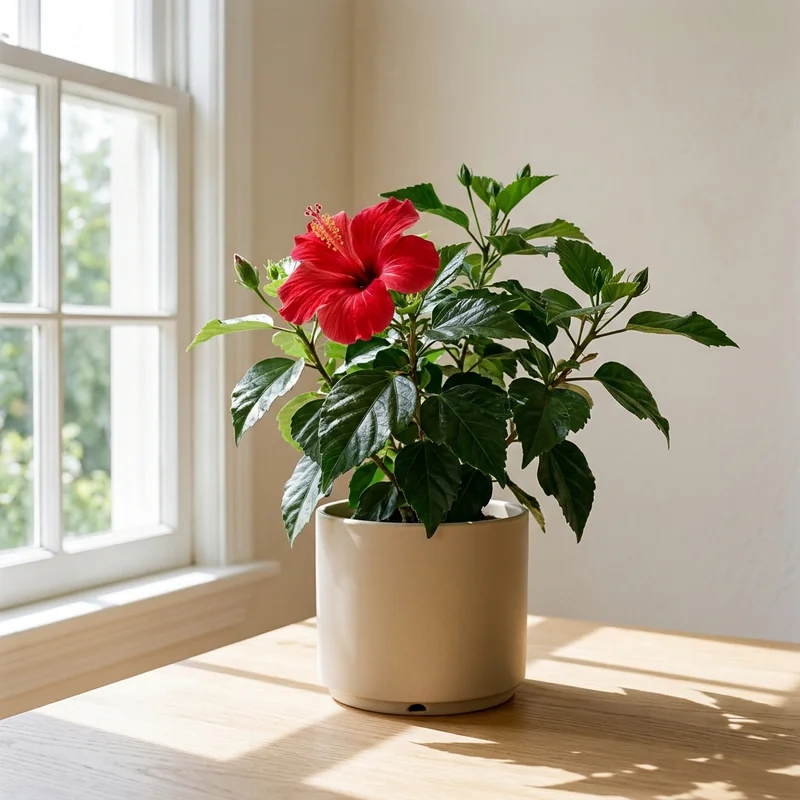
Tropical shrub with glossy serrated dark green leaves and spectacular flared trumpet flowers featuring a prominent protruding staminal column.
Environment and placement
Warm, tropical conditions (18-28 °C / 65-82 °F). Frost-tender; must be moved indoors to a sunny spot when temperatures fall below 10 °C (50 °F).
Your living Chinese hibiscus in your pocket
In the Grovia mobile app, every species comes with an interactive 3D digital twin that thrives as you care for it. Track waterings, get smart light alerts, and watch your plant grow in your pocket garden.
Potting mix and feeding
Keep drainage open and observe how long this particular pot takes to dry.
There is no universal feeding dose: fertilise only during healthy growth, following the label and a confirmed identification.
Problems to check
Unopened flower bud drop caused by fluctuating temperatures, erratic watering, or low light; spider mites under dry air.
Specialized diagnostic guide
How to assess yellow leaves
Common question
Why do hibiscus flower buds drop before opening?
Bud drop is usually caused by insufficient direct sunlight, temperature swings, cold drafts, or allowing the soil to dry out excessively.
Botanical source
Related species
 🐾 Pet safe