Madonna lily
Lilium candidumUpdated
Hardy Mediterranean bulb bearing fragrant, spotless white blooms. Needs very shallow planting, sharp drainage and strict separation from cats.
Essential care to help it thrive
Light and placement
Give full sun or bright airy outdoor exposure; flowers thrive in sunny warmth while the shallow crown prefers a cool, well-drained base.
Climate and season
Frost-hardy to -15 °C in open beds. Extremely toxic and fatal to cats (acute kidney failure per ASPCA); keep all parts and pollen away from cats.
Soil and repotting
Free-draining neutral to alkaline loam enriched with leaf mould and coarse grit; plant bulbs very shallowly with only 2–3 cm of cover.
Conditions vary with pot, season and location. Always check the mix and your plant's response.
Madonna lily: when to check the soil
Plant in sharp, well-drained soil. Shallow-planted bulbs tolerate drier spells once established, but waterlogged ground quickly rots bulb scales.
This plant is not watered in a pot
Its watering routine does not fit a soil-check interval: follow the care sheet.
Let Grovia remind you when to check your Madonna lilySave the plant, get watering reminders and adjust the rhythm as the seasons change. Free on iPhone and Android.
How to identify it
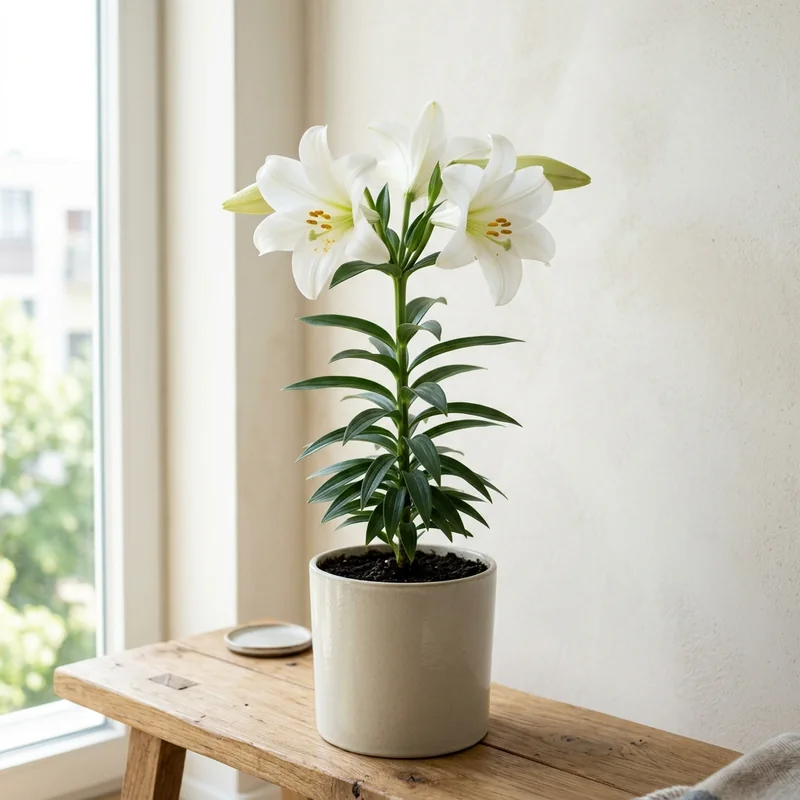
Erect leafy stems carry fragrant, spotless pure white trumpet flowers. Unlike most lilies, it grows an overwintering basal leaf rosette in autumn.
Botanical sheet
- Family
- Liliaceae
- Origin
- S Europe · SW Asia
- Size
- 1–1.5 m upright
- Climate
- 10–24 °C · min. -15 °C
What's wrong with your plant?
Pet safety Toxic to pets
ASPCA lists this species as toxic to cats and dogs. Keep pets from chewing it; contact a veterinarian if ingestion is suspected.
Toxic principles and clinical signs quoted from the ASPCA database.
See the ASPCA entryCommon questions
How deep should Madonna lily bulbs be planted?
Very shallowly, with just 2–3 cm of drained soil above the bulb tip so its autumn basal rosette can emerge cleanly.
Are Madonna lilies fatal to cats?
Yes. ASPCA warns all Lilium species, including pollen and vase water, cause acute kidney failure in cats; never keep them within a cat's reach.
Why do leaves sprout at the base in autumn?
It is normal: after a brief summer rest it forms an overwintering basal rosette that fuels next summer's flowering stem.