Plants
Red Emerald philodendron care: light, water & problems
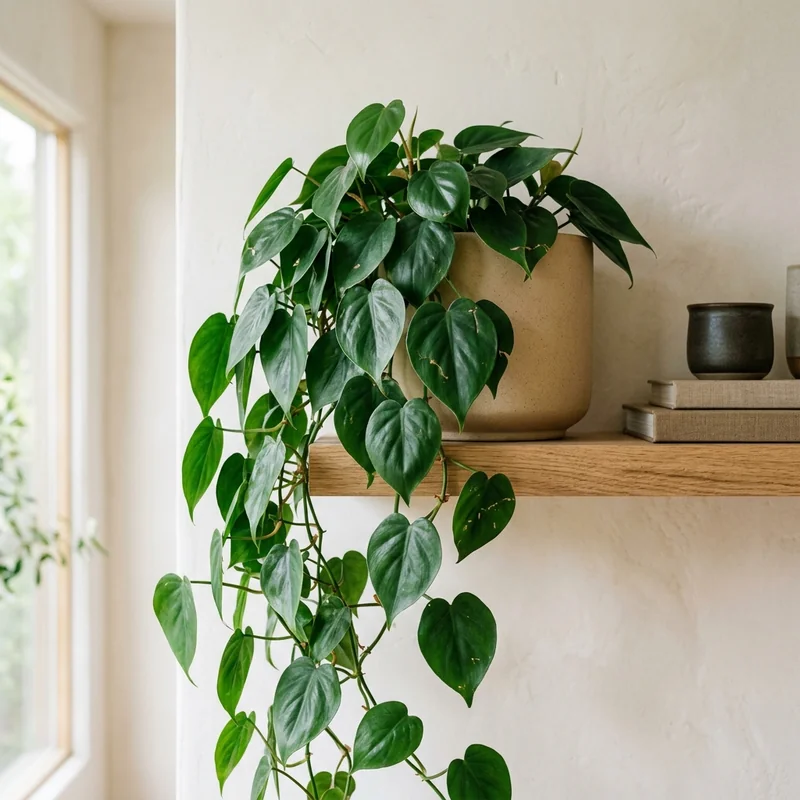
Scientific name: Philodendron erubescens · Common name: Red Emerald philodendron
Red Emerald philodendron care: bright indirect light, watering when top half dries and moss pole climbing. Botanical sources.
Editorial revision:
Care at a glance
Light
Bright indirect light or gentle morning sun. Generous filtered light keeps foliage dense and intensifies red stem coloration.
Watering
Water thoroughly once the top half of the potting mix feels dry; ensure pot has drainage holes to prevent soggy roots.
Conditions vary with pot, season and location. Always check the mix and your plant's response.
How to identify it
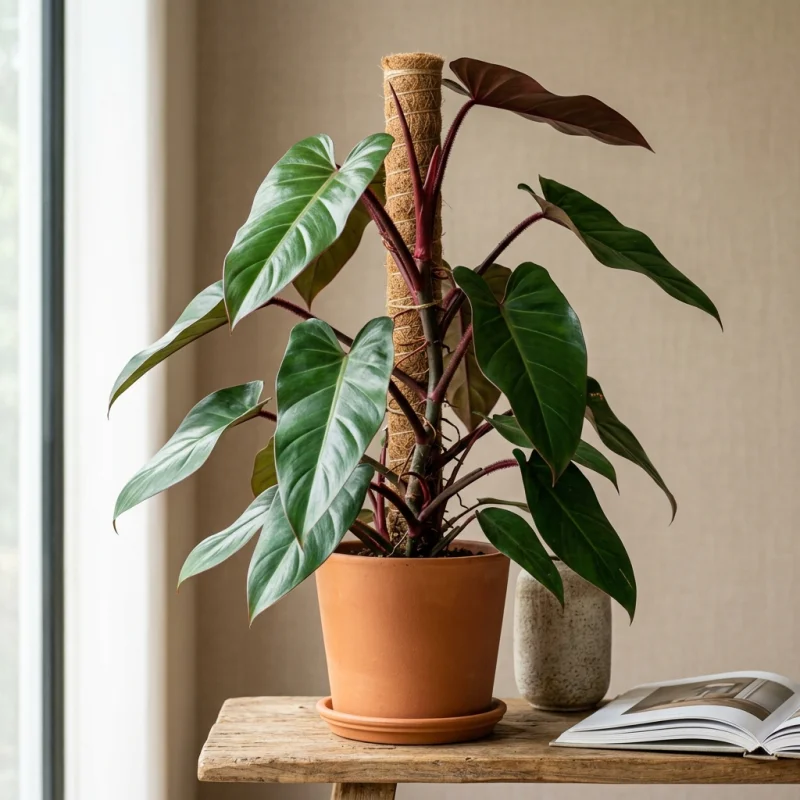
Vigorous climbing aroid with glossy dark-green arrowhead leaves, distinguished by rich burgundy-red stems and coppery new shoots.
Environment and placement
Warm room conditions (18-25 °C / 65-77 °F) with average to high humidity. Thrives on a moss or coco-coir totem pole.
Your living Red Emerald philodendron in your pocket
In the Grovia mobile app, every species comes with an interactive 3D digital twin that thrives as you care for it. Track waterings, get smart light alerts, and watch your plant grow in your pocket garden.
Potting mix and feeding
Use an airy, draining mix and a pot with drainage holes. Match pot size to the root ball so excess mix does not remain wet.
Feed only during active growth and follow the product label. Correct damaged roots or poor light before fertilising.
Problems to check
Yellowing foliage caused by waterlogged potting mix; leggy stems and small leaves when kept in dim spots.
Specialized diagnostic guide
How to assess yellow leaves
Cats and dogs
ASPCA lists this species as toxic to cats and dogs. Keep pets from chewing it; contact a veterinarian if ingestion is suspected.
ASPCACommon question
How do I get larger leaves on my Red Emerald?
Train the climbing stems onto a moist moss pole so aerial roots can anchor, and provide ample bright indirect sunlight.
Botanical source
Related species