Plants
Bird of paradise (Crane flower) care: light, water & problems
Scientific name: Strelitzia reginae · Common name: Bird of paradise (Crane flower)
Bird of paradise care: daily direct sun, deep summer watering and natural wind tears in paddle leaves. Botanical sources.
Editorial revision:
Care at a glance
Light
Direct sunlight to very bright indirect light. Requires 4-6 hours of direct sun daily to produce its signature crane-like flowers.
Watering
Water thoroughly during spring and summer once the top half of the potting soil dries out; reduce significantly in winter.
Conditions vary with pot, season and location. Always check the mix and your plant's response.
How to identify it
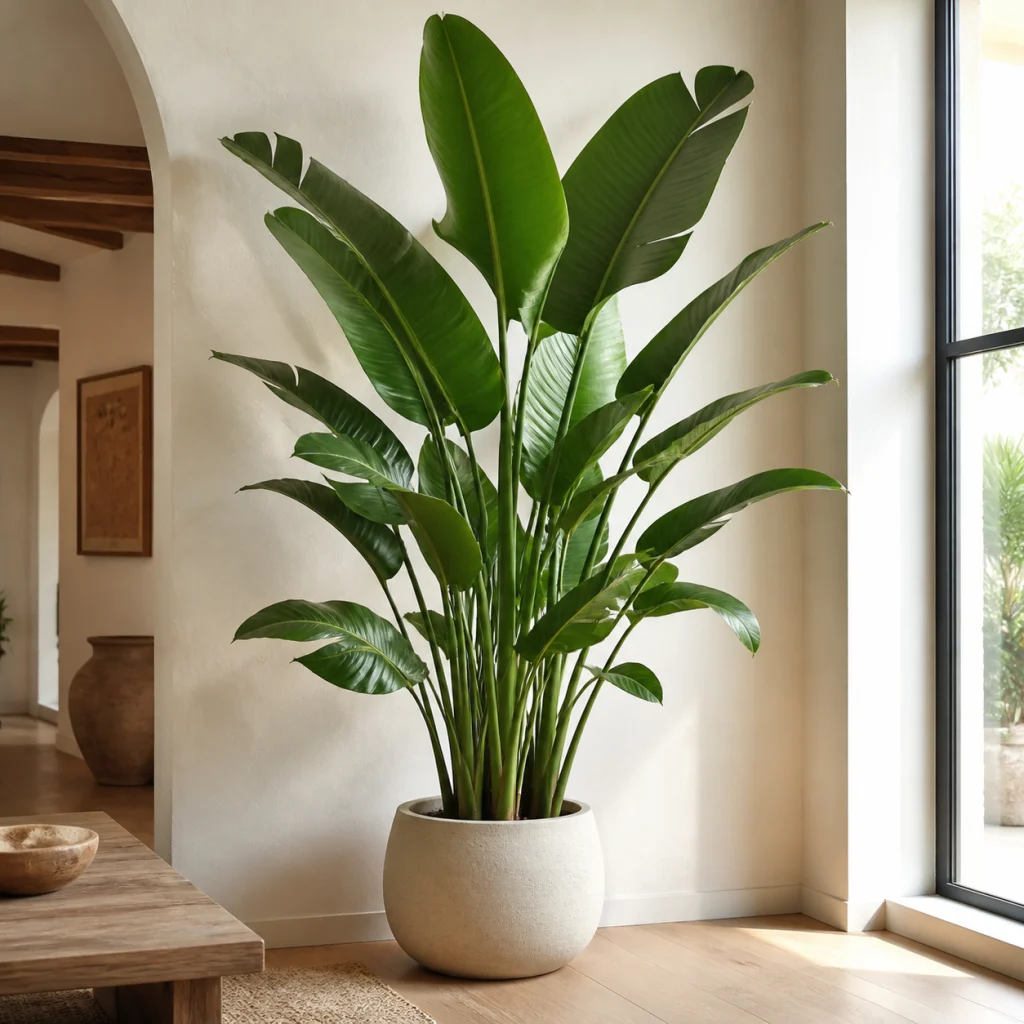
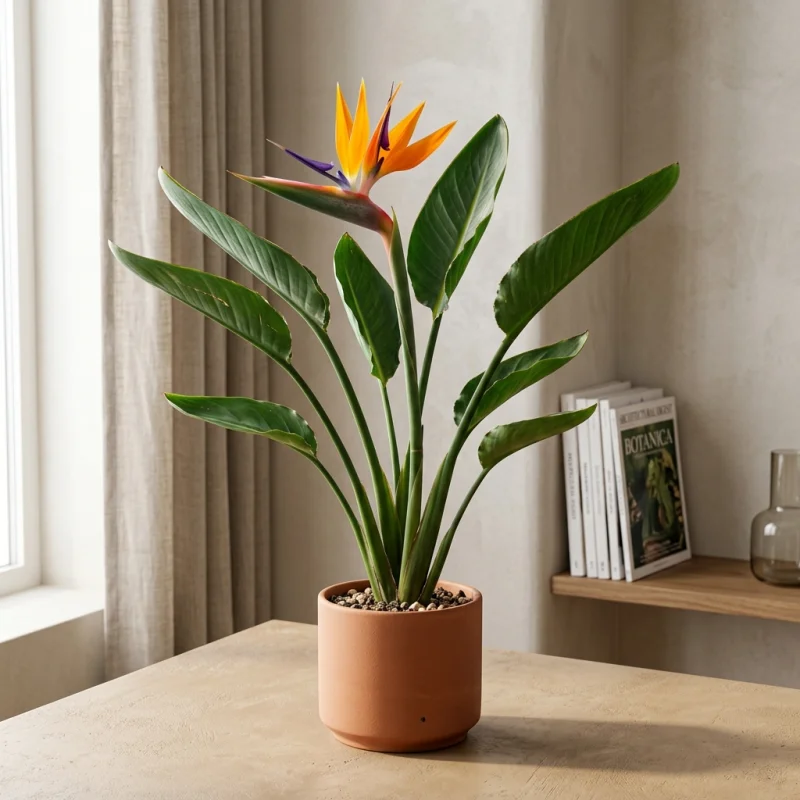
Architectural clump-forming perennial bearing stiff, paddle-shaped blue-green leaves and magnificent bird-like orange and electric blue blossoms.
Environment and placement
Warm, well-ventilated spot (15-28 °C / 60-82 °F). Requires a sturdy, deep planter to accommodate its thick fleshy taproots.
Your living Bird of paradise (Crane flower) in your pocket
In the Grovia mobile app, every species comes with an interactive 3D digital twin that thrives as you care for it. Track waterings, get smart light alerts, and watch your plant grow in your pocket garden.
Potting mix and feeding
Use a draining mix that retains some moisture, matched to pot size and the drying rate in your home.
During active growth, follow a suitable feed label. First check light, water and roots if the plant is declining.
Problems to check
Natural leaf splitting from breezes or handling; failure to flower in dim light; scale insects on sturdy leaf stems.
Specialized diagnostic guide
How to assess brown tips and edges
Cats and dogs
ASPCA lists this species as toxic to cats and dogs. Keep pets from chewing it; contact a veterinarian if ingestion is suspected.
ASPCACommon question
Why do the leaves split down the middle?
Leaf tears are an evolutionary adaptation allowing strong winds to pass through without snapping the plant; it is completely healthy.
Botanical source
Related species