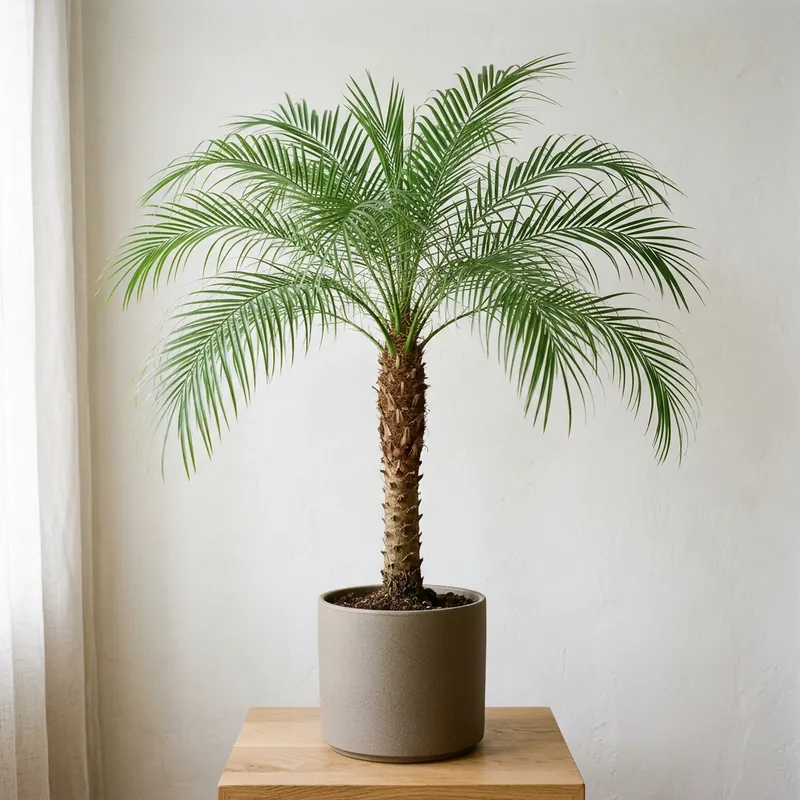
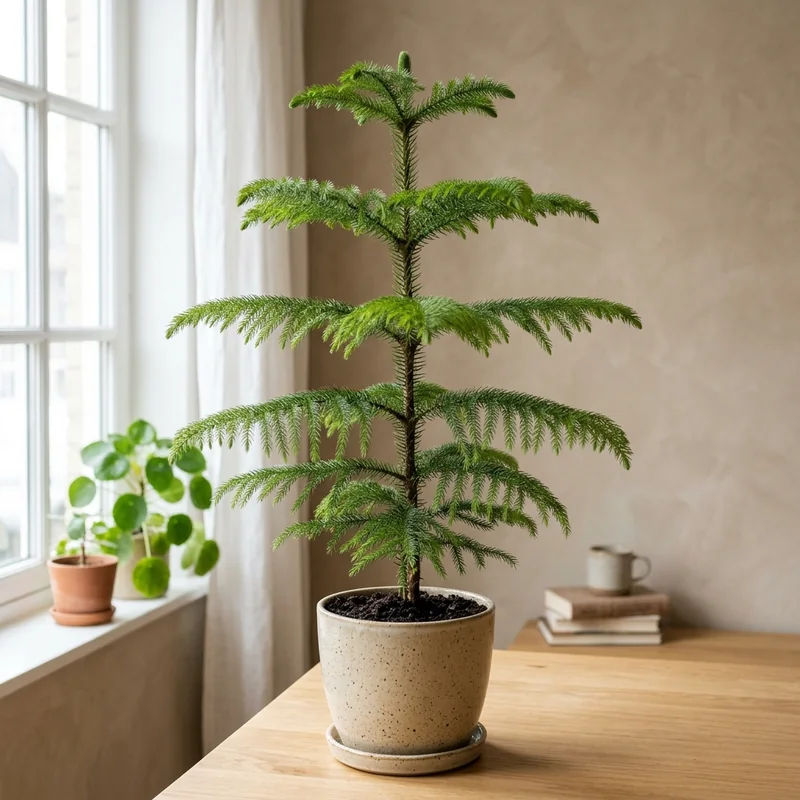
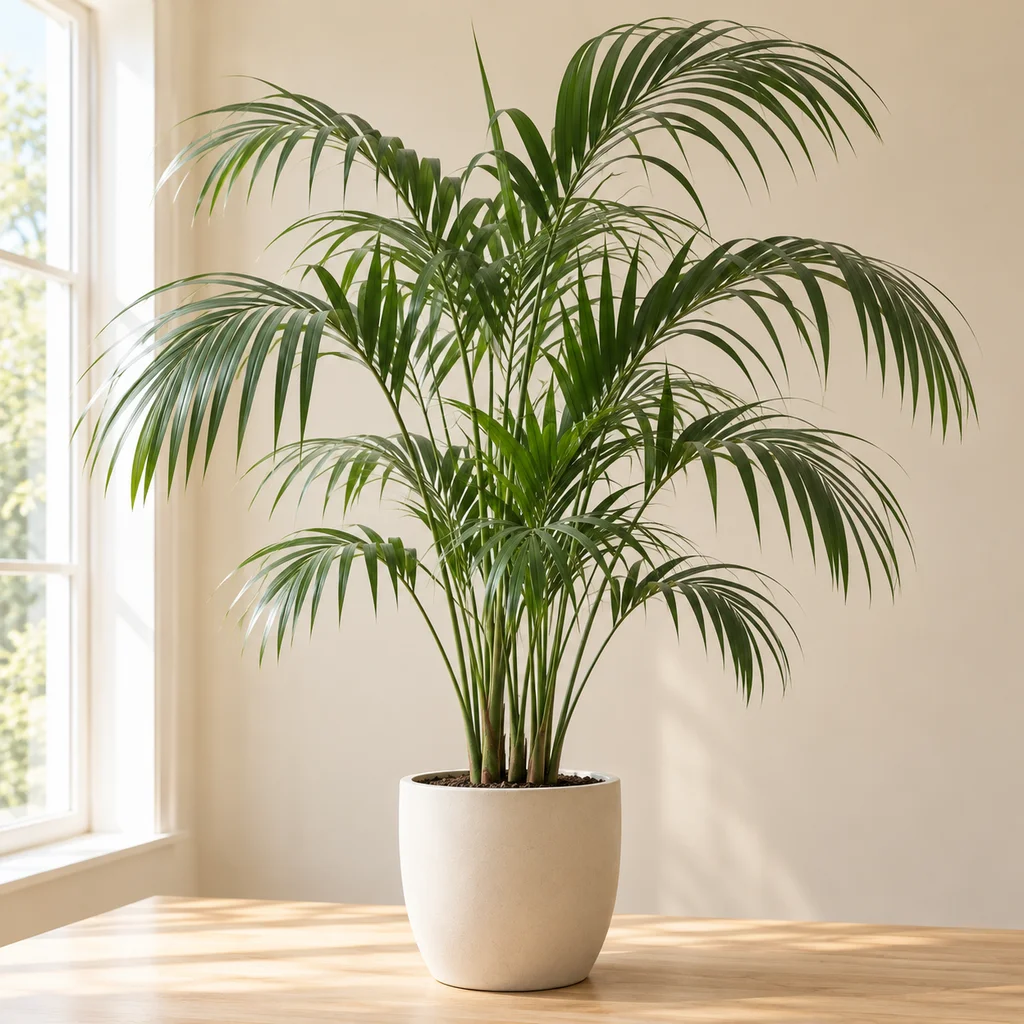
Kentia palm
Howea forsterianaUpdated
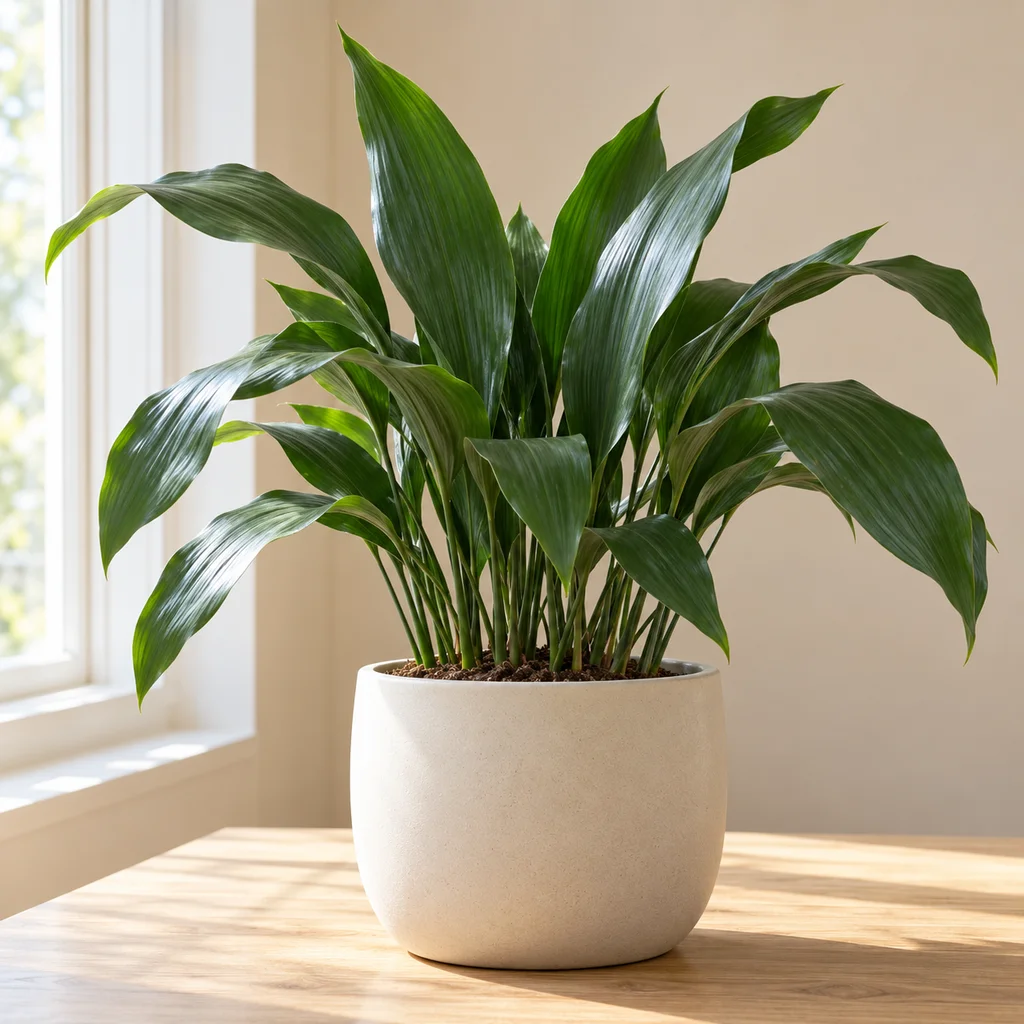
Graceful, long-lived indoor palm tolerant of medium room light. Thrives on stable warmth, airy drainage and undisturbed roots.
Essential care to help it thrive
Light and placement
Give indirect light, avoiding harsh sun that can scorch fronds.
Climate and season
It prefers a stable position with room for fronds; avoid radiators and draughts.
Soil and repotting
Use an airy palm compost blended with 20% perlite and coarse sand in a deep draining pot; repot gently without teasing sensitive roots.
Conditions vary with pot, season and location. Always check the mix and your plant's response.
Kentia palm: when to check the soil
Check mix moisture and let it drain; do not leave the pot base submerged.
Let Grovia remind you when to check your Kentia palmSave the plant, get watering reminders and adjust the rhythm as the seasons change. Free on iPhone and Android.
See table by pot size
| Ø | Summer | Winter |
|---|---|---|
| 10 cm | 5–7 days | 10–13 days |
| 15 cm | 6–8 days | 12–17 days |
| 25 cm | 8–11 days | 16–22 days |
How to identify it
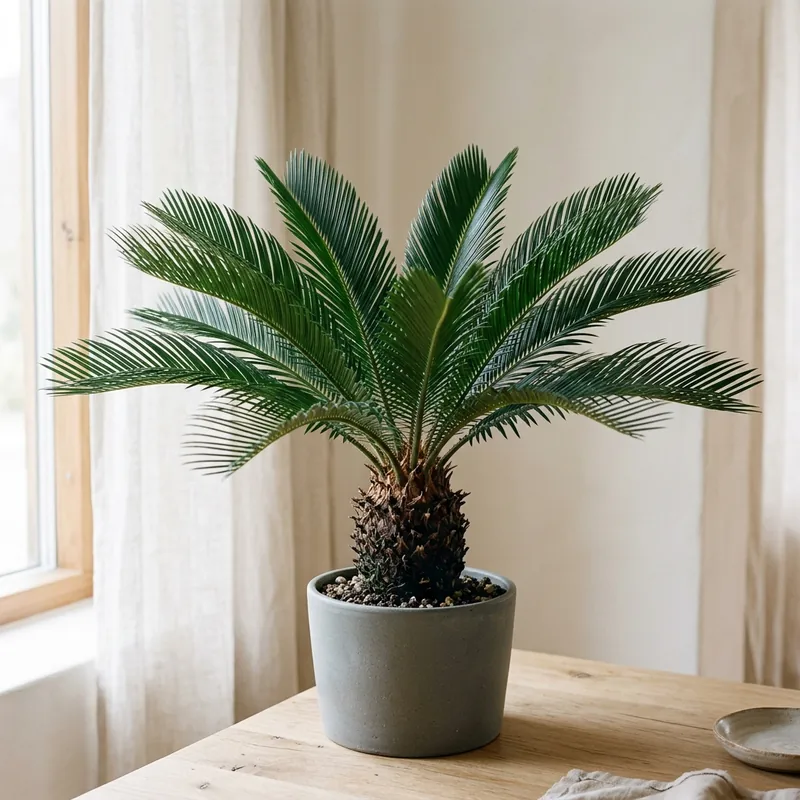
A palm with arching fronds and long leaflets; it grows slowly indoors.
Botanical sheet
- Family
- Arecaceae
- Origin
- Lord Howe Island (Australia)
- Size
- 1.5–3 m indoors
- Climate
- 16–24 °C · min. 10 °C
What's wrong with your plant?
Pet safety Pet-friendly
ASPCA lists this species as non-toxic to cats and dogs. Even so, prevent heavy chewing or ingestion of potting mix or fertiliser.
See the ASPCA entryCommon questions
Is it a coconut palm?
No. Howea forsteriana and Cocos nucifera are distinct palms with different needs.
How often should you repot a kentia palm?
Only every 2–3 years in spring when roots fill the pot, keeping the root ball intact.
Why do indoor kentia palms get spider mites in winter?
Heated dry rooms encourage mites—keep away from radiators and wipe fronds clean periodically.