African Lily (Agapanthus africanus)
Agapanthus africanusUpdated
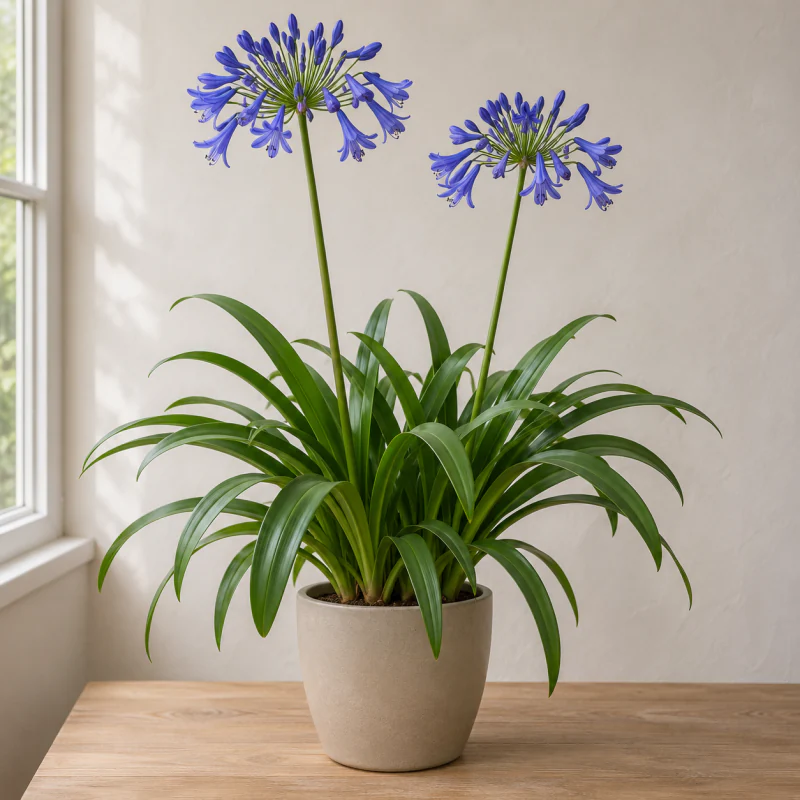
Bold South African perennial raising globes of deep cobalt-blue trumpet blooms above strap foliage in summer. Flowers best pot-bound in full sun.
Essential care to help it thrive
Light and placement
Position in open full sun outdoors to maximize flower stems and stiff upright stalks; shady corners produce lush leaf fans with very few summer umbels.
Climate and season
Thrives between 10 and 28 °C outdoors and tolerates frosts to -5 °C when kept dry; move containers into a bright frost-free porch during severe freezes.
Soil and repotting
Pot snugly into heavy containers with free-draining loam-based compost opened up with coarse horticultural grit.
Conditions vary with pot, season and location. Always check the mix and your plant's response.
African Lily (Agapanthus africanus): when to check the soil
Water steadily whenever the upper compost dries from spring through flowering, then cut sharply in winter so thick fleshy roots rest without soggy rot.
Let Grovia remind you when to check your African Lily (Agapanthus africanus)Save the plant, get watering reminders and adjust the rhythm as the seasons change. Free on iPhone and Android.
See table by pot size
| Ø | Summer | Winter |
|---|---|---|
| 10 cm | 4–5 days | 7–10 days |
| 15 cm | 5–6 days | 9–13 days |
| 25 cm | 6–9 days | 12–17 days |
How to identify it
Clumping evergreen perennial with fleshy roots, glossy strap leaves, and tall spherical deep-blue flower umbels; formerly Agapanthus umbellatus.
Botanical sheet
- Family
- Amaryllidaceae
- Origin
- South Africa (Western Cape)
- Size
- 50–80 cm flower stems
- Climate
- 10–28 °C · min -5 °C
What's wrong with your plant?
Pet safety Toxicity unverified
There is no species-specific toxicity verification for this plant on ASPCA. Check with your veterinarian or search the ASPCA directory before keeping it within reach of pets.
Open the toxicity checkerCommon questions
Why does Agapanthus bloom better when slightly root-bound in a pot?
Snug container walls curb endless root expansion and trigger flowering hormone shifts; divide clumps or move up one pot size only every three to five years.
Should African Lily foliage be cut down cleanly before winter frosts?
Leave evergreen leaves intact over winter to insulate the crown against cold snaps, trimming away only yellowed dead outer blades in early spring.
Which fertilizer encourages more blue flower spikes in summer?
Feed liquid tomato-type high-potash fertilizer from early spring until flower buds open, then stop once blooms finish so growth firms before cold weather.