Oleander
Nerium oleanderUpdated
Sun-loving Mediterranean evergreen shrub prized for narrow grey-green leaves and abundant summer blooms. Needs full sun, well-drained soil and strict safety around pets.
Essential care to help it thrive
Light and placement
Give full direct sunlight for as many hours daily as possible on a sunny patio or bright conservatory. Partial shade sharply reduces flower buds and weakens stems.
Climate and season
Thrives in hot airy conditions (10–32 °C) and brief frost to -5 °C when dry, though potted shrubs do best overwintered indoors in a bright cool room.
Soil and repotting
Choose a heavy draining tub with loam-based peat-free potting mix lightened with coarse sand or grit so water drains quickly after summer soaking.
Conditions vary with pot, season and location. Always check the mix and your plant's response.
Oleander: when to check the soil
Check the top 3–5 cm every 4–7 days in hot summer weather and water deeply; cut back to every 10–14 days in cool bright winter so wet roots never chill.
Let Grovia remind you when to check your OleanderSave the plant, get watering reminders and adjust the rhythm as the seasons change. Free on iPhone and Android.
See table by pot size
| Ø | Summer | Winter |
|---|---|---|
| 10 cm | 4–5 days | 7–10 days |
| 15 cm | 5–6 days | 9–13 days |
| 25 cm | 6–9 days | 12–17 days |
How to identify it
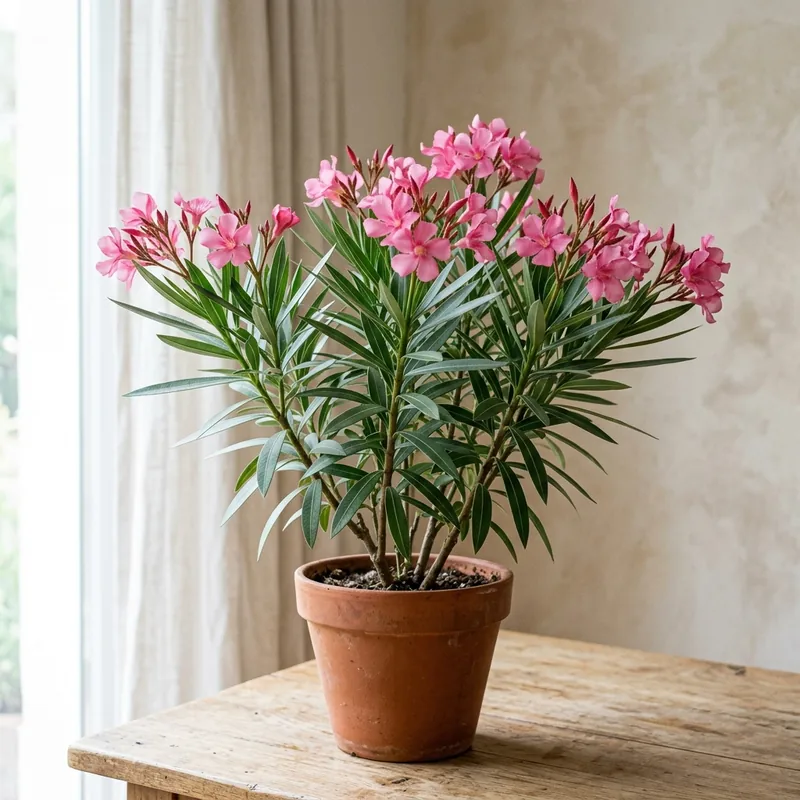
Narrow leathery grey-green leaves in whorls of three and clusters of 5-petaled pink, white or red flowers. Distinct from culinary bay laurel (Laurus nobilis).
Botanical sheet
- Family
- Apocynaceae
- Origin
- Mediterranean · Western Asia
- Size
- 1.5–2.5 m shrub
- Climate
- 10–32 °C · min. -5 °C
What's wrong with your plant?
Pet safety Toxic to pets
ASPCA lists this species as toxic to cats and dogs. Keep pets from chewing it; contact a veterinarian if ingestion is suspected.
See the ASPCA entryCommon questions
Why should I wear gloves when pruning Nerium oleander?
Every stem, leaf and flower holds potent cardiac glycosides, sap can irritate skin, and RHS cautions that even smoke from burned prunings is toxic.
How do I avoid confusing oleander with bay laurel?
Oleander has narrow matte leaves arranged in whorls of three and showy pink or white blooms, unlike wide wavy aromatic bay laurel leaves.
Is oleander fatal if chewed by cats or dogs?
Yes. ASPCA rates Nerium oleander as severely toxic and potentially fatal to dogs, cats and horses, so keep pets well away.