Zebra plant (Aphelandra squarrosa)
Aphelandra squarrosaUpdated
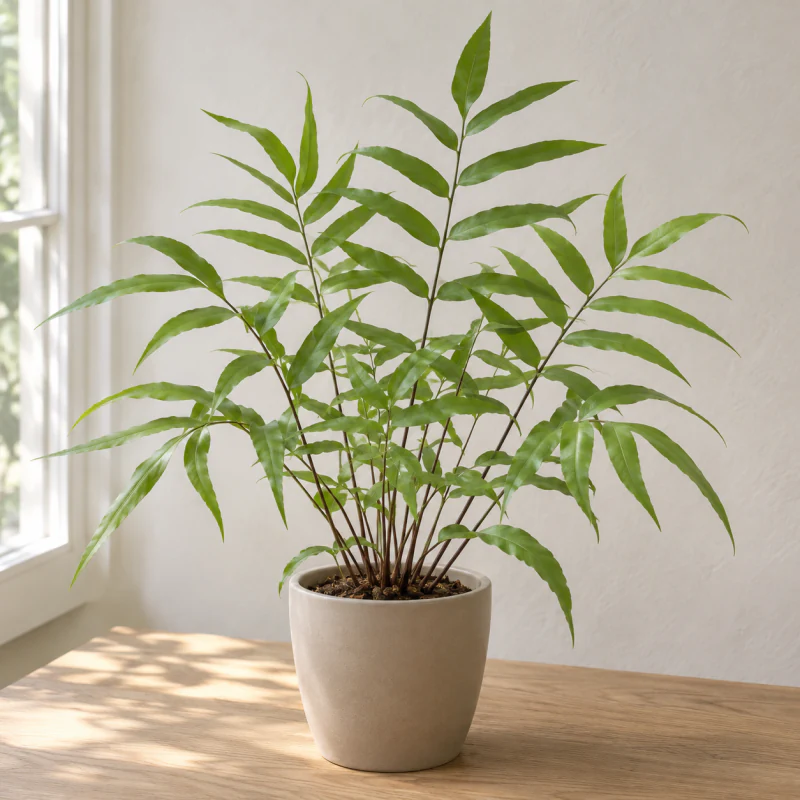
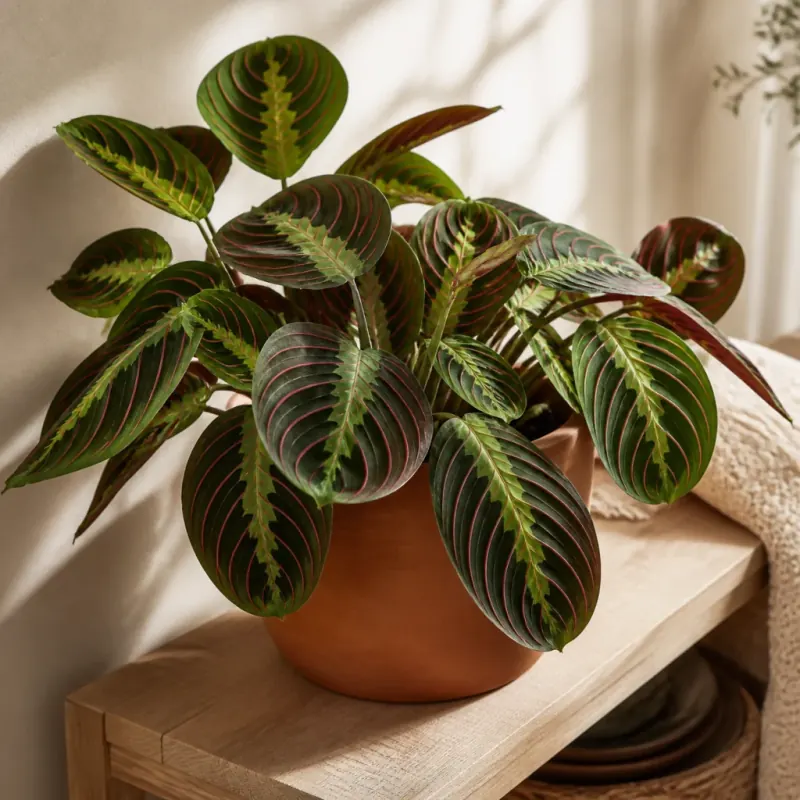
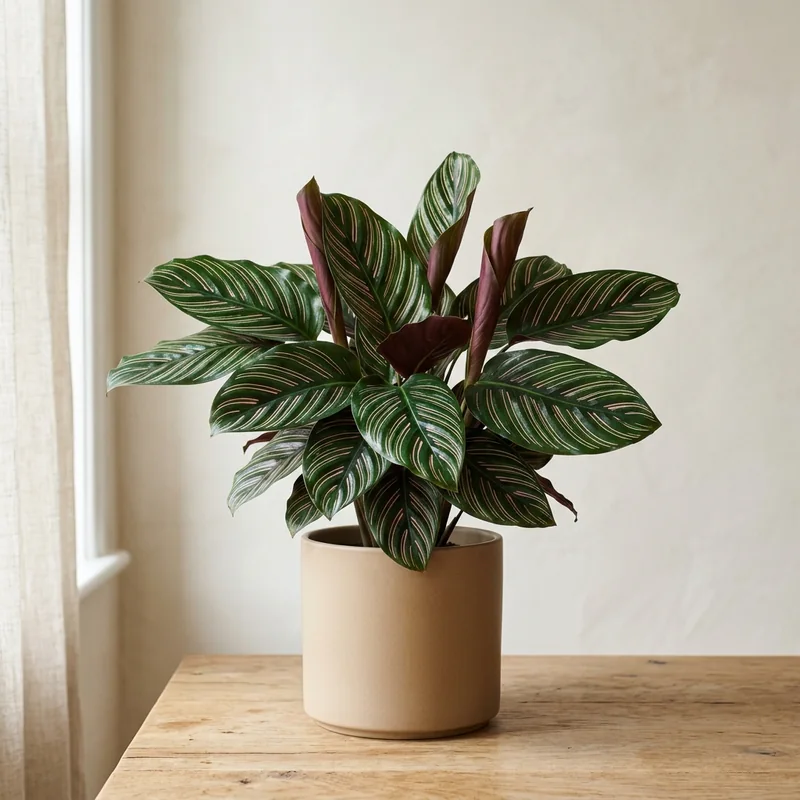
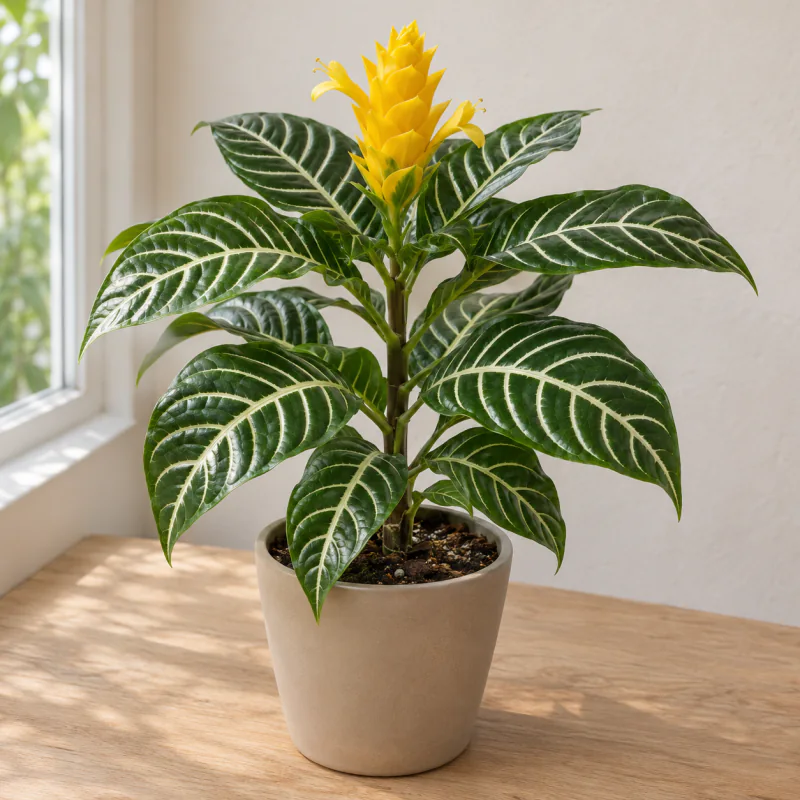
Pet-safe Brazilian shrub (ASPCA) flaunting glossy deep-green leaves etched in bold white zebra veins and bright saffron flower spikes. Needs even dampness.
Essential care to help it thrive
Light and placement
Give bright indirect window light shielded from harsh sunbeams to preserve sharp ivory striping and support autumn flower spikes; deep shade drops lower leaves.
Climate and season
Thrives at 18–26 °C (frost-free minimum 10 °C per RHS) paired with 55–70% ambient humidity away from cold drafts and dry heater air.
Soil and repotting
Drained pot filled with rich airy peat-free mix of coco coir, fine composted bark, and perlite.
Conditions vary with pot, season and location. Always check the mix and your plant's response.
Zebra plant (Aphelandra squarrosa): when to check the soil
Check surface compost frequently and apply soft rainwater before pots dry out, letting saucers drain cleanly so roots never swing between bone-dry and soggy.
Let Grovia remind you when to check your Zebra plant (Aphelandra squarrosa)Save the plant, get watering reminders and adjust the rhythm as the seasons change. Free on iPhone and Android.
See table by pot size
| Ø | Summer | Winter |
|---|---|---|
| 10 cm | 4–5 days | 7–10 days |
| 15 cm | 5–6 days | 9–13 days |
| 25 cm | 6–9 days | 12–17 days |
How to identify it
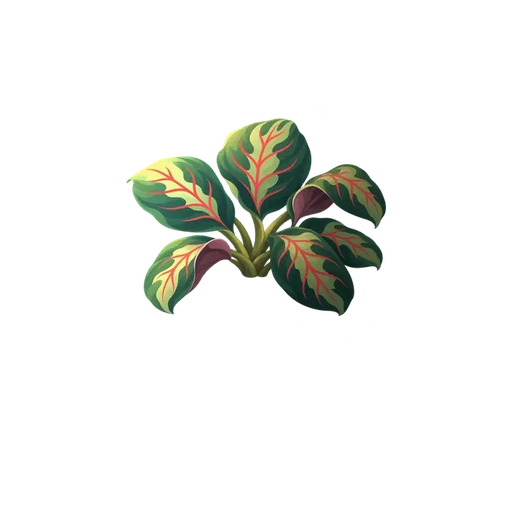
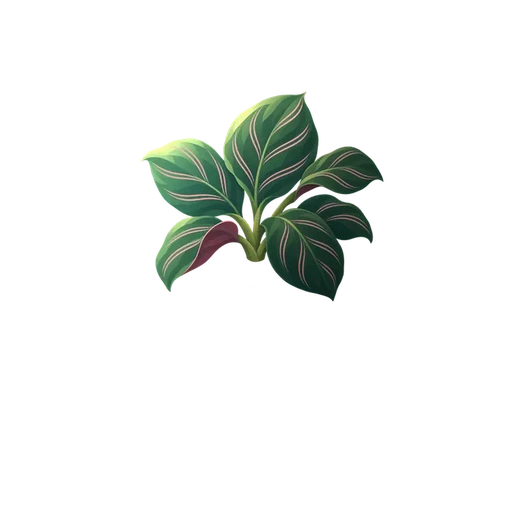
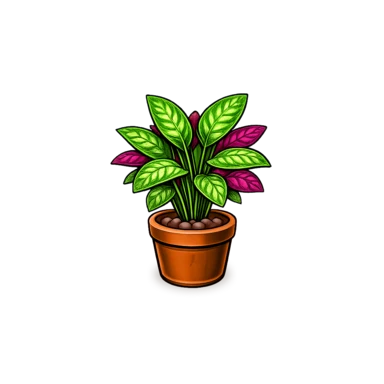
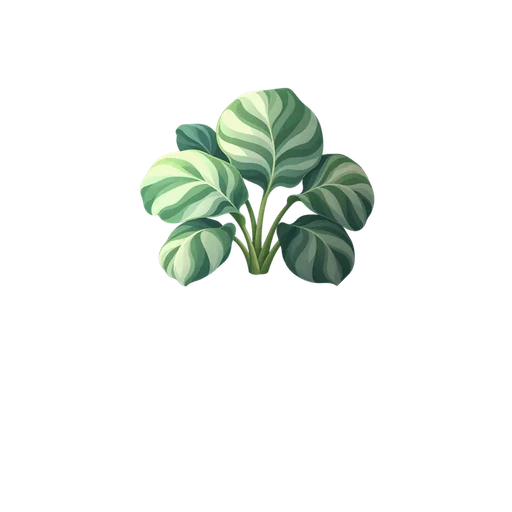
Stout upright shrub with large shiny dark-green elliptic blades boldly striped along white main veins and four-sided bright yellow flower spikes.
Botanical sheet
- Family
- Acanthaceae
- Origin
- Eastern and southeastern Brazil
- Size
- 30–60 cm pot (1–1.5 m wide)
- Climate
- 18–26 °C · min 10 °C
What's wrong with your plant?
Pet safety Pet-friendly
ASPCA lists this species as non-toxic to cats and dogs. Even so, prevent heavy chewing or ingestion of potting mix or fertiliser.
See the ASPCA entryCommon questions
Why does Aphelandra squarrosa drop bottom leaves so dramatically indoors?
Zebra plants strongly dislike moisture rollercoasters and dry air: letting roots wilt dry once or exposing stems to cold drafts quickly triggers leaf drop.
What should you do when the bright yellow saffron spike fades?
Snip the spent flower stalk cleanly right above the upper leaves, then lightly pinch tall stems back in spring to encourage compact side branching.
Is Aphelandra zebra plant safe for dogs, cats, and horses?
Yes. ASPCA lists saffron spike zebra (Aphelandra squarrosa) as completely non-toxic to dogs, cats, and horses.