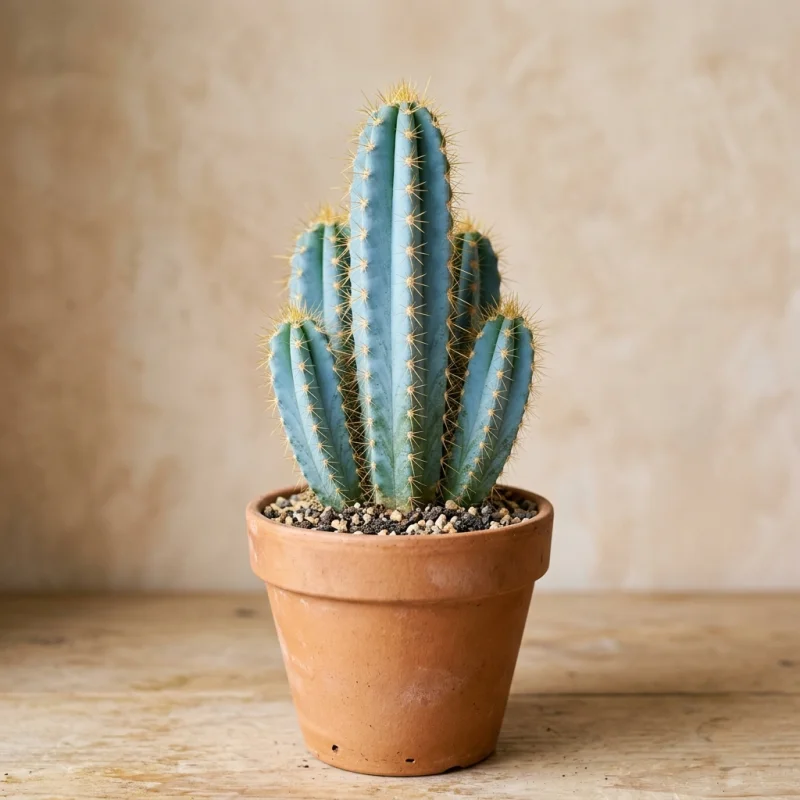
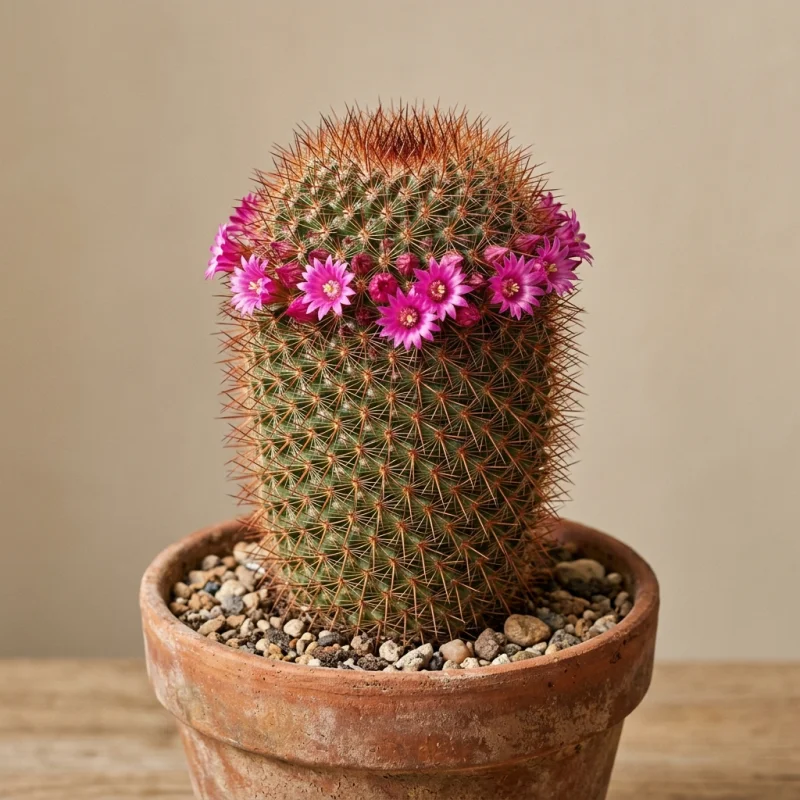
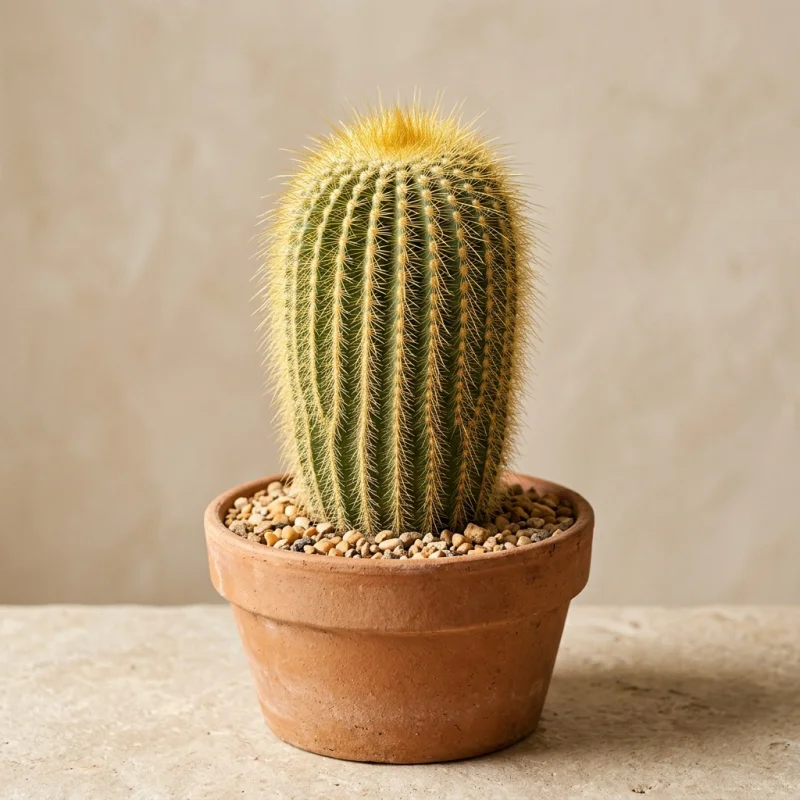
Sand dollar cactus (Astrophytum)
Astrophytum asteriasUpdated
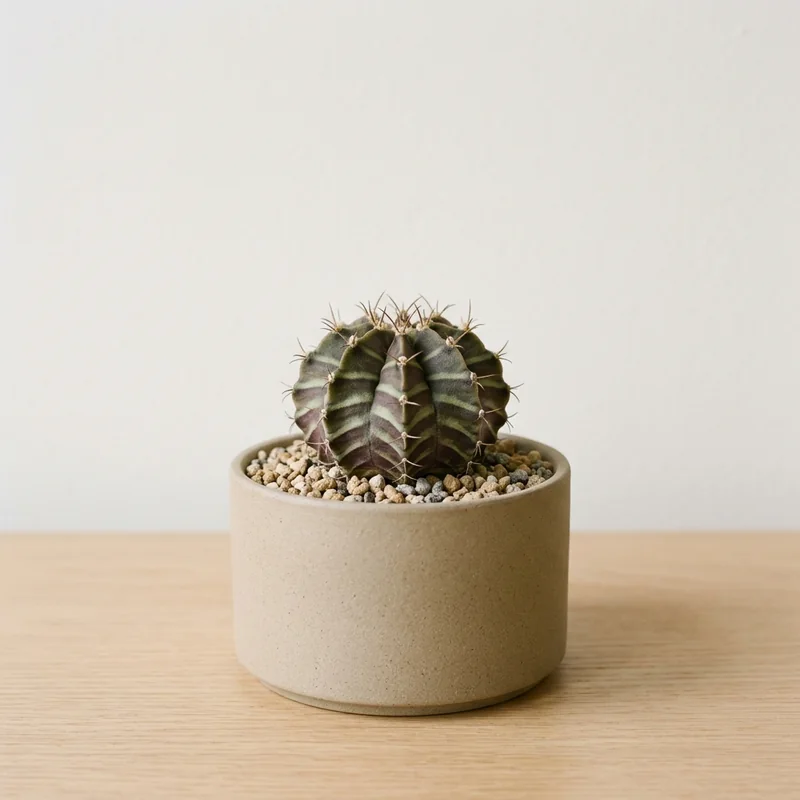
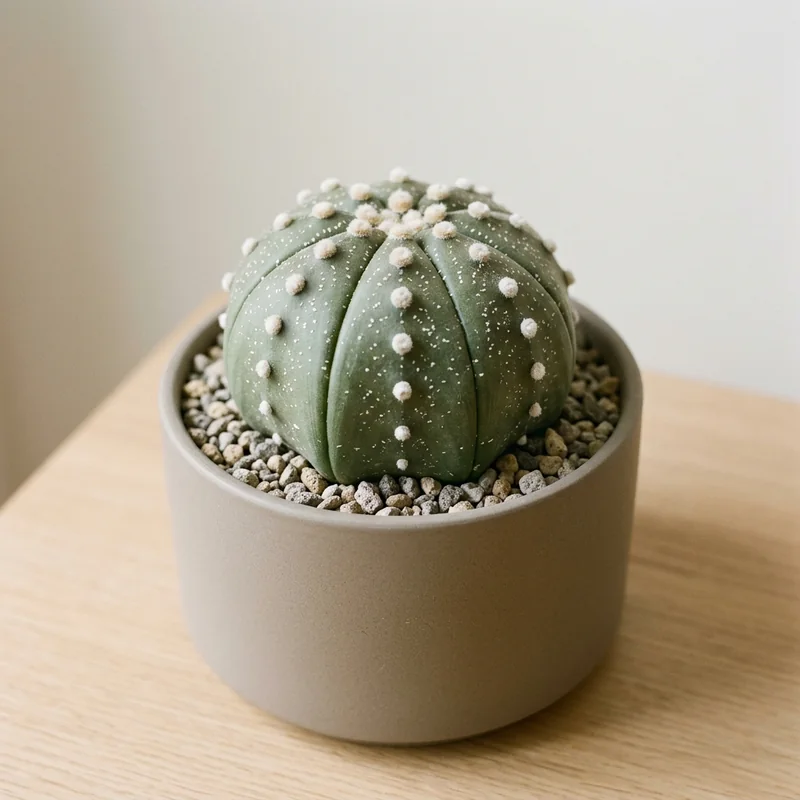
Spineless miniature Texas-Mexican star dome flecked with woolly white scales across eight low rounded ribs. Demands intense bright light and porous mineral grit.
Essential care to help it thrive
Light and placement
Place in very bright filtered light or mild morning sun so domes stay compact and low; scorching summer glass can burn tissue, while dim corners stretch cones.
Climate and season
Needs crisp airflow and low ambient humidity year-round, plus a bright, cool, frost-free, bone-dry winter dormancy above chilly drafts.
Soil and repotting
Deep terracotta pot with fast drainage filled predominantly with coarse pumice, lava rock, decomposed granite, and gritty sand.
Conditions vary with pot, season and location. Always check the mix and your plant's response.
Sand dollar cactus (Astrophytum): when to check the soil
Water-rot prone species: soak pure mineral grit only after staying completely dry during warm active growth, then withhold all water through cool dry winters.
Let Grovia remind you when to check your Sand dollar cactus (Astrophytum)Save the plant, get watering reminders and adjust the rhythm as the seasons change. Free on iPhone and Android.
See table by pot size
| Ø | Summer | Winter |
|---|---|---|
| 10 cm | 10–13 days | No water |
| 15 cm | 12–17 days | No water |
| 25 cm | 16–22 days | No water |
How to identify it
Completely spineless flattened olive-green sphere with eight broad ribs dotted by fuzzy white scales in neat rows; formerly called Echinocactus asterias.
Botanical sheet
- Family
- Cactaceae
- Origin
- Southern Texas and northeastern Mexico
- Size
- ≈ 5–15 cm · Low flattened star dome
- Climate
- ≈ 18–30 °C · ≥ 5 °C · Warm dry · cool rest
Approximate figures: reference sources do not publish exact data for this species.
What's wrong with your plant?
Pet safety Toxicity unverified
There is no species-specific toxicity verification for this plant on ASPCA. Check with your veterinarian or search the ASPCA directory before keeping it within reach of pets.
Open the toxicity checkerCommon questions
Why does Sand Dollar Cactus rot so fast in standard houseplant soil?
Its deep fleshy taproot evolved in arid gravelly limestone slopes of northern Mexico and South Texas; organic peat holds moisture around the collar far too long.
Does Astrophytum asterias have sharp hidden spines?
None at all—adult domes are genuinely spineless, carrying only soft woolly felt cushions and tiny chalky white scales along eight curved ribs.
How do you trigger spring yellow blooms on Star Cactus?
Provide a genuinely bright, cool, bone-dry winter pause followed by warm spring sunshine and sparse warm-season drenchings.