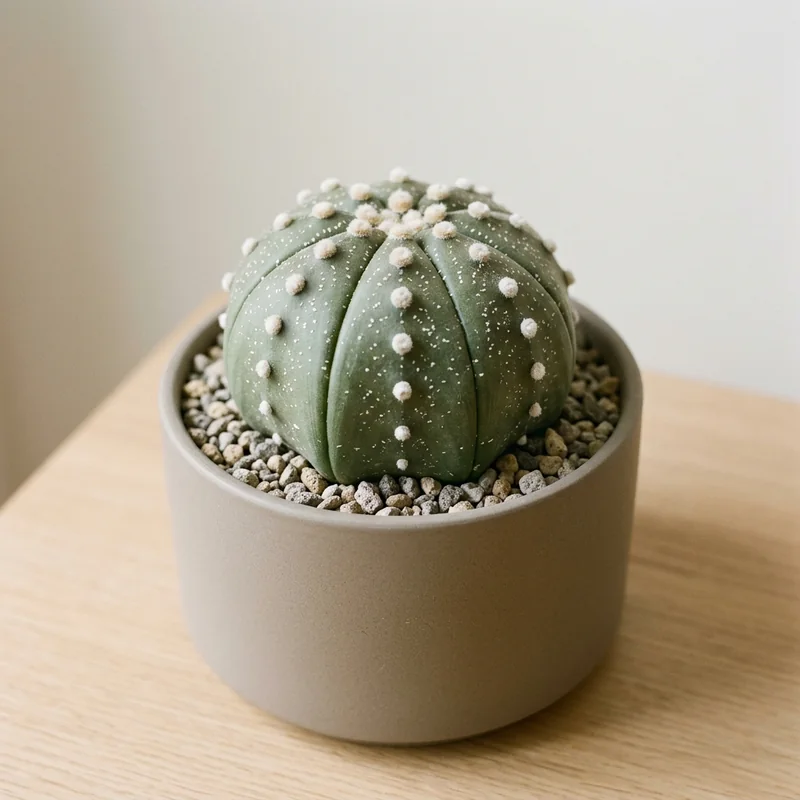
Chin cactus / Moon cactus
Gymnocalycium mihanovichiiUpdated
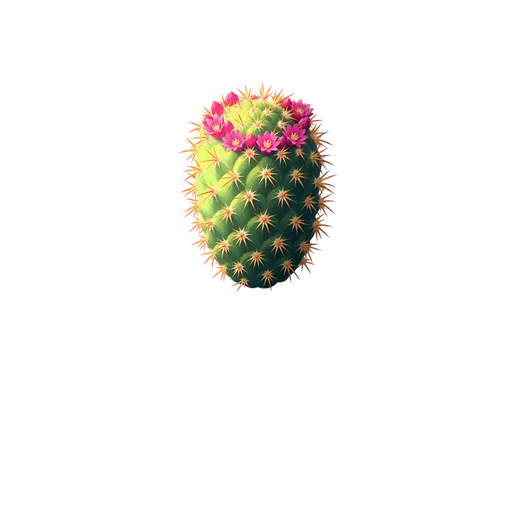
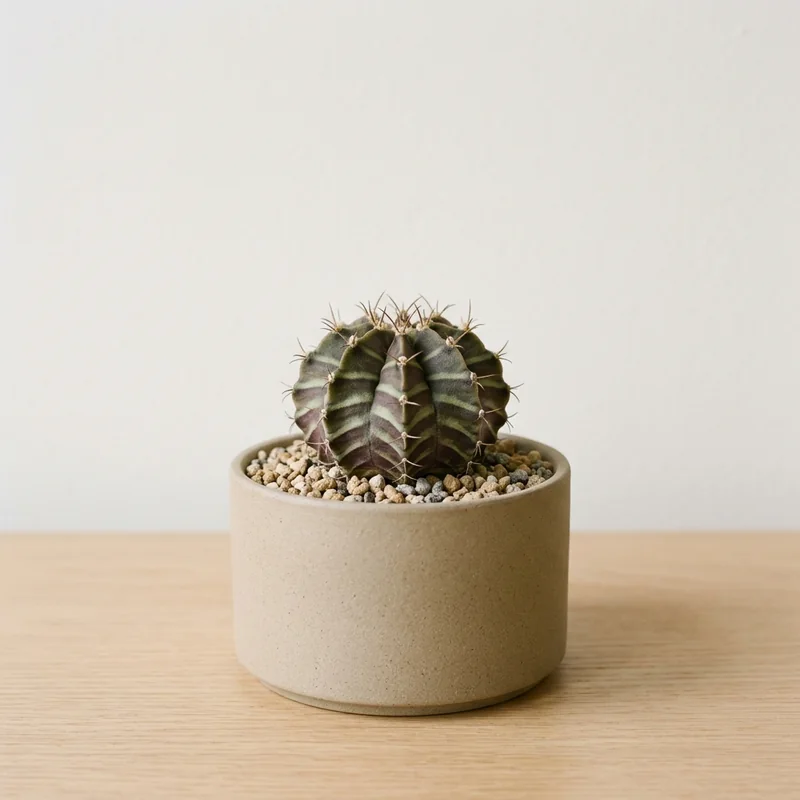
Ribbed miniature South American globe cactus famous both as an olive-green species and colorful grafted moon cactus. Wants bright filtered sun and mineral grit.
Essential care to help it thrive
Light and placement
Provide bright filtered daylight or gentle morning sun. Harsh midday glass sun easily bleaches and burns both green forms and chlorophyll-free grafted tops.
Climate and season
Thrives at 18–30 °C in low indoor humidity; own-root green plants handle dry winter rest down to 5 °C, whereas grafted tropical rootstocks stay happier above 10 °C.
Soil and repotting
Small drained terracotta pot packed fifty-fifty with cactus compost and coarse pumice, scoria, or mineral grit.
Conditions vary with pot, season and location. Always check the mix and your plant's response.
Chin cactus / Moon cactus: when to check the soil
Soak gritty mix deeply only after it dries completely through from top to bottom. Keep green own-root plants dry over cool winters; give tiny sips to grafted stocks.
Let Grovia remind you when to check your Chin cactus / Moon cactusSave the plant, get watering reminders and adjust the rhythm as the seasons change. Free on iPhone and Android.
See table by pot size
| Ø | Summer | Winter |
|---|---|---|
| 10 cm | 10–13 days | No water |
| 15 cm | 12–17 days | No water |
| 25 cm | 16–22 days | No water |
How to identify it
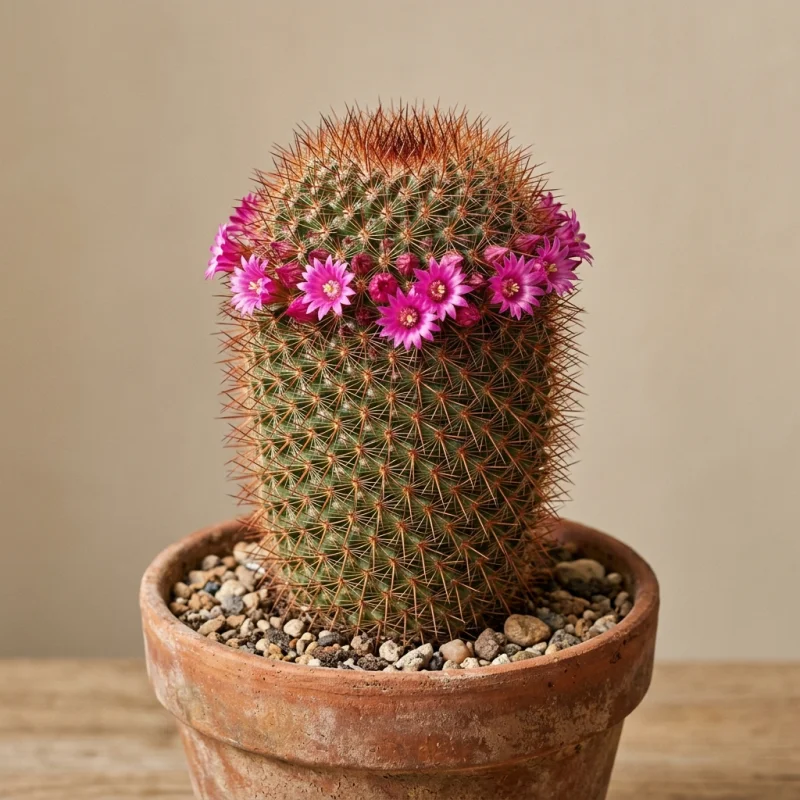
Compact eight-ribbed olive-green to purplish banded globe cactus native to Paraguay; formerly classified under Echinocactus mihanovichii.
Botanical sheet
- Family
- Cactaceae
- Origin
- Paraguay and northeastern Argentina
- Size
- 5–8 cm compact globe
- Climate
- 18–30 °C · min 5 °C
What's wrong with your plant?
Pet safety Toxicity unverified
There is no species-specific toxicity verification for this plant on ASPCA. Check with your veterinarian or search the ASPCA directory before keeping it within reach of pets.
Open the toxicity checkerCommon questions
Why are bright red or yellow Moon Cacti grafted onto green stalks?
Variegated 'Hibotan' cultivars lack green chlorophyll and cannot photosynthesize alone, so nurseries graft them onto green cactus rootstocks that supply sugars.
Do own-root green Gymnocalycium mihanovichii live longer than grafted ones?
Yes. Naturally pigmented green-bronze plants on their own roots live decades indoors, whereas grafted neon tops last only as long as their green host stalk.
Can side offsets from Gymnocalycium mihanovichii root in soil alone?
Only olive-green or dark brownish offsets holding chlorophyll can root cleanly on dry grit; solid neon pink, orange, or yellow pups still require grafting.