Clivia (Bush lily)
Clivia miniataUpdated
South African evergreen prized for dark strap-shaped leaves and vibrant orange umbels. Water freely in summer, then give a cool drier winter rest to set buds.
Essential care to help it thrive
Light and placement
Give bright filtered light year-round with shade from scorching midday sun, which bleaches or blisters the broad strap leaves.
Climate and season
Keep frost-free above 7 °C and avoid repotting often: RHS notes clivias dislike root disturbance and bloom best when slightly pot-bound.
Soil and repotting
Pot in peat-free loam-based compost blended with leaf mould and grit for fast drainage. Only repot every 3–5 years right after flowering.
Conditions vary with pot, season and location. Always check the mix and your plant's response.
Clivia (Bush lily): when to check the soil
Water freely through summer and feed weakly until buds form. Keep barely moist during a cool winter rest (7–10 °C) to trigger spring flowering.
Let Grovia remind you when to check your Clivia (Bush lily)Save the plant, get watering reminders and adjust the rhythm as the seasons change. Free on iPhone and Android.
See table by pot size
| Ø | Summer | Winter |
|---|---|---|
| 10 cm | 4–5 days | 7–10 days |
| 15 cm | 5–6 days | 9–13 days |
| 25 cm | 6–9 days | 12–17 days |
How to identify it
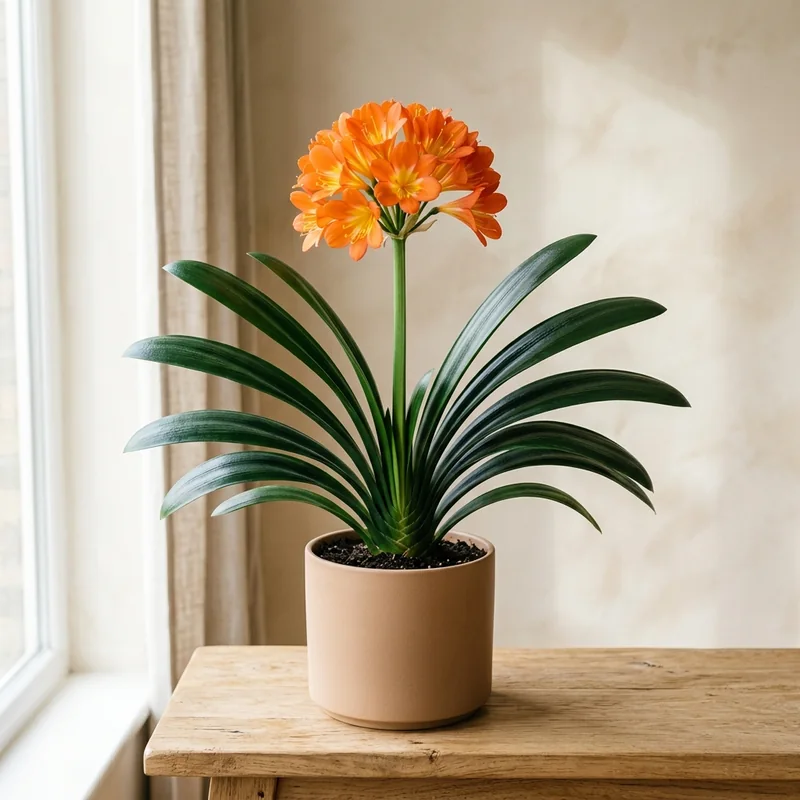
Evergreen perennial with thick, arching strap-shaped leaves sheathing a swollen bulb-like base and tall stems topped by umbels of bright orange trumpet blooms.
Botanical sheet
- Family
- Amaryllidaceae
- Origin
- South Africa (Natal)
- Size
- 30–50 cm clumps
- Climate
- 10–24 °C · min. 7 °C
What's wrong with your plant?
Pet safety Toxic to pets
ASPCA lists this species as toxic to cats and dogs. Keep pets from chewing it; contact a veterinarian if ingestion is suspected.
Toxic principles and clinical signs quoted from the ASPCA database.
See the ASPCA entryCommon questions
Why won't my Clivia miniata produce flower stalks?
It requires 6–8 weeks of cool (7–10 °C), barely watered winter rest plus snug roots to initiate flower buds.
How often should you repot an established clivia?
Only every 3–5 years after blooming ends, since thick roots resent disturbance and actually flower better when slightly crowded.
Are all parts of Clivia miniata toxic to pets?
Yes: ASPCA lists it as toxic to dogs, cats and horses due to lycorine alkaloids concentrated most heavily in the bulbs.