Watch chain (Crassula muscosa)
Crassula muscosaUpdated
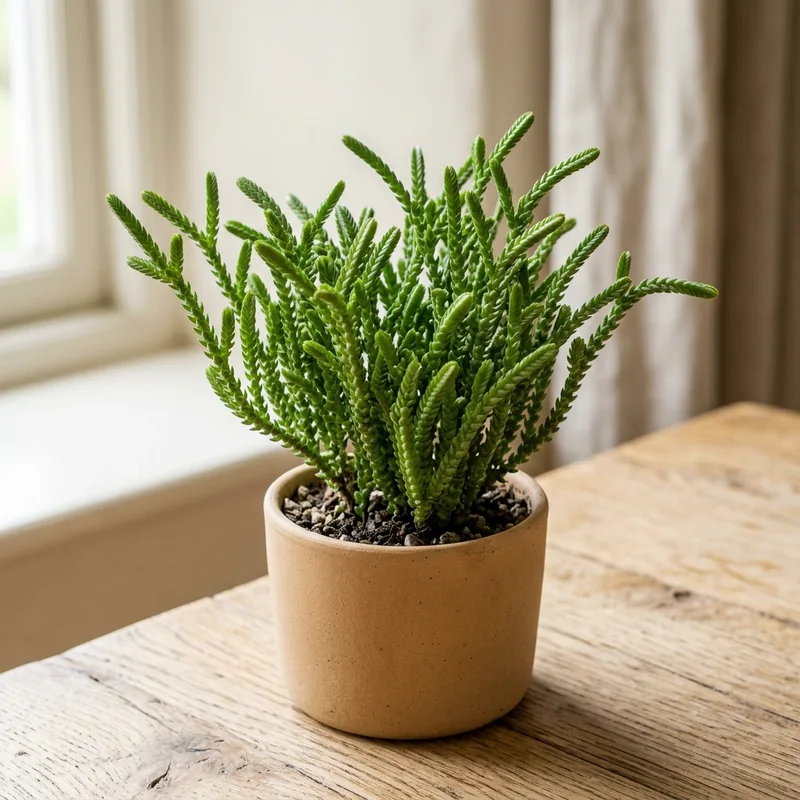
Architectural South African succulent forming tightly braided stems of miniature stacked leaves. Thrives on bright sunlight, gritty cactus compost and full dry-downs.
Essential care to help it thrive
Light and placement
Bright window sun or intense filtered light for several hours daily; insufficient light quickly stretches stems and opens wide gaps.
Climate and season
Dry, airy and frost-free conditions (10–25 °C, min. 5 °C); handles dry indoor heating well when protected from cold damp drafts.
Soil and repotting
Fast-draining cactus potting mix blended with 50% pumice, grit or coarse sand in a shallow terracotta pot with unobstructed drainage holes.
Conditions vary with pot, season and location. Always check the mix and your plant's response.
Watch chain (Crassula muscosa): when to check the soil
Follow full dry-down succulent care: drench only after cactus mix dries completely from top to bottom, and water very sparingly in winter dormancy.
Let Grovia remind you when to check your Watch chain (Crassula muscosa)Save the plant, get watering reminders and adjust the rhythm as the seasons change. Free on iPhone and Android.
See table by pot size
| Ø | Summer | Winter |
|---|---|---|
| 10 cm | 7–10 days | 14–19 days |
| 15 cm | 9–12 days | 17–24 days |
| 25 cm | 11–16 days | 23–32 days |
How to identify it
Compact succulent subshrub with tiny leaves packed into four braided ranks, formerly listed as Crassula lycopodioides or Crassula pseudolycopodioides.
Botanical sheet
- Family
- Crassulaceae
- Origin
- South Africa · Namibia
- Size
- 15–45 cm tall
- Climate
- 10–25 °C · min. 5 °C
What's wrong with your plant?
Pet safety Toxicity unverified
There is no species-specific toxicity verification for this plant on ASPCA. Check with your veterinarian or search the ASPCA directory before keeping it within reach of pets.
Open the toxicity checkerCommon questions
Why are the lower stems turning brown and woody?
Mature lower stems naturally turn tan and woody with age; if stems feel mushy and dark, however, unpot and reroot healthy green tips.
How do you propagate watch chain cuttings?
Snip 5–8 cm healthy stems in spring or summer, let cuts callous for 24 hours, then rest them on gritty cactus compost.
How often should you fertilise Crassula muscosa?
Apply a balanced diluted liquid feed only two or three times across spring and summer, holding back completely in winter.