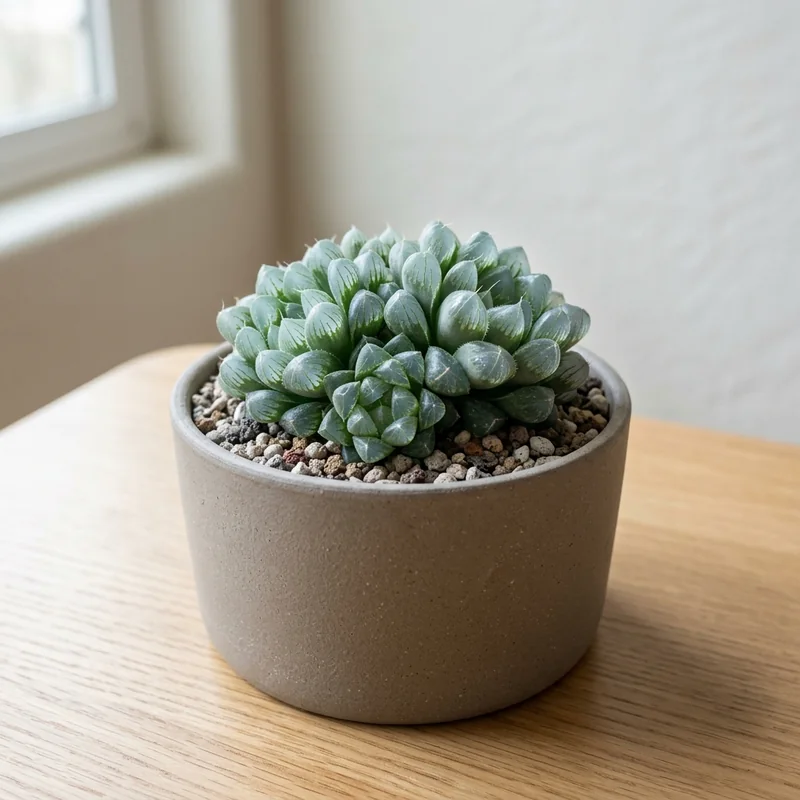
Fairy washboard
Haworthiopsis limifoliaUpdated
Fairy washboard: choose bright light, preferably filtered through glass. Let the mix dry between waterings and keep water from sitting in the rosette centre.
Essential care to help it thrive
Light and placement
Choose bright light, preferably filtered through glass; avoid an abrupt move into harsh sun.
Climate and season
Use a small, free-draining pot; protect from frost and cold wet conditions.
Soil and repotting
Prioritise a very free-draining mix and a pot with holes. Heavy mix that remains wet for weeks raises root risk. Feed sparingly during active growth if needed; do not fertilise a plant weakened by overwatering.
Conditions vary with pot, season and location. Always check the mix and your plant's response.
Fairy washboard: when to check the soil
Let the mix dry between waterings and keep water from sitting in the rosette centre.
Let Grovia remind you when to check your Fairy washboardSave the plant, get watering reminders and adjust the rhythm as the seasons change. Free on iPhone and Android.
See table by pot size
| Ø | Summer | Winter |
|---|---|---|
| 10 cm | 7–10 days | 14–19 days |
| 15 cm | 9–12 days | 17–24 days |
| 25 cm | 11–16 days | 23–32 days |
How to identify it
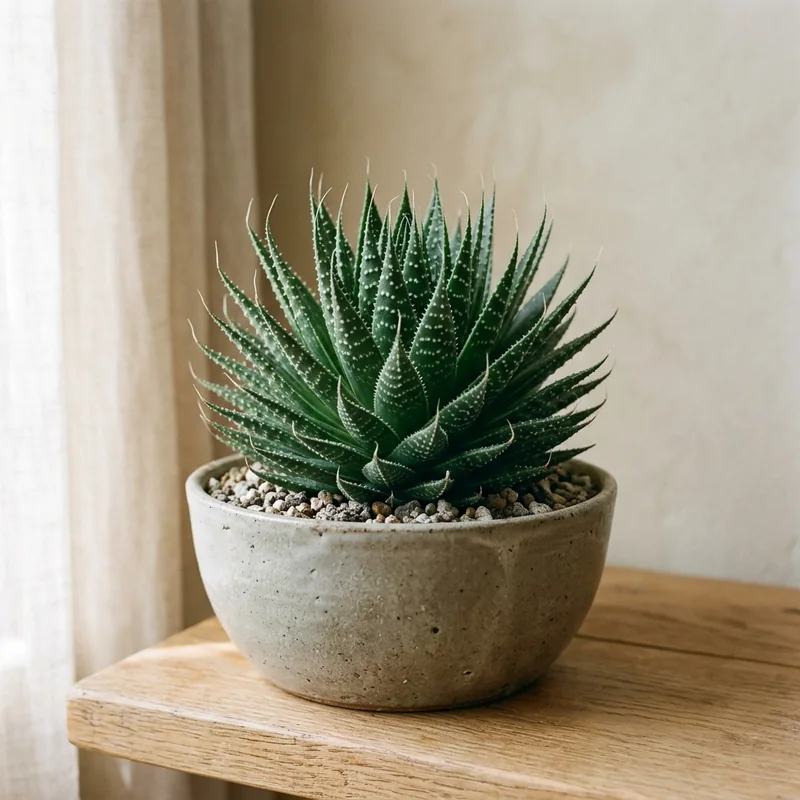
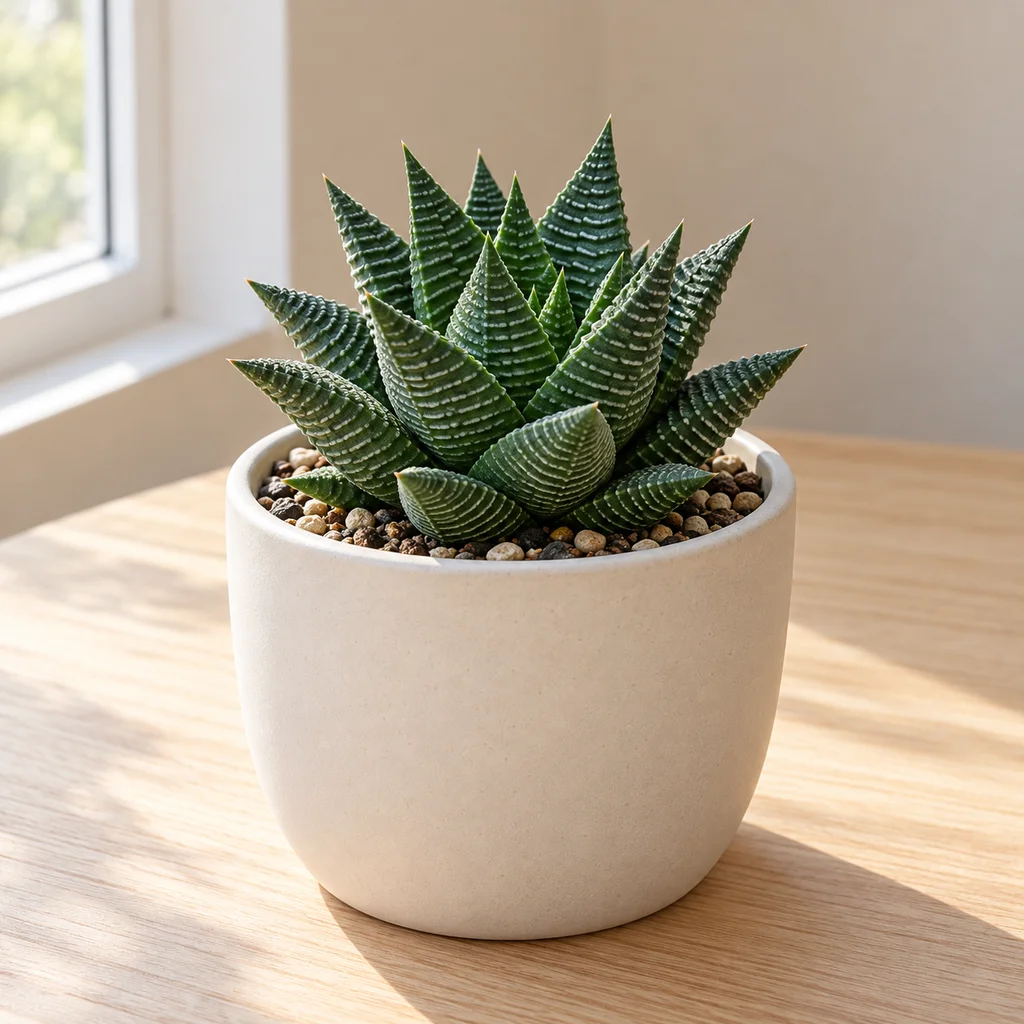
A small rosette of triangular leaves with palpable transverse ridges; it was formerly placed in Haworthia.
Botanical sheet
- Family
- Asphodelaceae
- Origin
- South Africa · Mozambique
- Size
- 10–20 cm
- Climate
- 15–26 °C · ≥ 5 °C
What's wrong with your plant?
Pet safety Toxicity unverified
There is no species-specific toxicity verification for this plant on ASPCA. Check with your veterinarian or search the ASPCA directory before keeping it within reach of pets.
Open the toxicity checkerCommon questions
Is it an aloe?
No, though the rosette may resemble one; look for the leaf ridges.