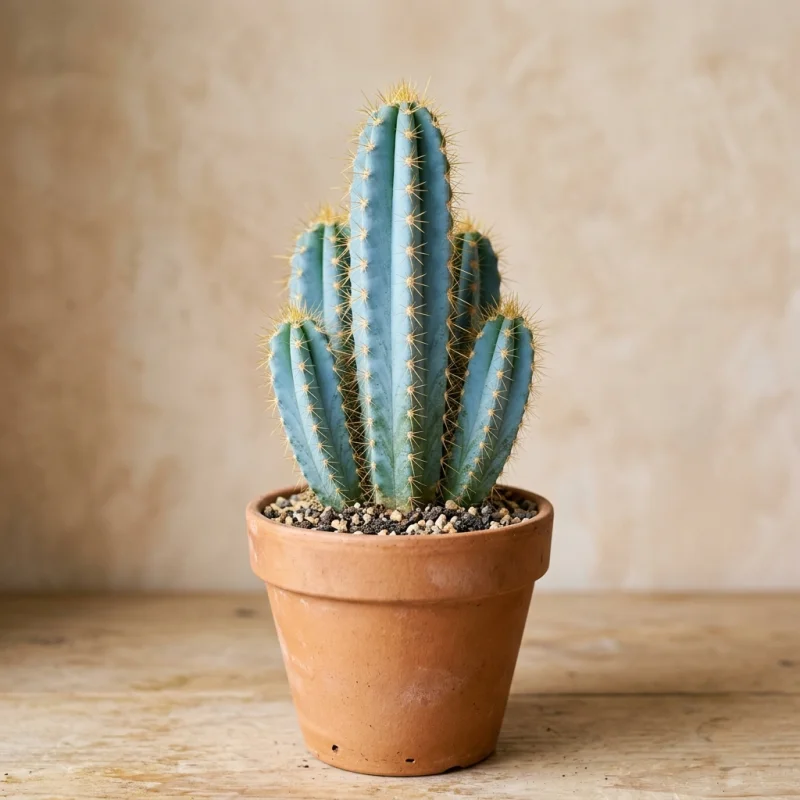
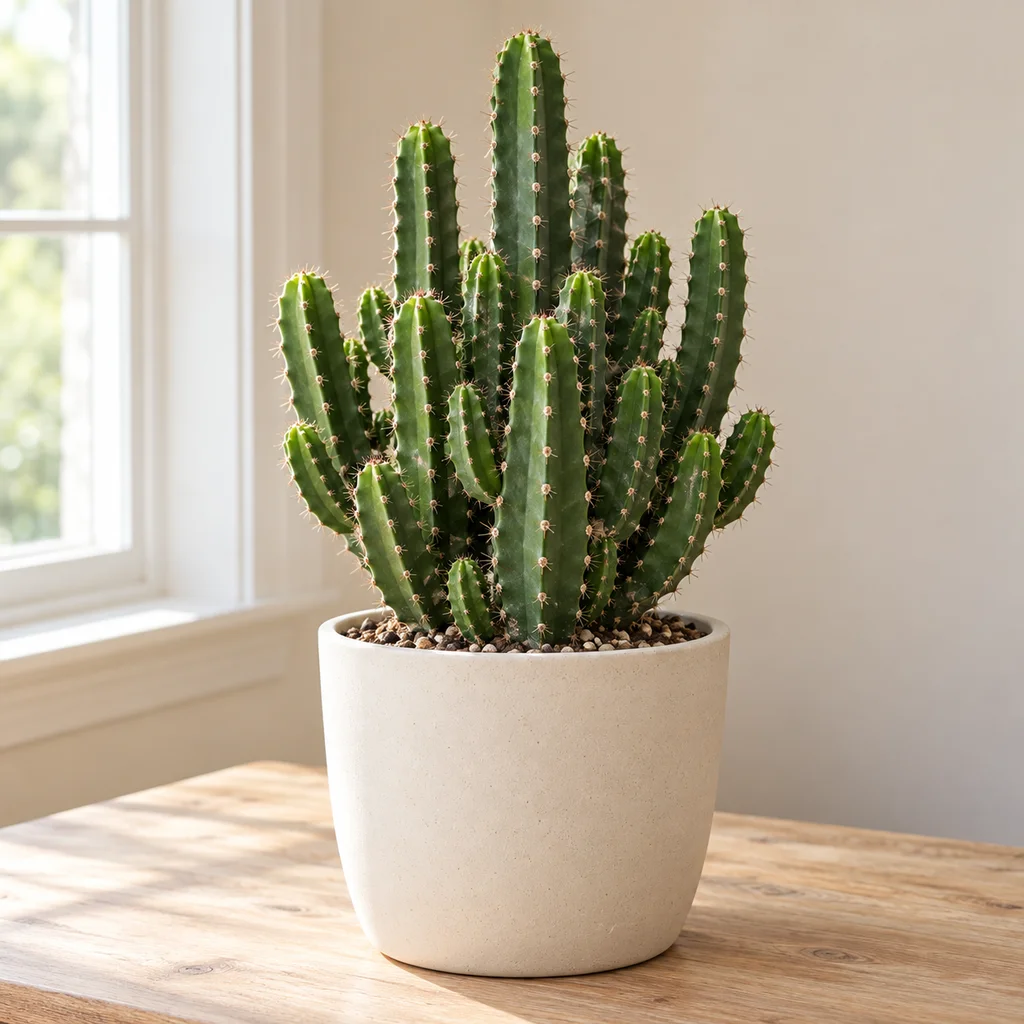
African milk tree (Euphorbia)
Euphorbia trigonaUpdated
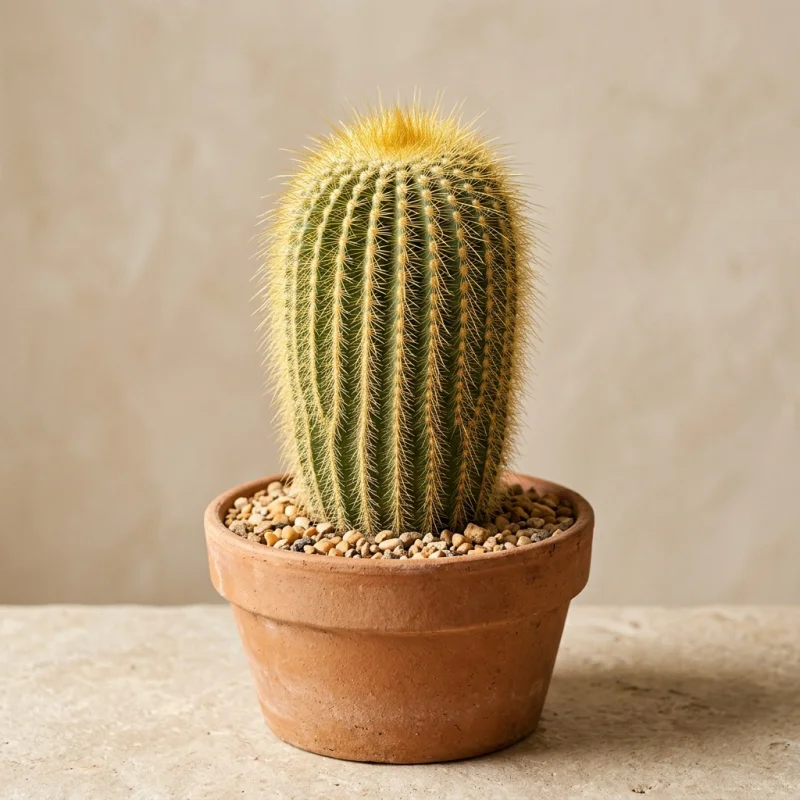
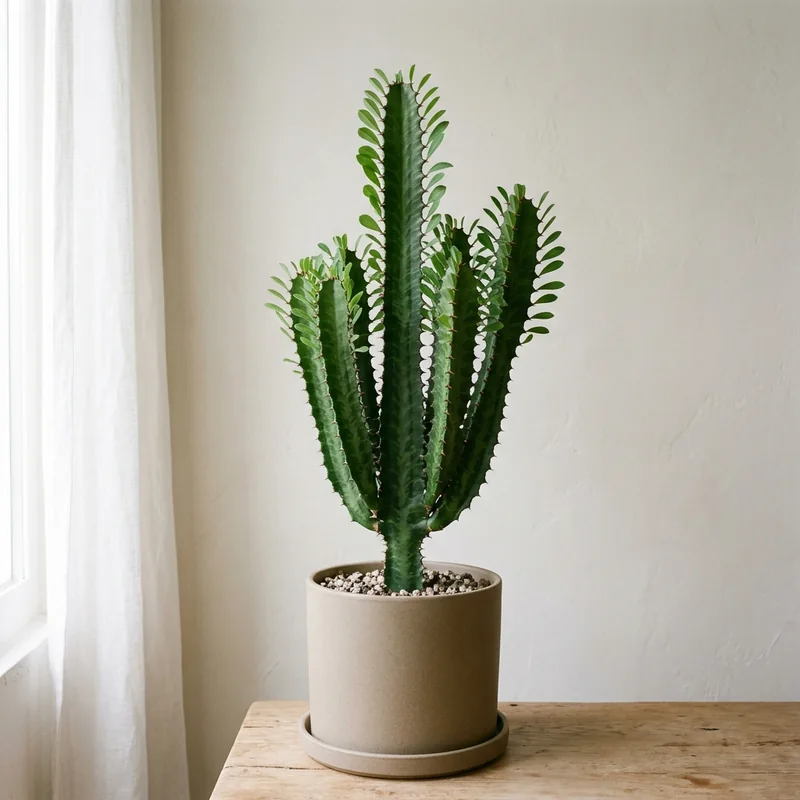
Architectural three-sided upright succulent sporting thorny wavy ribs studded with tiny teardrop leaves. Loves bright light, gritty cactus soil and careful sap handling.
Essential care to help it thrive
Light and placement
Thrives in bright filtered daylight or soft morning sun, deepening burgundy tones on 'Rubra' selections while preventing scorching from sudden fierce afternoon glass.
Climate and season
Excels in dry indoor rooms at 15–28 °C strictly above 5 °C; choose a heavy wide terracotta container so tall branches never topple over.
Soil and repotting
Fast-draining mineral cactus blend packed with pumice, lava grit and coarse sand.
Conditions vary with pot, season and location. Always check the mix and your plant's response.
African milk tree (Euphorbia): when to check the soil
Check every 10–14 days during spring and summer growth and soak deeply only once gritty cactus mix dries 100%, tapering to scant winter sips.
Let Grovia remind you when to check your African milk tree (Euphorbia)Save the plant, get watering reminders and adjust the rhythm as the seasons change. Free on iPhone and Android.
See table by pot size
| Ø | Summer | Winter |
|---|---|---|
| 10 cm | 7–10 days | 14–19 days |
| 15 cm | 9–12 days | 17–24 days |
| 25 cm | 11–16 days | 23–32 days |
How to identify it
Upright three-angled marbled green columns armed along wavy ridges with paired reddish-brown spines and small short-lived oval leaves; formerly Euphorbia hermentiana.
Botanical sheet
- Family
- Euphorbiaceae
- Origin
- Central Africa
- Size
- 1.8–4 m branching columns
- Climate
- 15–28 °C · min 5 °C
What's wrong with your plant?
Pet safety Toxicity unverified
There is no species-specific toxicity verification for this plant on ASPCA. Check with your veterinarian or search the ASPCA directory before keeping it within reach of pets.
Open the toxicity checkerCommon questions
Why must you wear gloves when pruning African Milk Tree?
Unlike true cacti, Euphorbia trigona bleeds caustic milky white latex whenever nicked or pruned; RHS warns sap irritates skin and eyes and is harmful if ingested.
Wait—are the small green leaves along the ribs meant to stay all year?
RHS notes those small leaves are naturally short-lived, sprouting actively in warm bright summers and shedding as cool winter sets in.
Is Euphorbia trigona safe around dogs or cats?
No: although absent from ASPCA's directory, RHS explicitly warns both humans and pets suffer severe irritation and ingestion toxicity from its milky latex.