Treasure Flower (Gazania rigens)
Gazania rigensUpdated
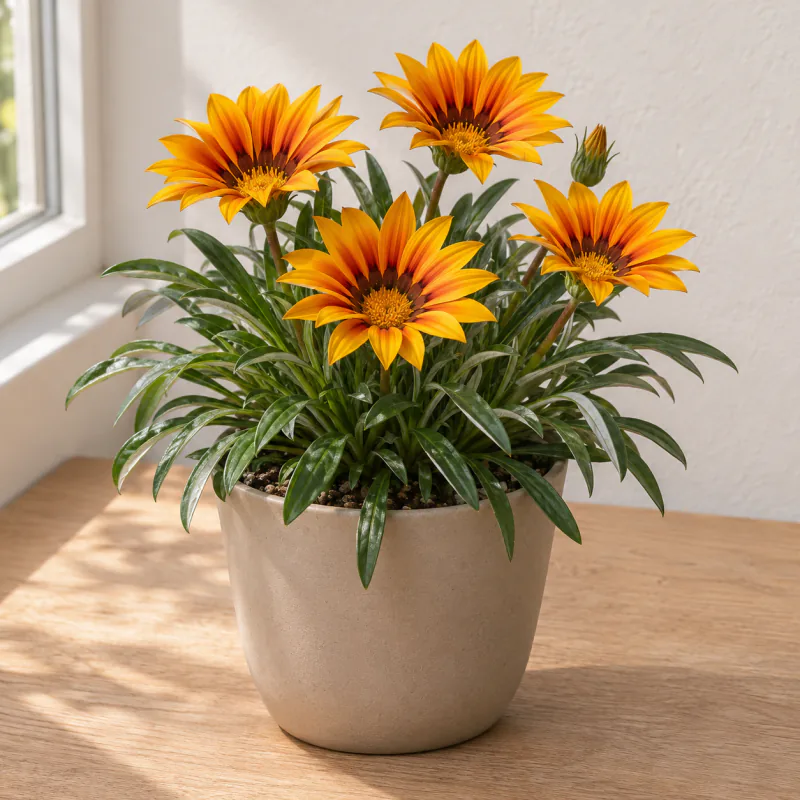
Sun-worshipping South African daisy whose fiery orange, bronze, and yellow blooms open only in bright sunlight. Thrives in lean sandy soil with light watering.
Essential care to help it thrive
Light and placement
Demand full direct sun along bright south or west railings because flowerheads fold shut promptly in overcast skies, deep shade, and evening twilight.
Climate and season
Thrives outdoors between 12 and 32 °C and shrugs off hot coastal salt breeze; survives crisp dry air to 1 °C yet rots rapidly in cold wet winter rain.
Soil and repotting
Plant into wide containers using lean free-draining sandy loam mixed heavily with horticultural grit or pumice.
Conditions vary with pot, season and location. Always check the mix and your plant's response.
Treasure Flower (Gazania rigens): when to check the soil
Allow the upper half of gritty compost to dry between thorough waterings; never leave pots sitting in saucers since drought hurts far less than damp roots.
Let Grovia remind you when to check your Treasure Flower (Gazania rigens)Save the plant, get watering reminders and adjust the rhythm as the seasons change. Free on iPhone and Android.
See table by pot size
| Ø | Summer | Winter |
|---|---|---|
| 10 cm | 4–5 days | 7–10 days |
| 15 cm | 5–6 days | 9–13 days |
| 25 cm | 6–9 days | 12–17 days |
How to identify it
Low spreading mound with narrow silvery-backed lance leaves and bold striped daisy flowerheads; historically sold as Gazania splendens.
Botanical sheet
- Family
- Asteraceae
- Origin
- South Africa
- Size
- 10–50 cm low mound
- Climate
- 12–32 °C · min 1 °C
What's wrong with your plant?
Pet safety Toxicity unverified
There is no species-specific toxicity verification for this plant on ASPCA. Check with your veterinarian or search the ASPCA directory before keeping it within reach of pets.
Open the toxicity checkerCommon questions
Why do Gazania blooms close every evening and on cloudy days?
Closing shields pollen from cool night dew and overcast rain; the striped daisies pop wide open again the moment bright direct sunlight hits the petals.
Will Gazania bloom nicely on a north-facing balcony?
Foliage survives in bright shade, yet petals mostly remain folded shut without direct sunbeams, so flowering herbs like Viola suit shady balconies much better.
Can Gazania plants survive outdoors across mild winters?
Yes in coastal or mild gardens staying frost-free above 1 °C with sharp sandy drainage; elsewhere treat them as easy long-blooming summer annuals.