Rattlesnake plant
Goeppertia insignisUpdated
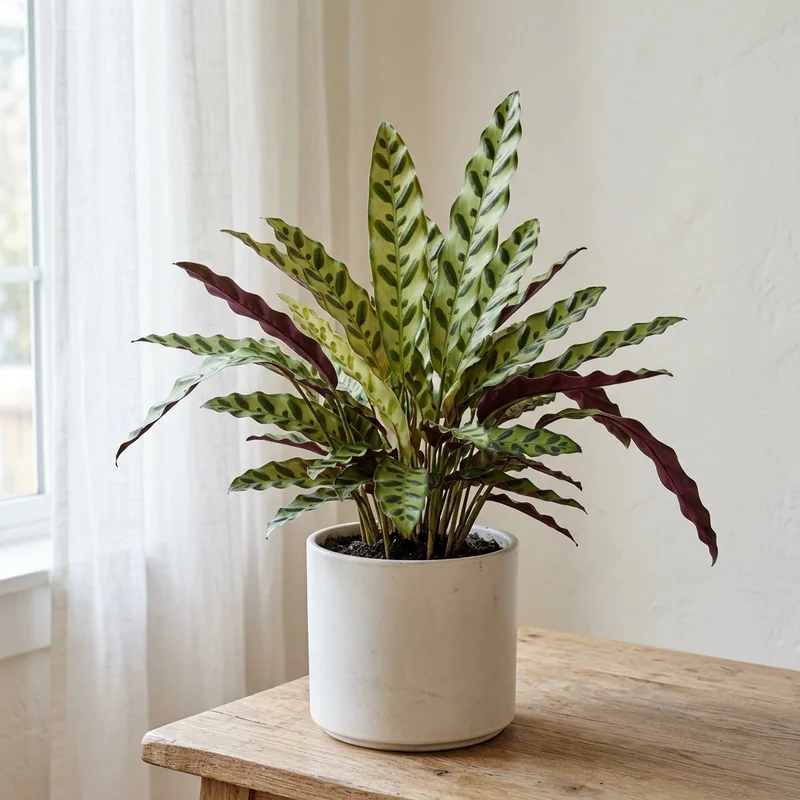
Pet-safe Brazilian prayer plant with wavy lance-shaped leaves spotted dark green and deep purple undersides. Thrives in filtered light, humidity and moist soil.
Essential care to help it thrive
Light and placement
Give medium to bright filtered light completely shielded from direct sunbeams. Harsh sun bleaches and crisps leaf blades, while deep gloom dulls the dark markings.
Climate and season
Provide steady warmth of at least 16 °C (ideally 18–25 °C) and high humidity above 60% away from drafts. Leaves fold upright at dusk to reveal maroon undersides.
Soil and repotting
Pot with drainage holes in an airy peat-free potting mix rich in coco coir, fine bark and perlite so moisture stays steady without turning soggy.
Conditions vary with pot, season and location. Always check the mix and your plant's response.
Rattlesnake plant: when to check the soil
Check the upper layer every 3–5 days in summer (6–9 days in winter) and keep potting mix lightly moist—never boggy—using rainwater or filtered water.
Let Grovia remind you when to check your Rattlesnake plantSave the plant, get watering reminders and adjust the rhythm as the seasons change. Free on iPhone and Android.
See table by pot size
| Ø | Summer | Winter |
|---|---|---|
| 10 cm | 4–5 days | 7–10 days |
| 15 cm | 5–6 days | 9–13 days |
| 25 cm | 6–9 days | 12–17 days |
How to identify it
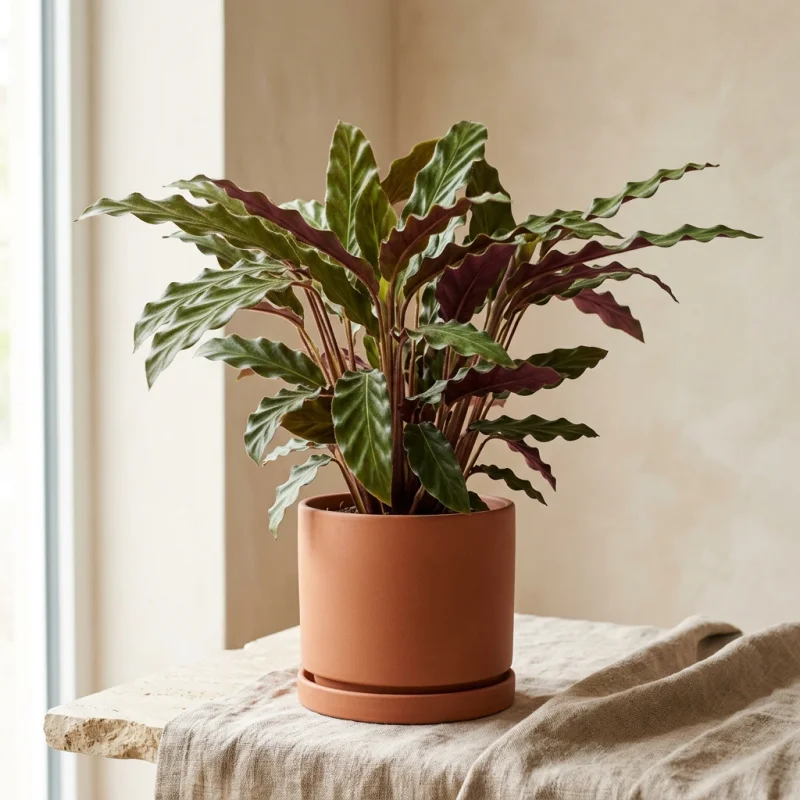
Upright clump of ruffled narrow chartreuse leaves patterned with alternating dark spots and maroon backs. Accepted as Goeppertia insignis, widely sold as Calathea lancifolia.
Botanical sheet
- Family
- Marantaceae
- Origin
- Brazil
- Size
- 0.5–1 m upright
- Climate
- 18–25 °C · min. 16 °C
What's wrong with your plant?
Pet safety Pet-friendly
ASPCA lists this species as non-toxic to cats and dogs. Even so, prevent heavy chewing or ingestion of potting mix or fertiliser.
See the ASPCA entryCommon questions
Why does my rattlesnake plant raise its leaves at night?
It is a normal prayer-plant rhythm: as daylight fades, flexible leaf joints lift blades upright—showing off purple backs—before lowering again at sunrise.
Why do brown edges appear even with regular watering?
Tap minerals like fluoride and chlorine burn leaf margins quickly, so switching to filtered or rainwater usually halts new browning.
Is Goeppertia lancifolia safe for dogs and cats?
Yes. ASPCA lists Calathea insignis as non-toxic to dogs, cats and horses.