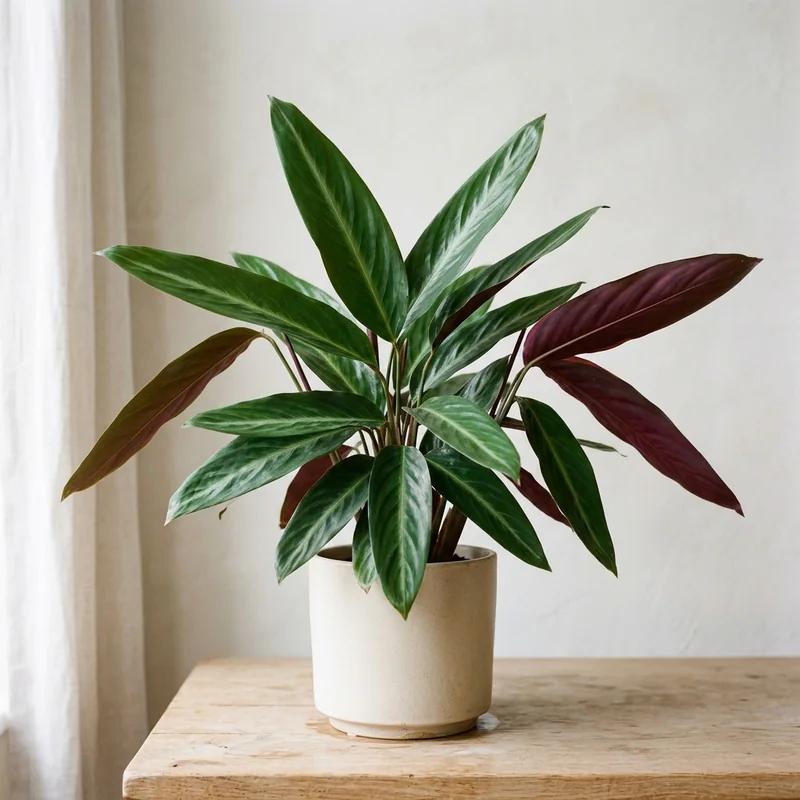
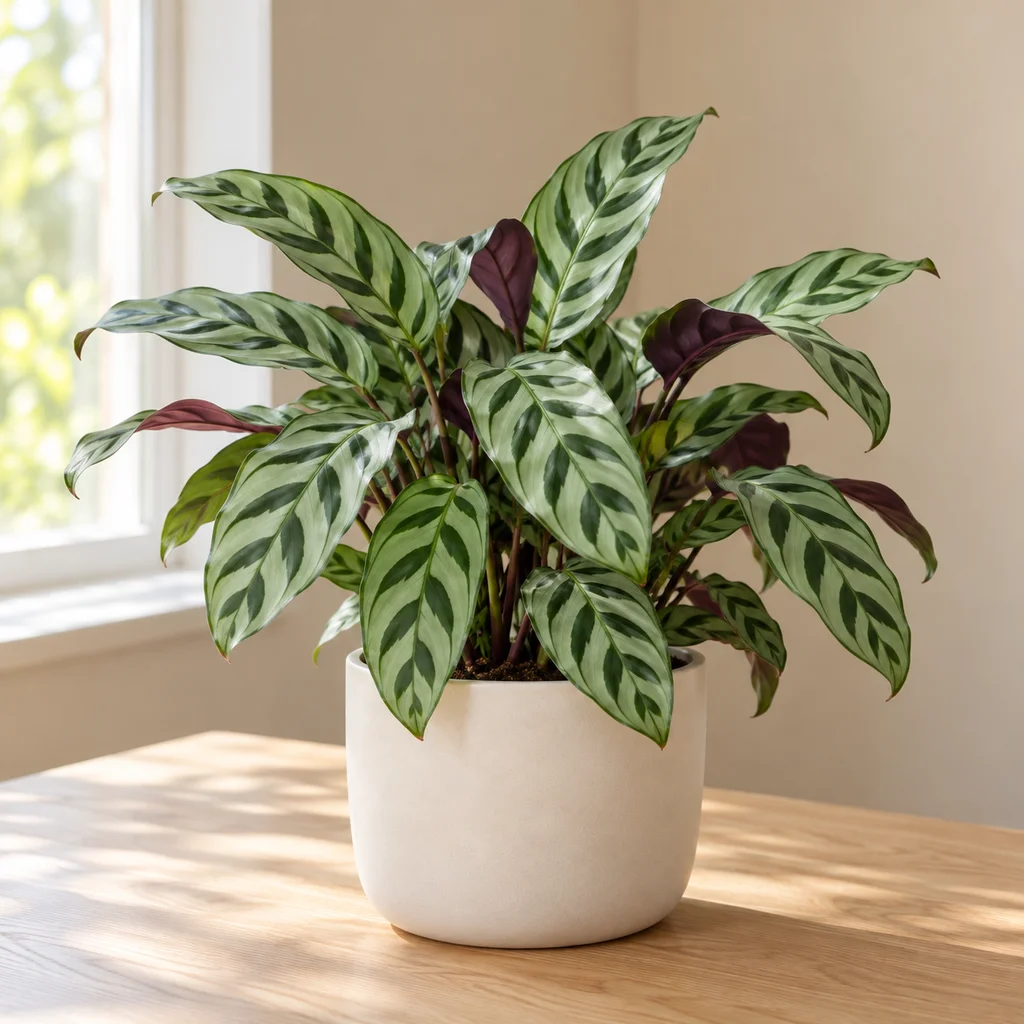
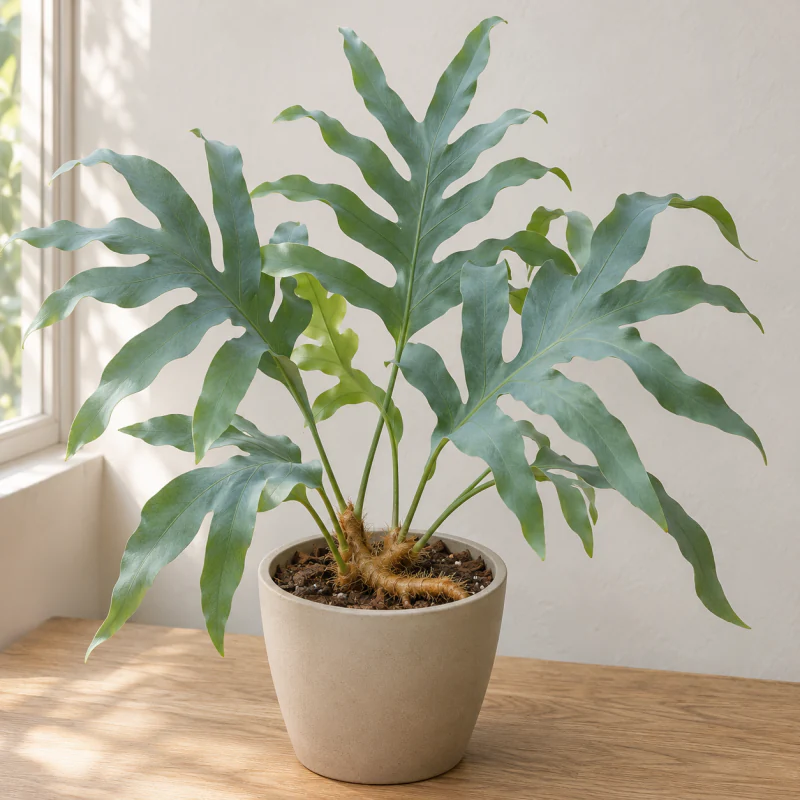
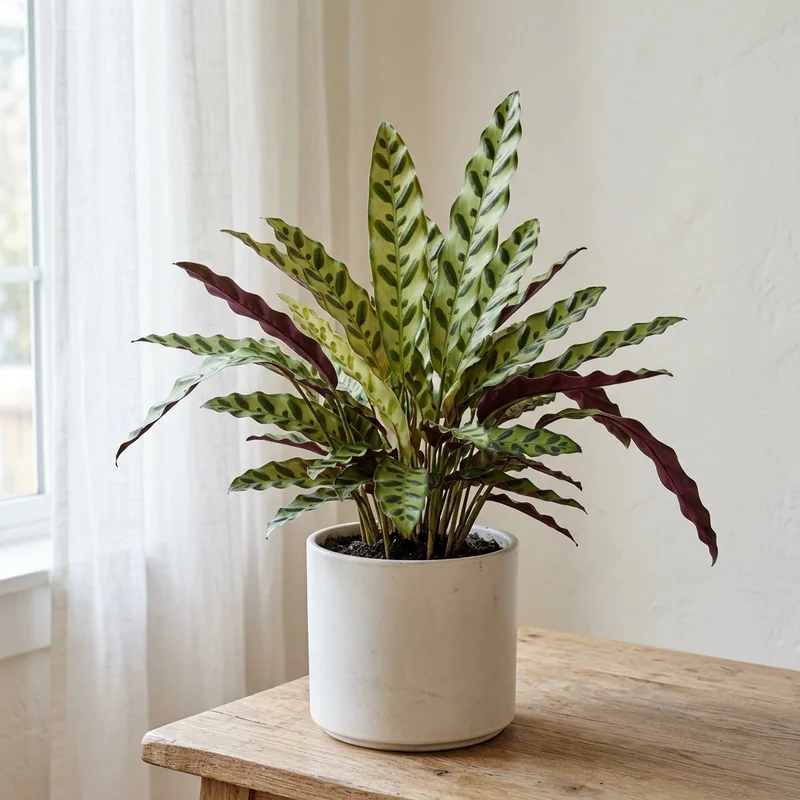
Zebra plant (Goeppertia zebrina)
Goeppertia zebrinaUpdated
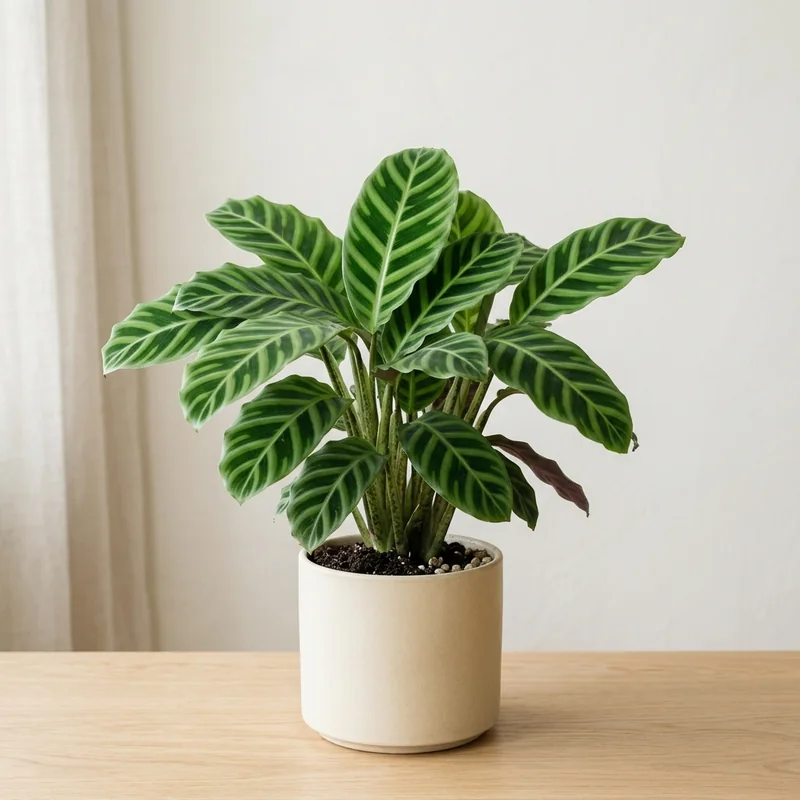
Velvet-leaved Brazilian prayer plant striped in deep forest and bright lime green. Demands bright shade, high warm humidity, and clean mineral-free moisture.
Essential care to help it thrive
Light and placement
Thrive in gentle bright shade or medium indirect window light. Direct sun scorches and fades the matte velvet surface, while deep darkness weakens stalks.
Climate and season
Hold rooms above 15 °C with steady 60–75% humidity well away from radiators or cold air vents. Velvet blades collect dust easily if air sits stagnant.
Soil and repotting
Sturdy drained container filled with peat-free blend of coco coir, fine bark, and perlite for steady airy moisture.
Conditions vary with pot, season and location. Always check the mix and your plant's response.
Zebra plant (Goeppertia zebrina): when to check the soil
Check the upper layer by touch and apply soft rainwater as soon as the surface barely dulls, letting every drop drain clear so thick roots stay oxygenated.
Let Grovia remind you when to check your Zebra plant (Goeppertia zebrina)Save the plant, get watering reminders and adjust the rhythm as the seasons change. Free on iPhone and Android.
See table by pot size
| Ø | Summer | Winter |
|---|---|---|
| 10 cm | 4–5 days | 7–10 days |
| 15 cm | 5–6 days | 9–13 days |
| 25 cm | 6–9 days | 12–17 days |
How to identify it
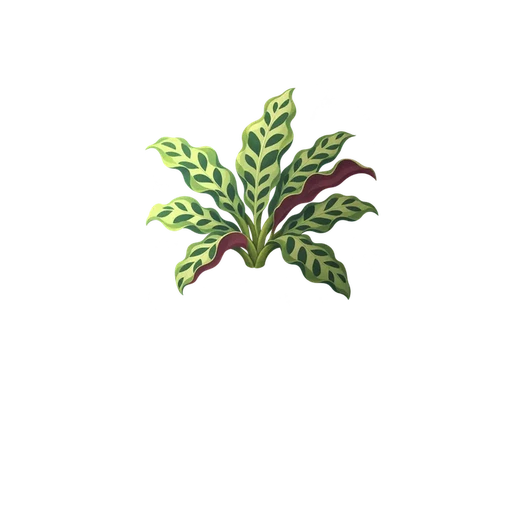
Clumping tropical perennial with broad velvety light-green leaves banded in dark emerald chevrons and soft maroon backs; formerly Calathea zebrina.
Botanical sheet
- Family
- Marantaceae
- Origin
- Eastern and southeastern Brazil
- Size
- 50–90 cm tall clump
- Climate
- 18–26 °C · min 15 °C
What's wrong with your plant?
Pet safety Toxicity unverified
There is no species-specific toxicity verification for this plant on ASPCA. Check with your veterinarian or search the ASPCA directory before keeping it within reach of pets.
Open the toxicity checkerCommon questions
Should you mist the velvety leaves of Goeppertia zebrina?
Avoid frequent misting because trapped droplets linger on velvety hairs and trigger spots; use a nearby humidifier or pebble tray to raise room moisture.
How do you dust Calathea zebrina leaves without bruising them?
Brush dust away gently with a soft dry makeup brush or wipe lightly with a damp microfiber cloth while supporting the underside.
Why do new zebra plant shoots emerge small and pale?
Insufficient indirect light or depleted compost limits blade size; move closer to filtered daylight and feed lightly during warm active growth.