Polka dot plant
Hypoestes phyllostachyaUpdated
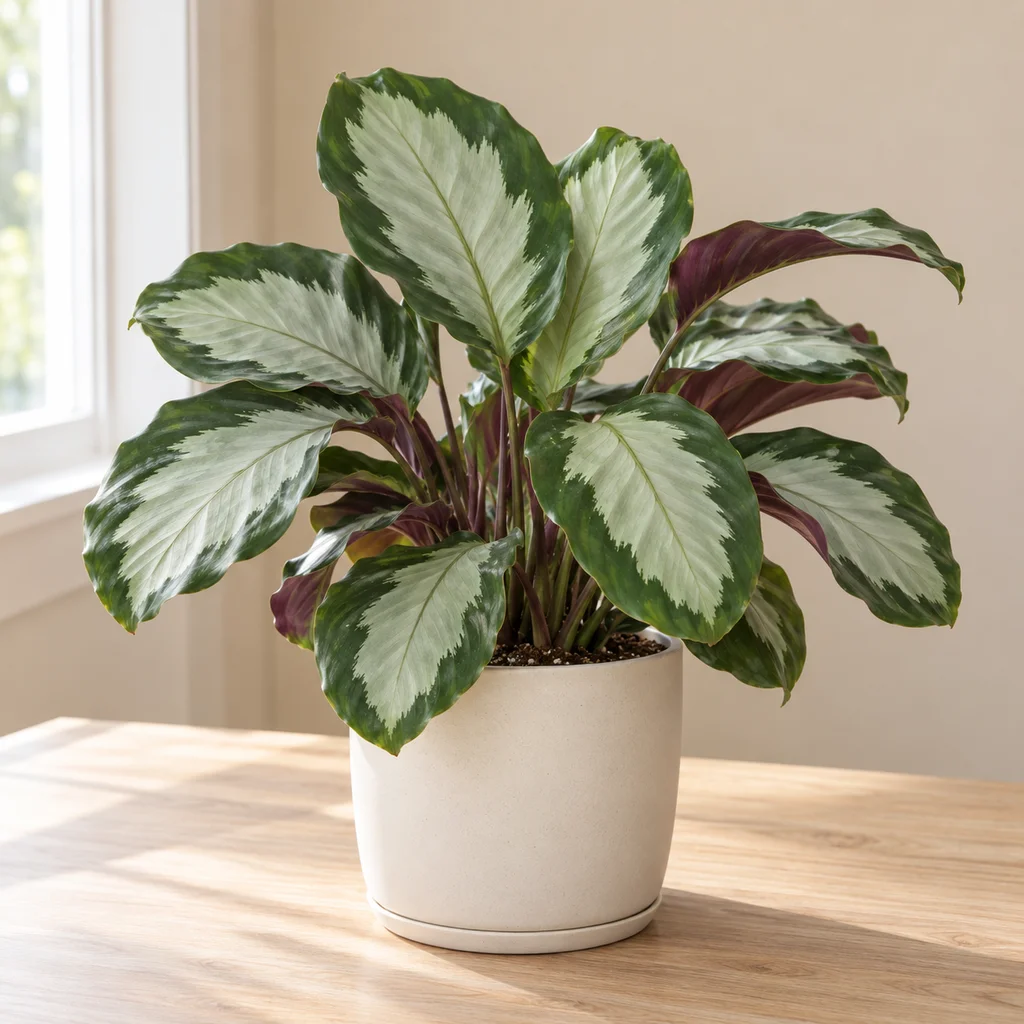
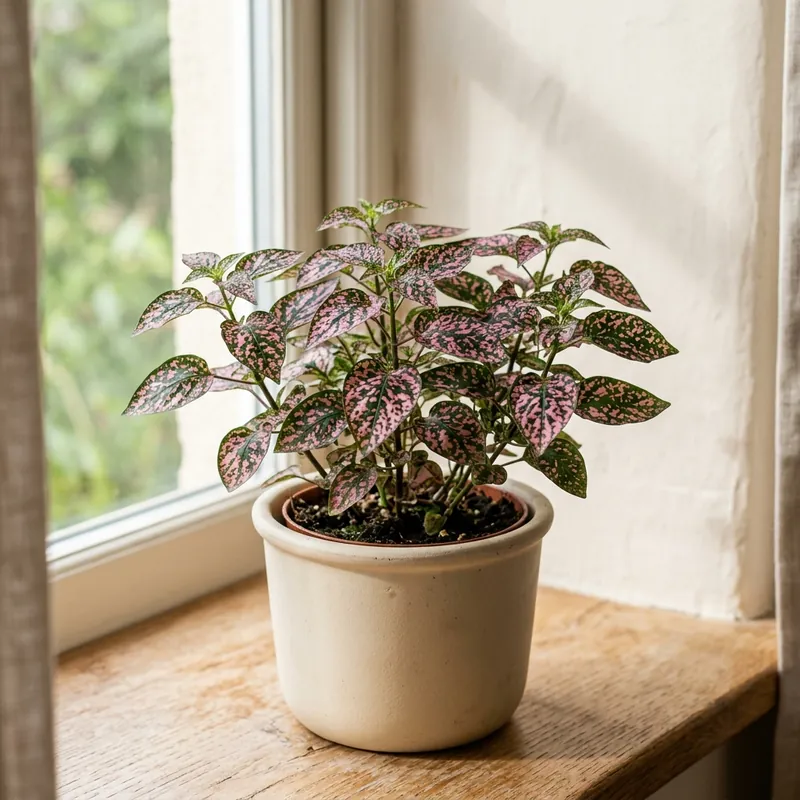
Compact tropical perennial prized for foliage speckled in pink, red, or white. Thrives in humid rooms or terrariums and stays bushy with regular pinching.
Essential care to help it thrive
Light and placement
Give bright filtered light to keep leaf speckles vivid; dim rooms turn new leaves mostly green and leggy, while scorching sun bleaches thin foliage.
Climate and season
Loves 16–25 °C warmth and moderate-to-high humidity, making it ideal for terrariums; keep airflow gentle to deter powdery mildew on damp foliage.
Soil and repotting
Use peat-free, loam-based potting mix lightened with 25% perlite so moisture stays steady without soggy pockets, feeding every 2–3 weeks in summer.
Conditions vary with pot, season and location. Always check the mix and your plant's response.
Polka dot plant: when to check the soil
Feel the soil first: keep it evenly lightly moist without waterlogging during growth, water sparingly in winter, and pinch back tall stems to stay bushy.
Let Grovia remind you when to check your Polka dot plantSave the plant, get watering reminders and adjust the rhythm as the seasons change. Free on iPhone and Android.
See table by pot size
| Ø | Summer | Winter |
|---|---|---|
| 10 cm | 3–4 days | 5–7 days |
| 15 cm | 3–5 days | 7–9 days |
| 25 cm | 4–6 days | 9–12 days |
How to identify it
Tender evergreen subshrub grown for spotted ovate leaves in pink, red, or white tones. Older nursery stock often carries the former name Hypoestes sanguinolenta.
Botanical sheet
- Family
- Acanthaceae
- Origin
- Madagascar · SE Asia · S Africa
- Size
- 15–50 cm bushy
- Climate
- 16–25 °C · min. 10 °C
What's wrong with your plant?
Pet safety Pet-friendly
ASPCA lists this species as non-toxic to cats and dogs. Even so, prevent heavy chewing or ingestion of potting mix or fertiliser.
See the ASPCA entryCommon questions
How do you stop a polka dot plant from getting leggy?
RHS advises pinching out growing shoot tips regularly alongside bright filtered light, plus removing tiny flowers to keep dense coloured foliage.
Can Hypoestes grow well inside a glass terrarium?
Yes: RHS specifically highlights it as an ideal plant for terrariums and bottle gardens thanks to its compact habit and humidity need.
Is polka dot plant completely safe for cats and dogs?
ASPCA classifies it non-toxic to dogs, cats, and horses, though chewing foliage may cause mild vomiting or diarrhea.