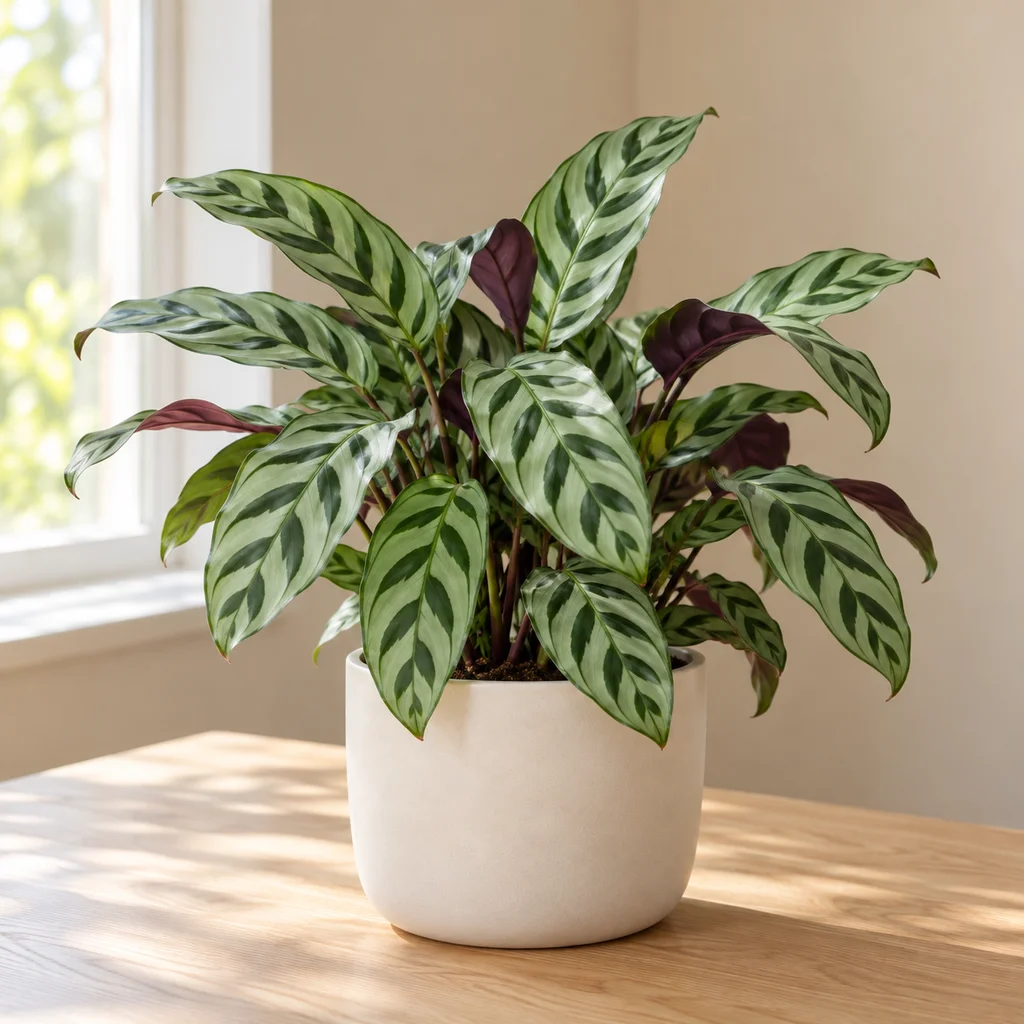
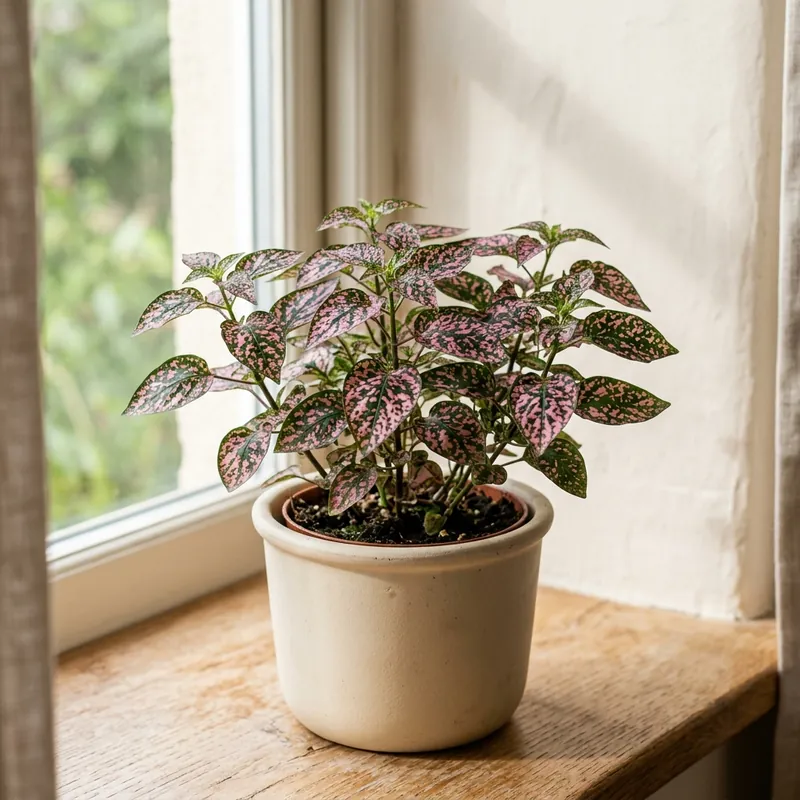
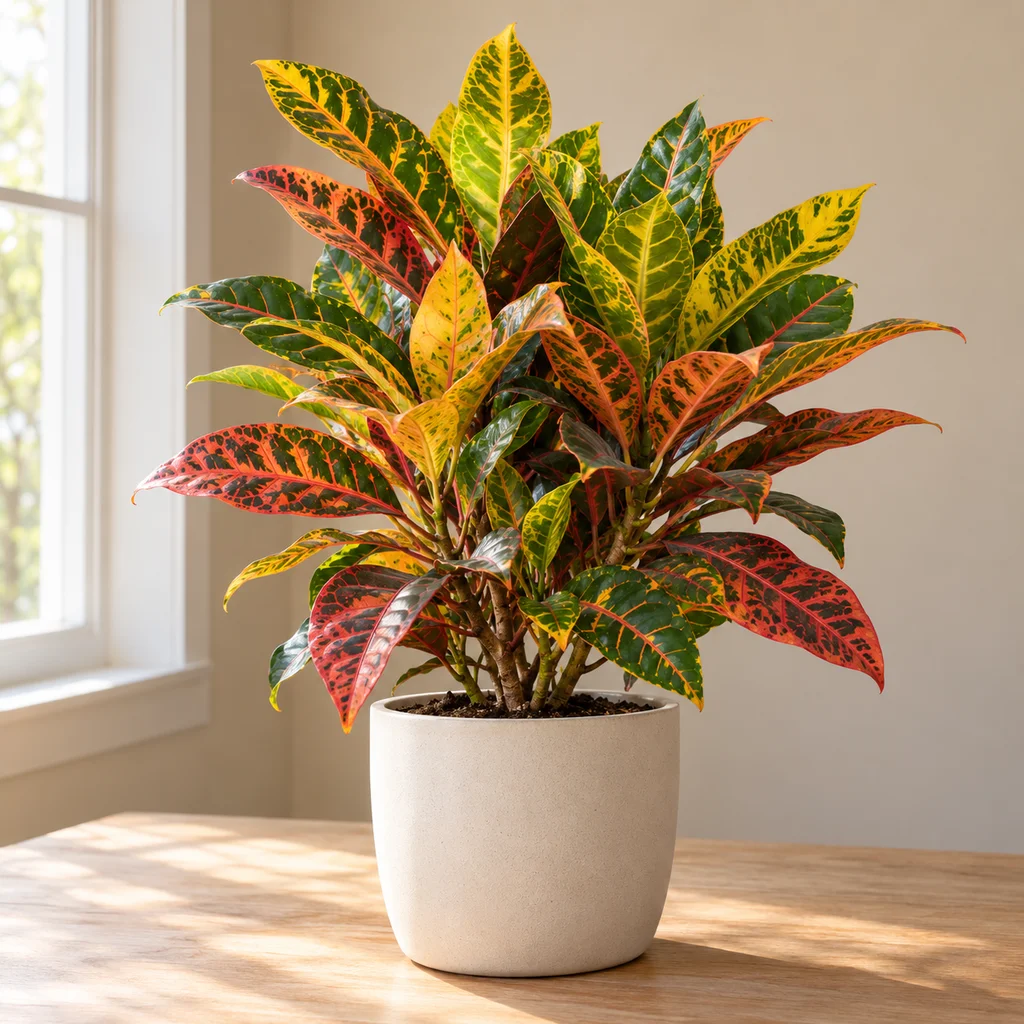
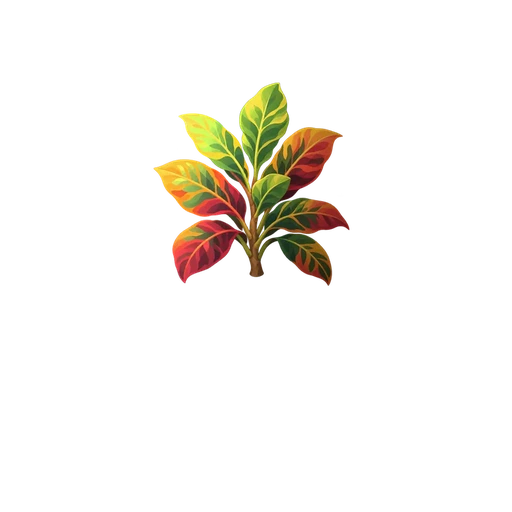
Painted prayer plant
Goeppertia picturataUpdated
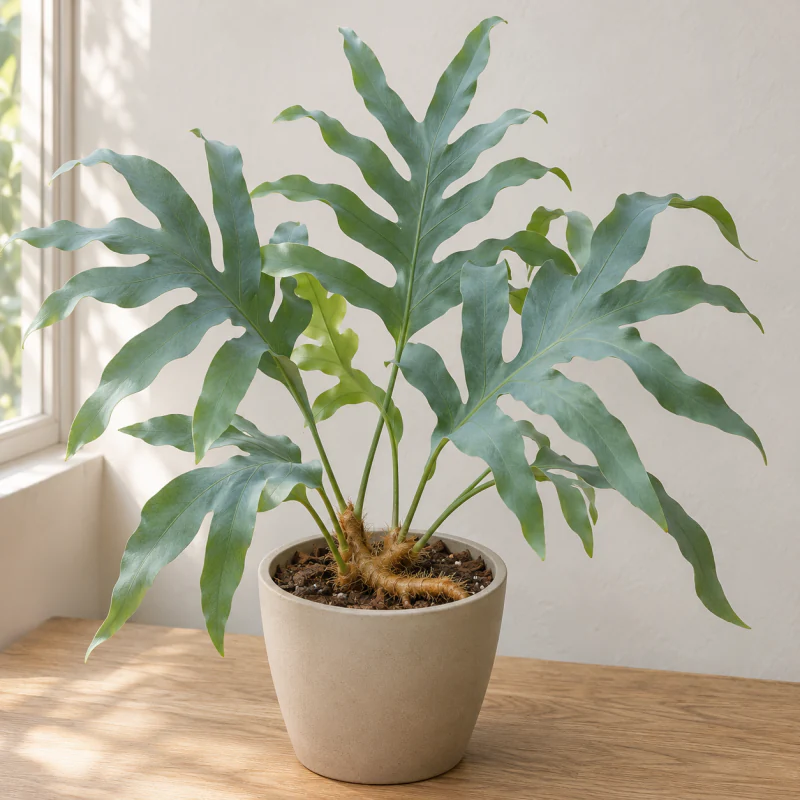
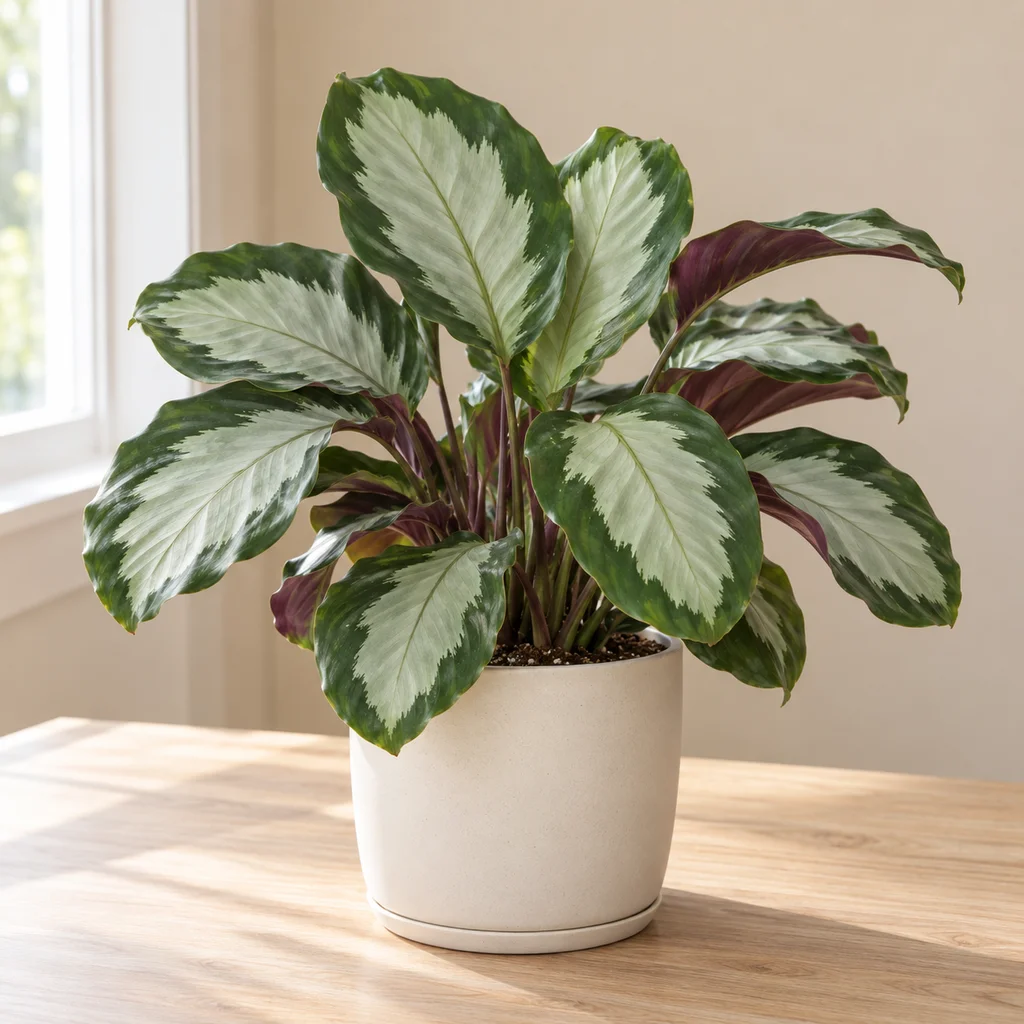
Painted prayer plant (Goeppertia picturata): indirect light. Keep the mix moderately moist, never with water trapped inside an outer pot.
Essential care to help it thrive
Light and placement
Indirect light; avoid strong sun that can mark leaf patterns.
Climate and season
It benefits from steady warmth and humidity; avoid dry draughts.
Soil and repotting
Use a draining mix that retains some moisture, matched to pot size and the drying rate in your home. During active growth, follow a suitable feed label. First check light, water and roots if the plant is declining.
Conditions vary with pot, season and location. Always check the mix and your plant's response.
Painted prayer plant: when to check the soil
Keep the mix moderately moist, never with water trapped inside an outer pot.
Let Grovia remind you when to check your Painted prayer plantSave the plant, get watering reminders and adjust the rhythm as the seasons change. Free on iPhone and Android.
See table by pot size
| Ø | Summer | Winter |
|---|---|---|
| 10 cm | 3–4 days | 5–7 days |
| 15 cm | 3–5 days | 7–9 days |
| 25 cm | 4–6 days | 9–12 days |
How to identify it
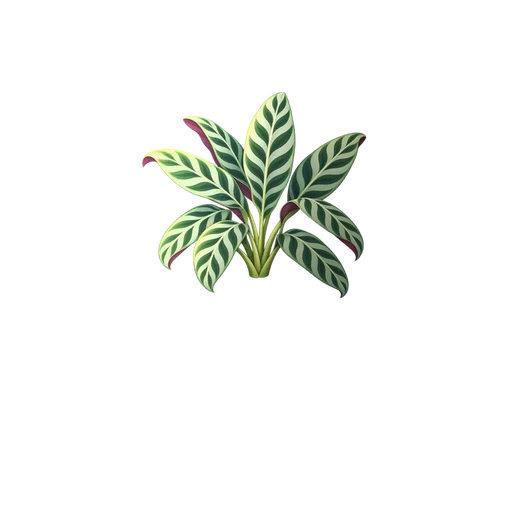
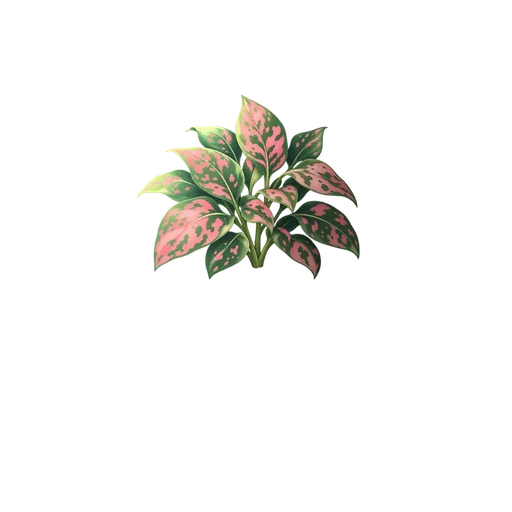
Oval ornamental leaves have contrasting patterns; the current botanical name is Goeppertia picturata, formerly Calathea picturata.
Botanical sheet
- Family
- Marantaceae
- Origin
- Northwest Brazil
- Size
- 30–40 cm
- Climate
- 18–24 °C · ≥ 16 °C
What's wrong with your plant?
Pet safety Toxicity unverified
There is no species-specific toxicity verification for this plant on ASPCA. Check with your veterinarian or search the ASPCA directory before keeping it within reach of pets.
Open the toxicity checkerCommon questions
Why is it listed as Calathea?
That is an older botanical name still used in trade.