Lantana (Lantana camara)
Lantana camaraUpdated
Sun-loving terrace shrub bearing nonstop dome clusters that shift from yellow to red all summer. Thrives on crisp drainage, hot daylight, and winter frost shelter.
Essential care to help it thrive
Light and placement
Position in full, unfiltered sun for at least six hours daily so flower umbels keep opening steadily; deep shade causes leggy green shoots with scant blooms.
Climate and season
Excels outdoors at 15–32 °C and endures warm coastal wind; protect containers below 5 °C in a bright frost-free porch before winter cold snaps arrive.
Soil and repotting
Choose a heavy container with clear drain holes and fertile gritty loam-based compost enriched with sharp perlite or coarse sand.
Conditions vary with pot, season and location. Always check the mix and your plant's response.
Lantana (Lantana camara): when to check the soil
Soak deeply once the upper substrate dries in summer heat, then cut back sharply during cool dormancy so roots never sit in cold waterlogged compost.
Let Grovia remind you when to check your Lantana (Lantana camara)Save the plant, get watering reminders and adjust the rhythm as the seasons change. Free on iPhone and Android.
See table by pot size
| Ø | Summer | Winter |
|---|---|---|
| 10 cm | 4–5 days | 7–10 days |
| 15 cm | 5–6 days | 9–13 days |
| 25 cm | 6–9 days | 12–17 days |
How to identify it
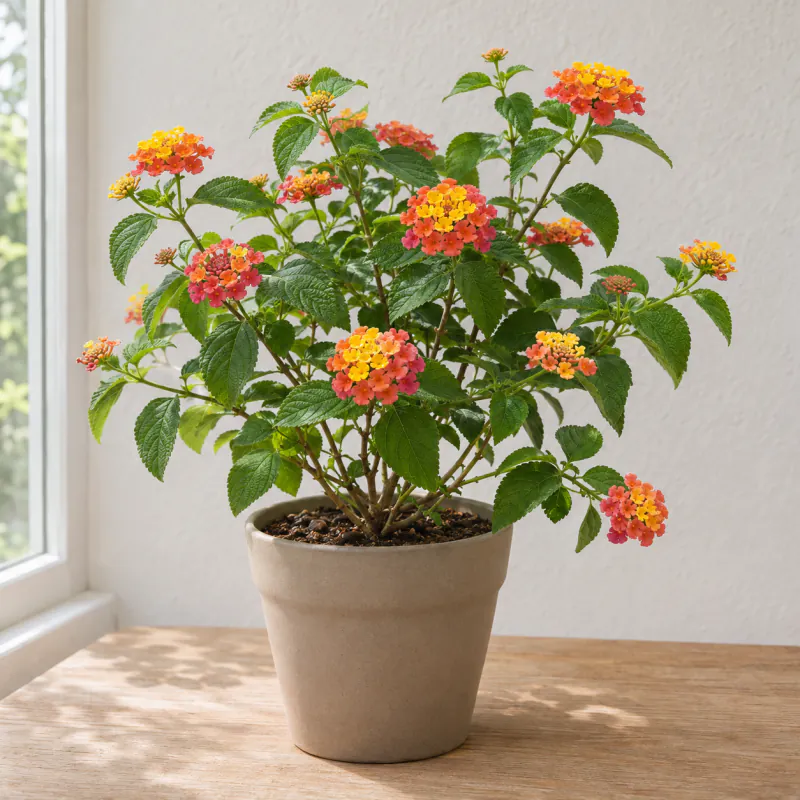
Woody aromatic shrub with prickly square stems, textured toothed ovate leaves, and clustered florets shifting yellow to coral; formerly listed as Lantana aculeata.
Botanical sheet
- Family
- Verbenaceae
- Origin
- Mexico to tropical Americas
- Size
- 40–80 cm potted (1–1.5 m)
- Climate
- 15–32 °C · min 5 °C
What's wrong with your plant?
Pet safety Toxic to pets
ASPCA lists this species as toxic to cats and dogs. Keep pets from chewing it; contact a veterinarian if ingestion is suspected.
Toxic principles and clinical signs quoted from the ASPCA database.
See the ASPCA entryCommon questions
Why should spent flowers and green berries be pinched off?
Deadheading prevents toxic seed formation, channels energy into continuous fresh buds into autumn, and keeps plants compact without spreading invasively.
Why do individual Lantana clusters show several colors?
Fresh florets open pale yellow and deepen into bright orange, pink, or scarlet as they age, giving each domed head a vibrant bicolored target for butterflies.
When is the safest time to prune back overgrown stems?
Trim back lightly during summer bloom and give a harder one-third cut in early spring after frost danger passes, wearing gloves against rough foliage.