Million Bells (Calibrachoa × hybrida)
Calibrachoa × hybridaUpdated
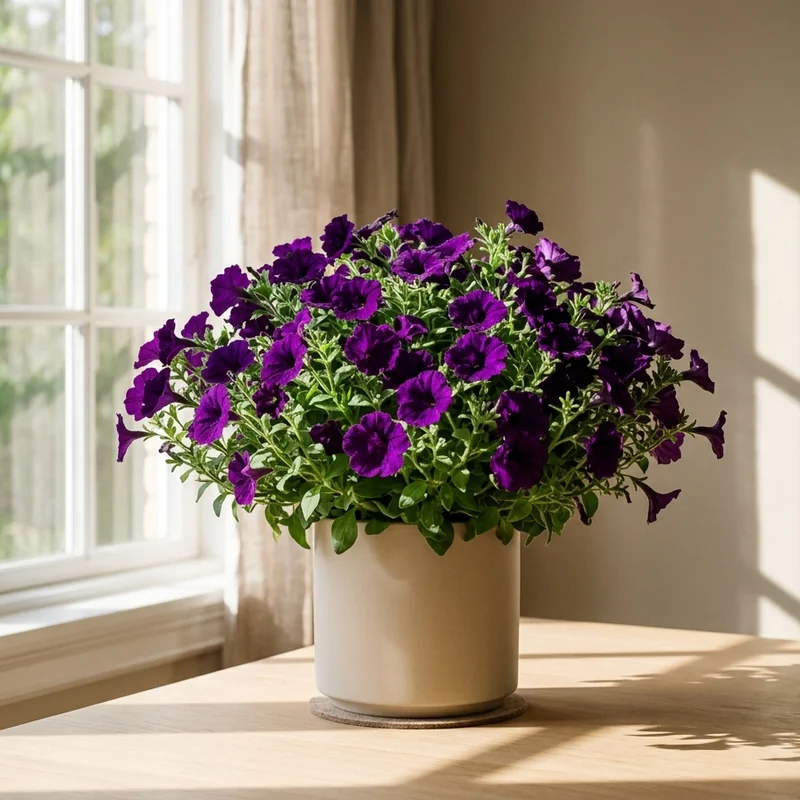
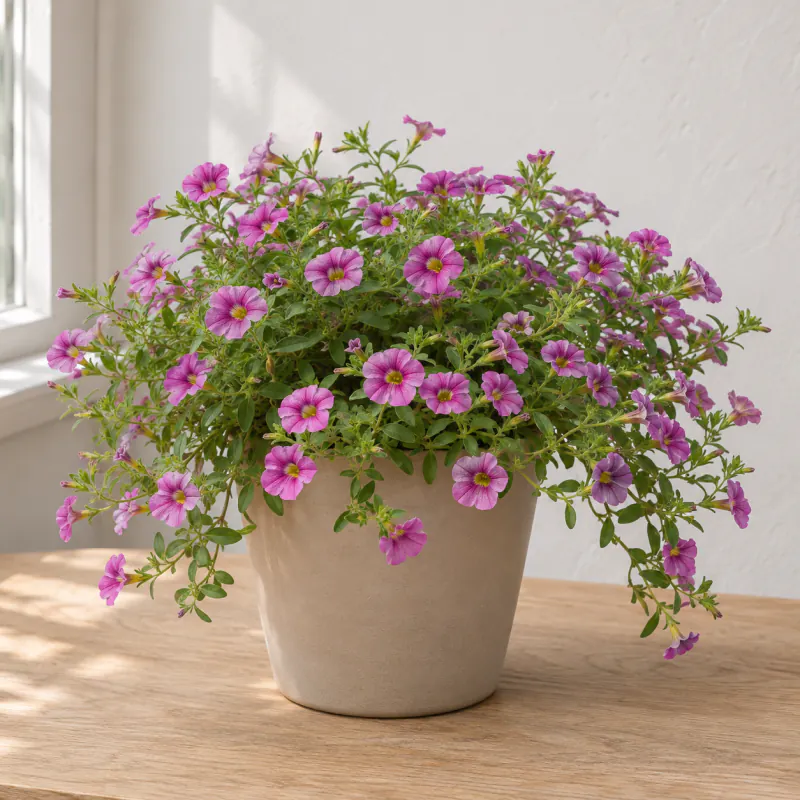
Self-cleaning trailing balcony bloomer overflowing with hundreds of tiny petunia-like trumpets from spring to frost. Demands full sun, acidic grit, and air.
Essential care to help it thrive
Light and placement
Place baskets in full outdoor sunlight for at least six hours daily so compact trails pack tightly with flowers; lower light yields sparse, open stems.
Climate and season
Excels between 12 and 28 °C in breezy hanging baskets or railing boxes; frost-tender (< 1 °C) and typically treated as a vigorous warm-season annual.
Soil and repotting
Grow in well-perforated baskets filled with slightly acidic, peat-free floral compost lightened with extra perlite.
Conditions vary with pot, season and location. Always check the mix and your plant's response.
Million Bells (Calibrachoa × hybrida): when to check the soil
Water thoroughly as soon as the upper layer feels dry, ensuring rapid drainage cleanly out of the bottom; cold soggy compost causes swift Phytophthora root rot.
Let Grovia remind you when to check your Million Bells (Calibrachoa × hybrida)Save the plant, get watering reminders and adjust the rhythm as the seasons change. Free on iPhone and Android.
See table by pot size
| Ø | Summer | Winter |
|---|---|---|
| 10 cm | 4–5 days | 7–10 days |
| 15 cm | 5–6 days | 9–13 days |
| 25 cm | 6–9 days | 12–17 days |
How to identify it
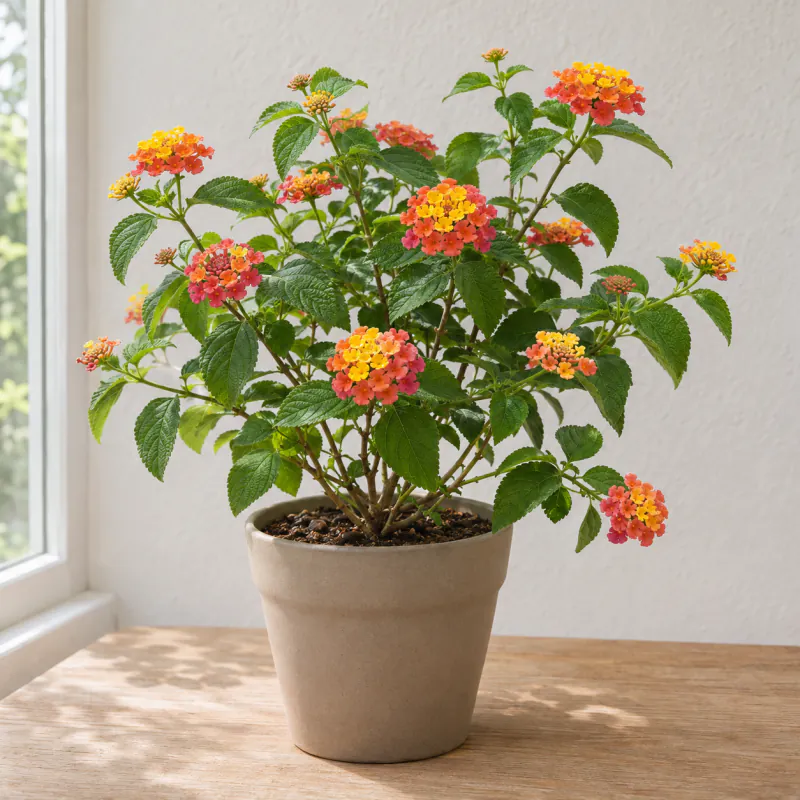
Mounded trailing hybrid covered in non-sticky small elliptic leaves and profuse miniature bell flowers in bright single or bicolored shades.
Botanical sheet
- Family
- Solanaceae
- Origin
- Hybrid of South American origin
- Size
- 10–25 cm tall (60 cm trail)
- Climate
- 12–28 °C · min 1 °C
What's wrong with your plant?
Pet safety Toxicity unverified
There is no species-specific toxicity verification for this plant on ASPCA. Check with your veterinarian or search the ASPCA directory before keeping it within reach of pets.
Open the toxicity checkerCommon questions
Do Million Bells need constant deadheading all summer long?
No—modern hybrids are mostly self-cleaning, dropping or hiding spent trumpets quickly beneath constant fresh side shoots without sticky seed pods.
How is Calibrachoa different from classic cascading Petunia?
Calibrachoa has smaller non-sticky leaves, loads of miniature bells, dislikes wet soggy roots even more, and needs mildly acidic iron nutrition to stay green.
Why do Calibrachoa baskets turn pale lime-yellow midsummer?
Alkaline tap water pushes soil pH up and locks out iron absorption; alternating regular bloom feed with acidifying iron fertilizer restores deep green color.