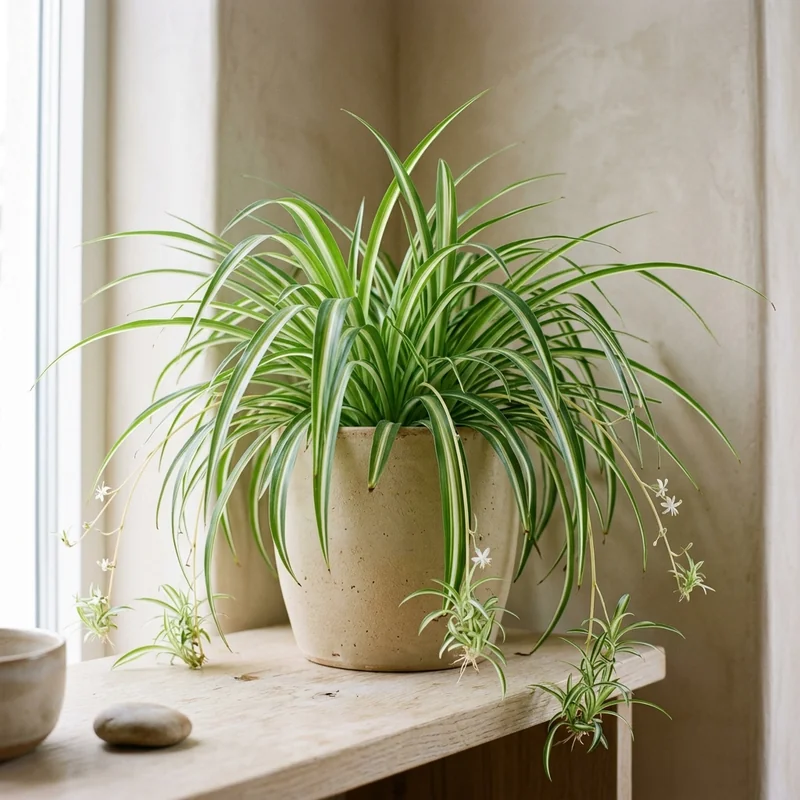
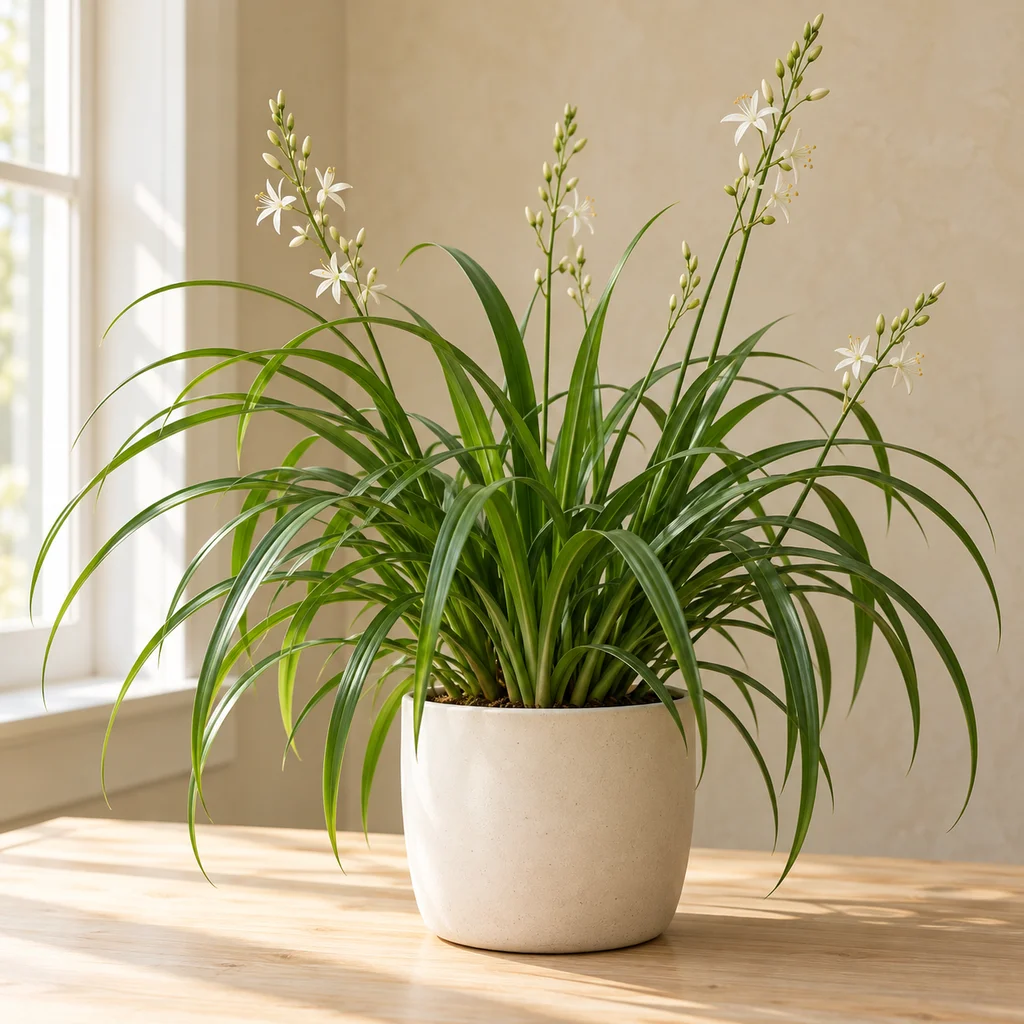
Fishbone fern (Nephrolepis cordifolia)
Nephrolepis cordifoliaUpdated
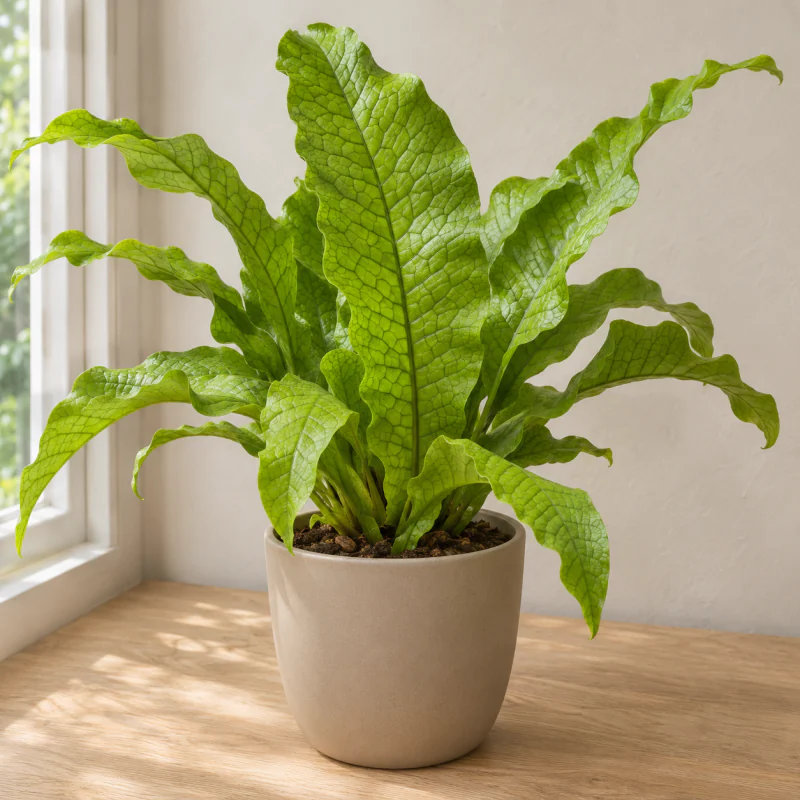
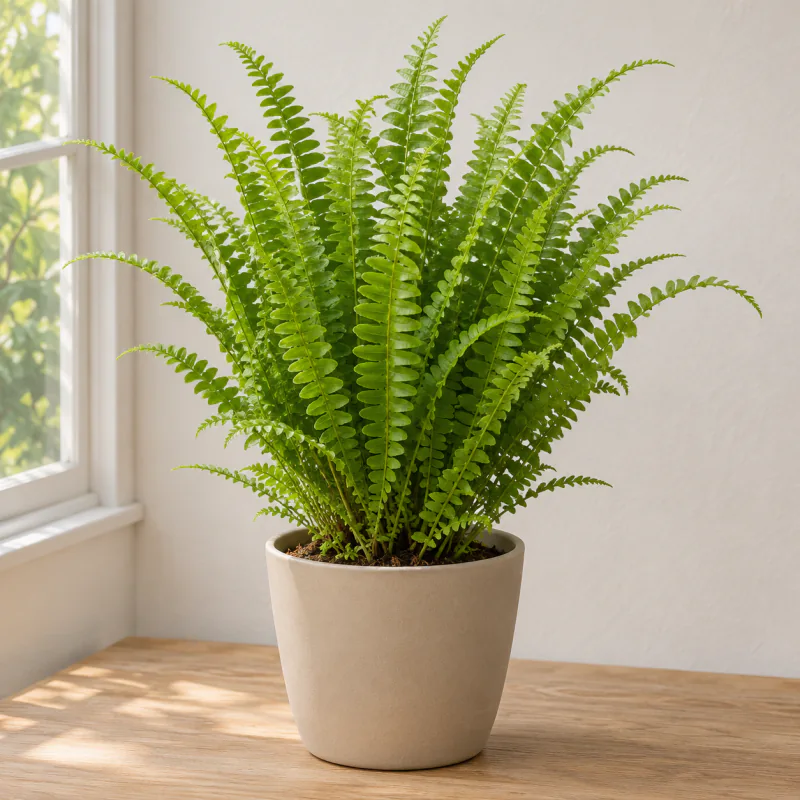
Upright sword fern packed with overlapping narrow leaflets and small water-storing root tubers underground. Wants soft indirect light, humidity, and moist soil.
Essential care to help it thrive
Light and placement
Keep in medium or soft indirect window light away from harsh midday sunbeams, which bleach delicate overlapping pinnae dull yellow and crispy.
Climate and season
Excels at 15–25 °C (RHS H1b minimum 10 °C indoors) with 50–65% room humidity away from dry heating vents and chilly air blasts.
Soil and repotting
Drained pot with airy peat-free blend of coco coir, fine composted bark, and perlite for springy moisture.
Conditions vary with pot, season and location. Always check the mix and your plant's response.
Fishbone fern (Nephrolepis cordifolia): when to check the soil
Water gently with rainwater before compost dries fully, allowing excess to drain cleanly. Small root tubers buffer short gaps yet prefer even moisture.
Let Grovia remind you when to check your Fishbone fern (Nephrolepis cordifolia)Save the plant, get watering reminders and adjust the rhythm as the seasons change. Free on iPhone and Android.
See table by pot size
| Ø | Summer | Winter |
|---|---|---|
| 10 cm | 3–4 days | 5–7 days |
| 15 cm | 3–5 days | 7–9 days |
| 25 cm | 4–6 days | 9–12 days |
How to identify it
Dense upright evergreen clump narrower than Boston fern with overlapping bright-green leaflets and marble-like translucent water tubers along roots.
Botanical sheet
- Family
- Nephrolepidaceae
- Origin
- Tropical Asia to the Pacific and western Africa
- Size
- 0.5–1 m upright fronds
- Climate
- 15–25 °C · min 10 °C
What's wrong with your plant?
Pet safety Toxicity unverified
There is no species-specific toxicity verification for this plant on ASPCA. Check with your veterinarian or search the ASPCA directory before keeping it within reach of pets.
Open the toxicity checkerCommon questions
What are the round watery marbles tucked inside the rootball?
Nephrolepis cordifolia naturally grows small translucent tubers along underground stolons to store spare moisture—leave them attached when repotting.
How is Fishbone Fern different from classic Boston Fern?
Fishbone fern stands much more upright with narrower ladder-like fronds whose small leaflets slightly overlap, plus underground storage tubers.
Should dry brown lower fronds be trimmed cleanly away?
Yes, snip spent brown stems neatly at soil level with clean shears so fresh bright green fiddles get unrestricted air and light.