String of turtles
Peperomia prostrataUpdated
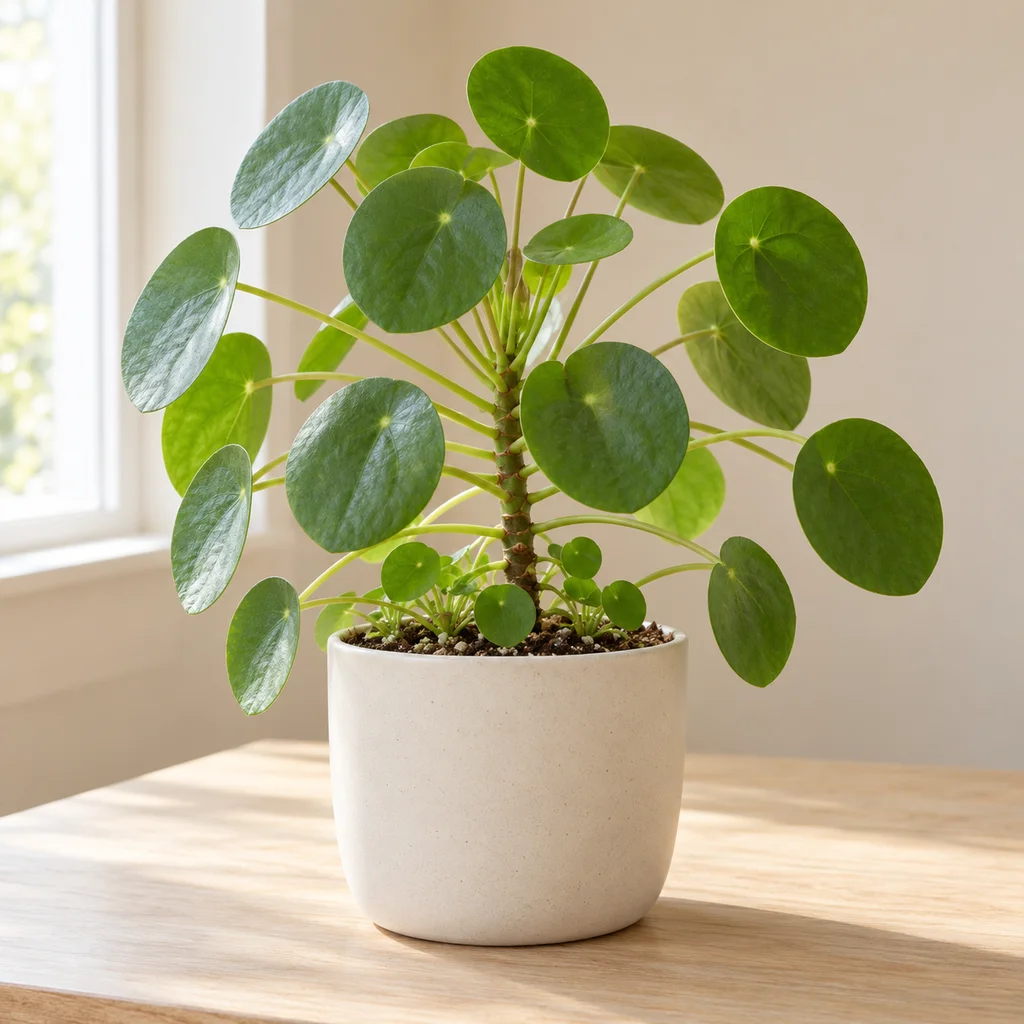
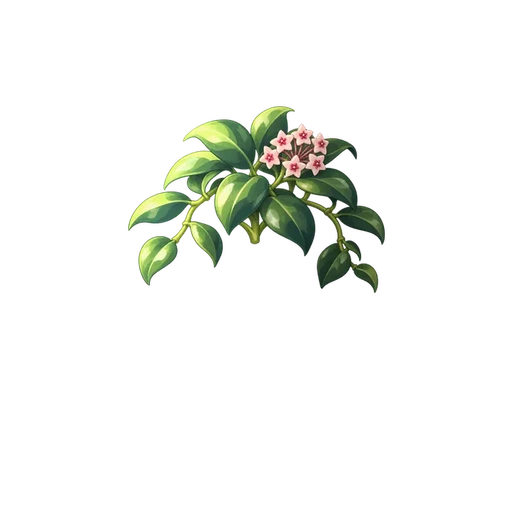
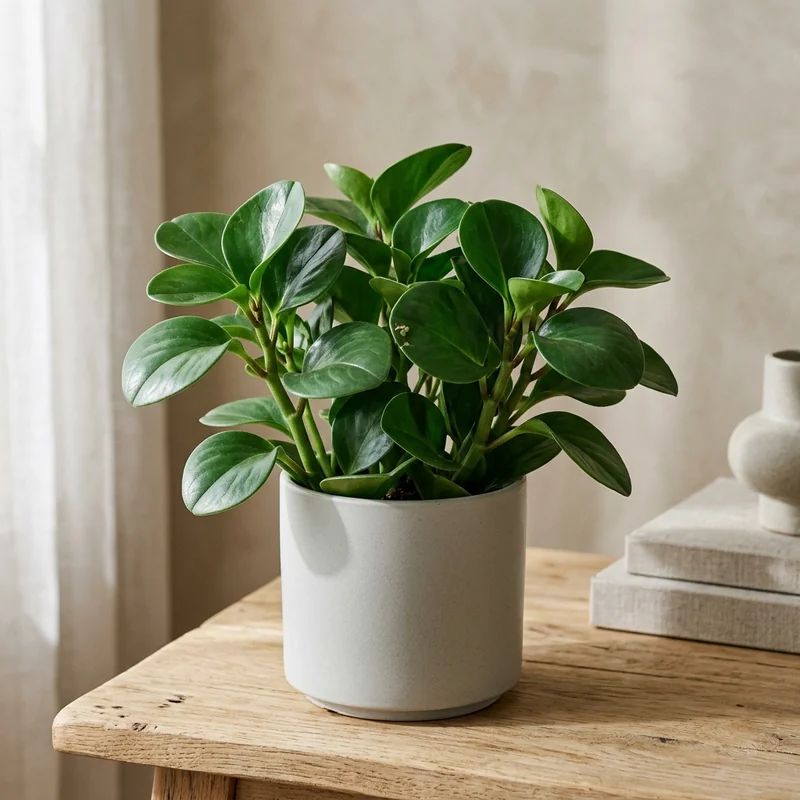
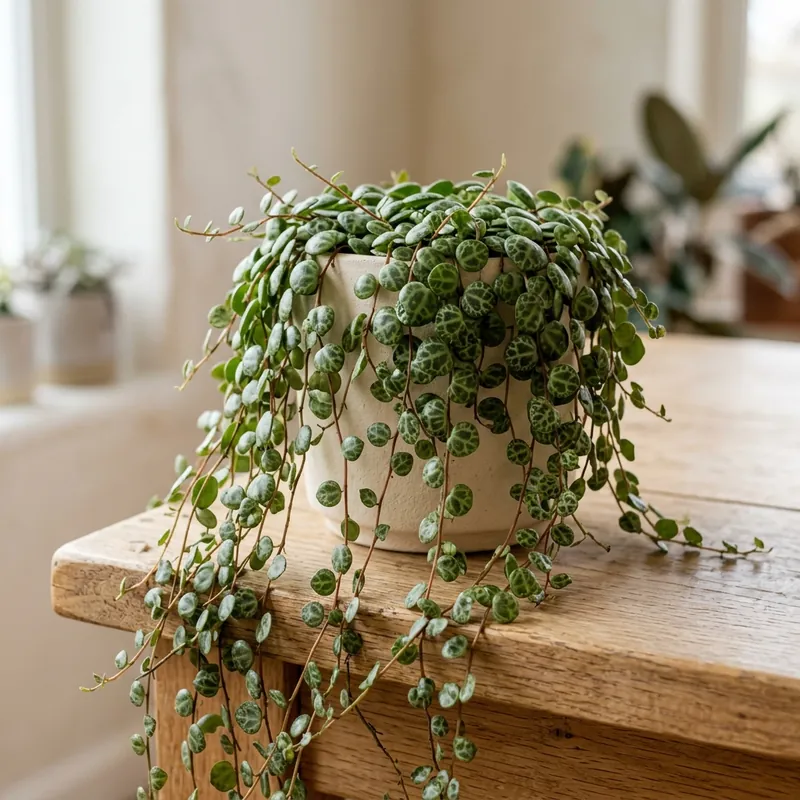
Trailing Ecuadorian peperomia studded with coin-sized succulent leaves patterned like turtle shells. Fine shallow roots thrive in wide, shallow pots.
Essential care to help it thrive
Light and placement
Give bright indirect light during active growth, shifting into fuller light in winter. Shield foliage from scorching summer glass sun.
Climate and season
Warm frost-free rooms (18–26 °C, min. 10 °C) with moderate humidity. Feed monthly with a balanced liquid fertiliser from spring to summer.
Soil and repotting
Use a shallow draining pot filled with airy peat-free houseplant compost lightened with 25% perlite and 25% fine orchid bark.
Conditions vary with pot, season and location. Always check the mix and your plant's response.
String of turtles: when to check the soil
Let the top half dry between waterings: water moderately in summer and sparingly in winter with tepid soft water; bottom-watering is ideal.
Let Grovia remind you when to check your String of turtlesSave the plant, get watering reminders and adjust the rhythm as the seasons change. Free on iPhone and Android.
See table by pot size
| Ø | Summer | Winter |
|---|---|---|
| 10 cm | 5–7 days | 11–15 days |
| 15 cm | 7–9 days | 13–18 days |
| 25 cm | 9–12 days | 18–24 days |
How to identify it
Slender trailing stems bear rounded, semi-succulent leaves marbled like tiny turtle shells alongside slender greenish-white flower spikes.
Botanical sheet
- Family
- Piperaceae
- Origin
- Ecuador
- Size
- 10–50 cm trailing
- Climate
- 18–26 °C · min. 10 °C
What's wrong with your plant?
Pet safety Pet-friendly
ASPCA lists this species as non-toxic to cats and dogs. Even so, prevent heavy chewing or ingestion of potting mix or fertiliser.
See the ASPCA entryCommon questions
How should you water string of turtles without rotting delicate stems?
Let the top half dry out, then bottom-water with tepid soft water so shallow roots drink evenly while trailing stems stay dry.
Should you trim off the thin greenish flower spikes?
RHS notes no pruning is needed, though pinching out slender spikes redirects energy into fuller leaf growth.
How do you propagate broken trailing vines?
Lay stem cuttings across warm, lightly damp compost in summer so nodes root quickly into fuller plants.