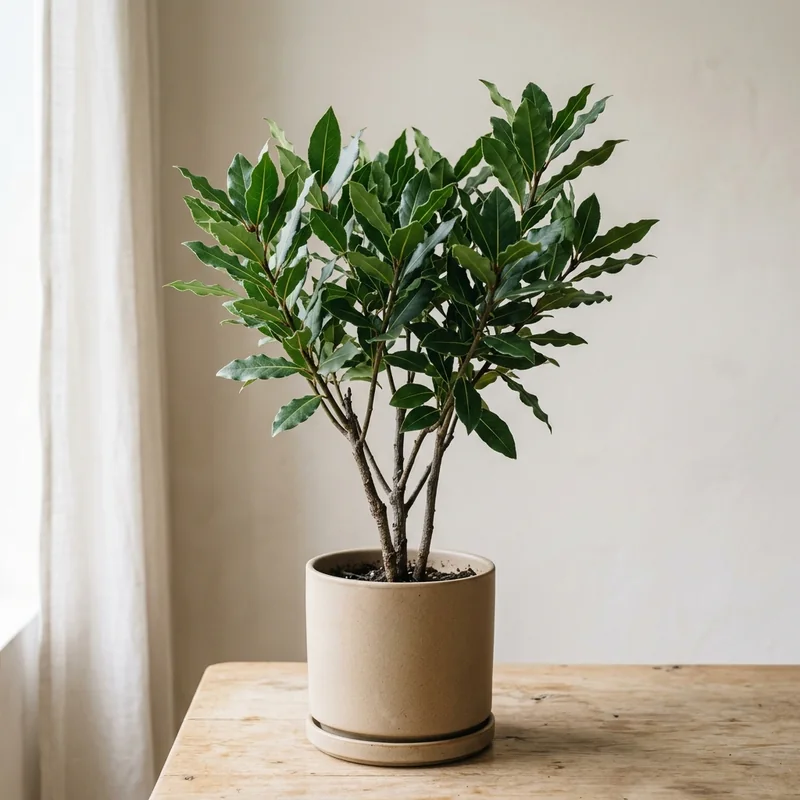
Pomegranate (Punica granatum)
Punica granatumUpdated
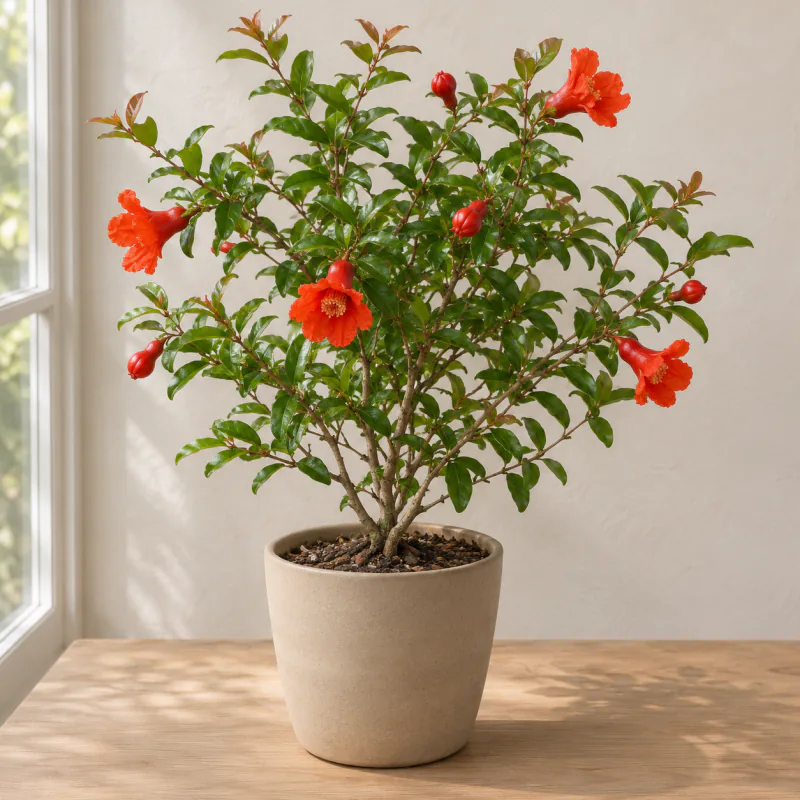
Sun-loving deciduous Mediterranean shrub bearing glossy leaves, scarlet trumpet summer flowers, and ornamental or edible red fruits in warm sheltered patio pots.
Essential care to help it thrive
Light and placement
Requires unobstructed hot full sun against warm south or west walls to set scarlet blossoms and ripen fruit cleanly; dwarf 'Nana' suits compact balconies best.
Climate and season
Excels in long warm summers between 12 and 34 °C and survives brief freezes down to -5 °C once woody; protect shallow pots from prolonged wet hard frost.
Soil and repotting
Use a large deep pot with gravelly drainage holes and fertile, free-draining sandy loam-based compost.
Conditions vary with pot, season and location. Always check the mix and your plant's response.
Pomegranate (Punica granatum): when to check the soil
Water steadily when upper compost dries through summer flowering and fruiting so swelling rinds never split, then keep leafless dormant roots nearly dry in winter.
Let Grovia remind you when to check your Pomegranate (Punica granatum)Save the plant, get watering reminders and adjust the rhythm as the seasons change. Free on iPhone and Android.
See table by pot size
| Ø | Summer | Winter |
|---|---|---|
| 10 cm | 5–7 days | 10–13 days |
| 15 cm | 6–8 days | 12–17 days |
| 25 cm | 8–11 days | 16–22 days |
How to identify it
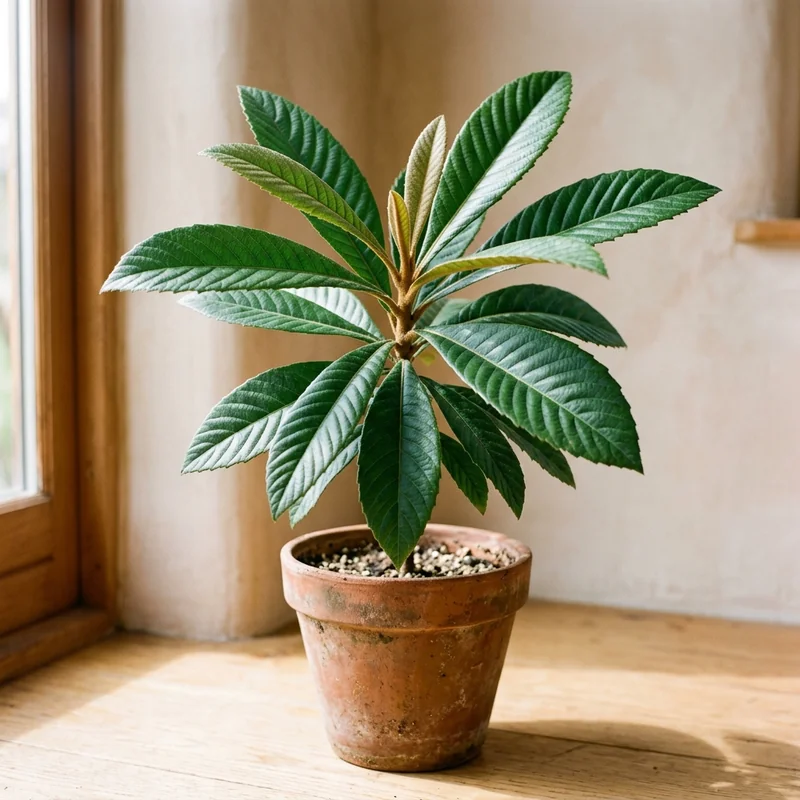
Rounded spiny-twigged deciduous shrub or small tree with bronze-flushed glossy narrow leaves, fiery orange-scarlet blooms, and leathery red fruits.
Botanical sheet
- Family
- Lythraceae
- Origin
- Eastern Mediterranean to the Himalayas
- Size
- 0.8–1.5 m potted (1.5–2.5 m)
- Climate
- 12–34 °C · min -5 °C
What's wrong with your plant?
Pet safety Toxicity unverified
There is no species-specific toxicity verification for this plant on ASPCA. Check with your veterinarian or search the ASPCA directory before keeping it within reach of pets.
Open the toxicity checkerCommon questions
Which Pomegranate size works best for urban balcony containers?
Dwarf Punica granatum var. nana stays compact around 50–100 cm, flowers prolifically in medium pots, and yields miniature bright fruits even on city terraces.
Should container Pomegranates receive heavy nitrogen fertilizer?
No—heavy nitrogen triggers weak sappy suckers with fewer blossoms and aphid attack; apply a light balanced feed cleanly once spring shoots open.
When should you prune potted Pomegranate branches cleanly?
Remove crossing inner twigs and basal suckers during late-winter leafless dormancy, leaving healthy short outer fruiting spurs undisturbed.