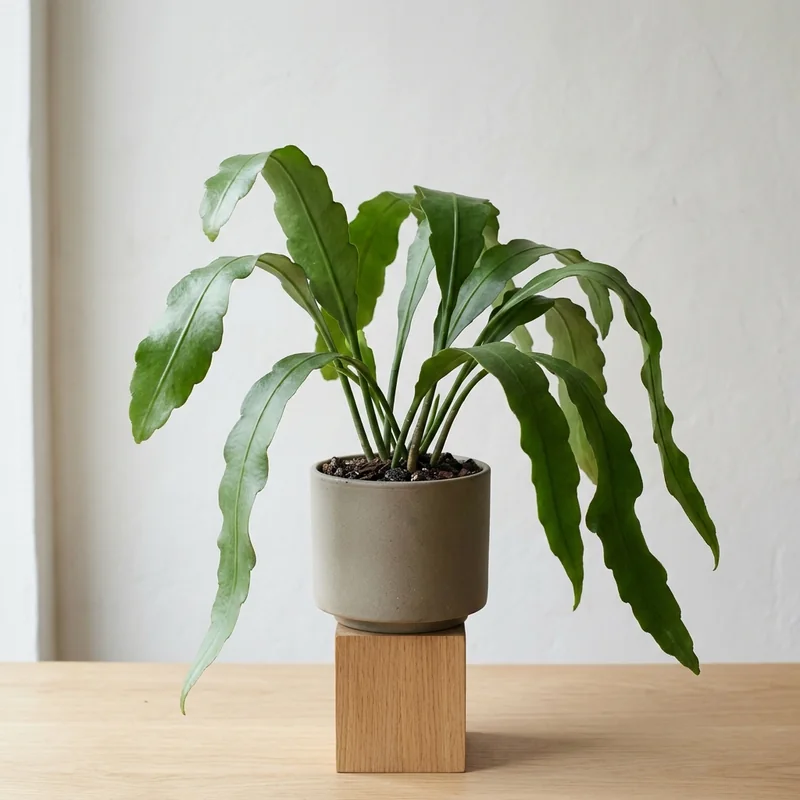
Mistletoe cactus (Rhipsalis)
Rhipsalis bacciferaUpdated
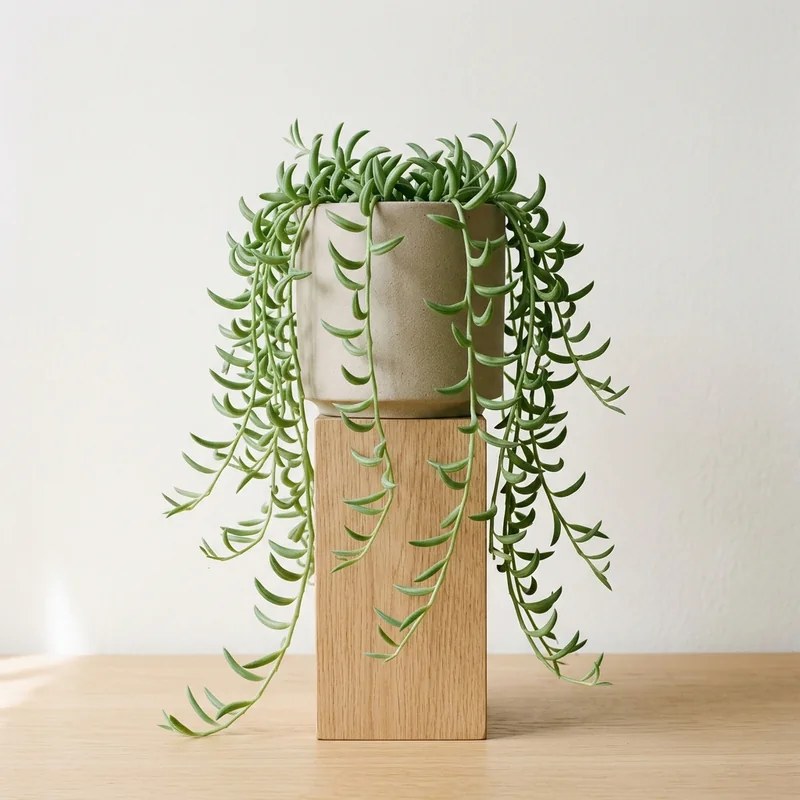
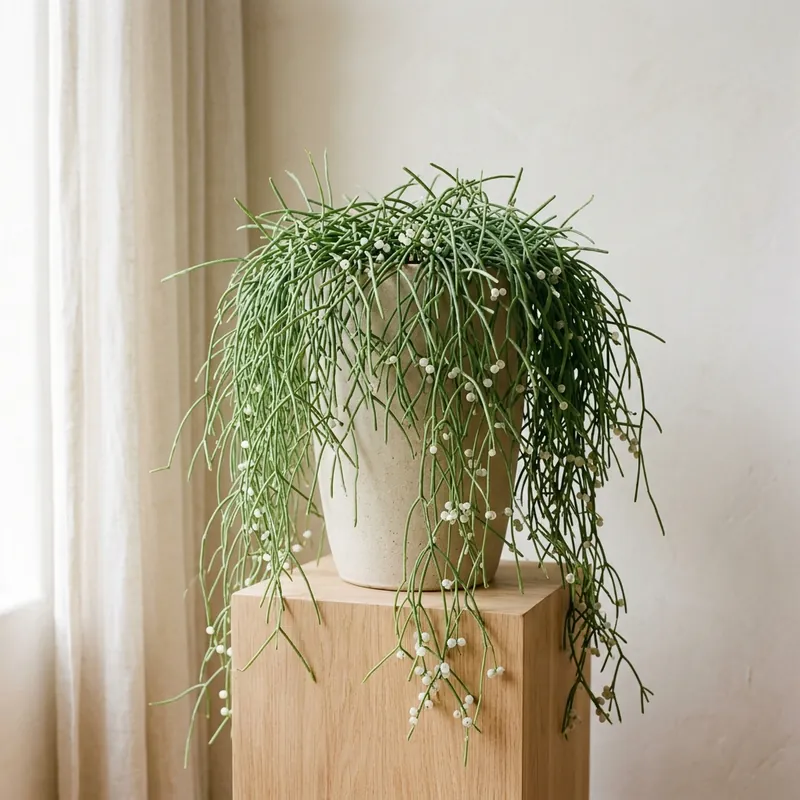
Pet-safe trailing forest cactus with spineless pencil-thin green stems and pearl berries. Thrives in bright filtered light, humidity and airy bark media.
Essential care to help it thrive
Light and placement
Unlike desert cacti, it loves bright indirect light near a shaded window; harsh direct sun bleaches or scorches tender stems.
Climate and season
Enjoys gentle humidity and frost-free warmth above 10 °C. Mist softly or group near other tropicals, keeping pots well away from blasting heaters.
Soil and repotting
Porous epiphytic blend of fine orchid bark, perlite and light coco coir that drains within seconds.
Conditions vary with pot, season and location. Always check the mix and your plant's response.
Mistletoe cactus (Rhipsalis): when to check the soil
As a jungle epiphyte, check the top 2–3 cm every 6–9 days and water once lightly dry rather than leaving the pot bone-dry for weeks.
Let Grovia remind you when to check your Mistletoe cactus (Rhipsalis)Save the plant, get watering reminders and adjust the rhythm as the seasons change. Free on iPhone and Android.
See table by pot size
| Ø | Summer | Winter |
|---|---|---|
| 10 cm | 7–10 days | 14–19 days |
| 15 cm | 9–12 days | 17–24 days |
| 25 cm | 11–16 days | 23–32 days |
How to identify it
Cascading clusters of slender cylindrical branching green stems mostly free of spines, producing tiny white blooms and translucent berries. Formerly Rhipsalis cassytha.
Botanical sheet
- Family
- Cactaceae
- Origin
- Tropical Americas · Africa · Madagascar
- Size
- Trailing 2.5–4 m
- Climate
- 15–26 °C · min 10 °C
What's wrong with your plant?
Pet safety Pet-friendly
ASPCA lists this species as non-toxic to cats and dogs. Even so, prevent heavy chewing or ingestion of potting mix or fertiliser.
See the ASPCA entryCommon questions
Why does Rhipsalis need more water than desert cacti?
It grows naturally anchored in damp rainforest tree canopies rather than arid sand, so its shallow roots prefer regular moderate moisture with airy bark drainage.
Is Mistletoe cactus safe around cats and dogs?
Yes: ASPCA lists it under Rhipsalis cassutha as non-toxic to dogs, cats and horses, and mature stems lack sharp desert spines.
How can I propagate snapped or trimmed trailing stems?
Allow cut green segments to callous indoors for 24 hours, then press shallowly into damp bark-and-perlite media under bright filtered light.