Lipstick plant (Aeschynanthus)
Aeschynanthus radicansUpdated
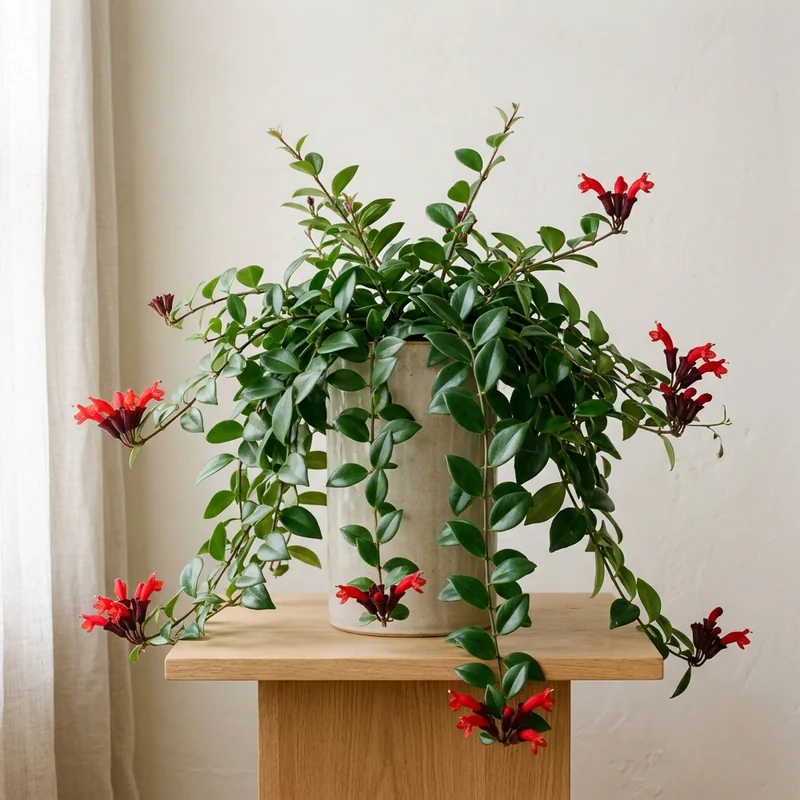
Trailing epiphyte famed for glossy leathery leaves and scarlet tubular blooms from burgundy calyces. Loves bright filtered light and warmth above 15 °C.
Essential care to help it thrive
Light and placement
Give bright indirect light year-round to trigger steady red flowering from spring through autumn; mild morning sun helps blooms, while intense midday sun bleaches leaves.
Climate and season
Needs consistent warmth at 18–26 °C strictly above 15 °C (RHS H1a) plus higher indoor humidity away from freezing winter glass.
Soil and repotting
Chunky airy epiphyte mix combining fine orchid bark, perlite and light coco coir.
Conditions vary with pot, season and location. Always check the mix and your plant's response.
Lipstick plant (Aeschynanthus): when to check the soil
Check the upper third every 6–9 days during warm growth, watering thoroughly with tepid soft water and draining cleanly; cut back well in cooler winter months.
Let Grovia remind you when to check your Lipstick plant (Aeschynanthus)Save the plant, get watering reminders and adjust the rhythm as the seasons change. Free on iPhone and Android.
See table by pot size
| Ø | Summer | Winter |
|---|---|---|
| 10 cm | 4–5 days | 7–10 days |
| 15 cm | 5–6 days | 9–13 days |
| 25 cm | 6–9 days | 12–17 days |
How to identify it
Arching cascading stems lined with thick glossy opposite oval leaves and curved bright-scarlet tubular flowers sliding out from dark maroon-burgundy calyces.
Botanical sheet
- Family
- Gesneriaceae
- Origin
- Malay Peninsula · Sumatra · Java
- Size
- Trailing 0.5–1 m
- Climate
- 18–26 °C · min 15 °C
What's wrong with your plant?
Pet safety Toxicity unverified
There is no species-specific toxicity verification for this plant on ASPCA. Check with your veterinarian or search the ASPCA directory before keeping it within reach of pets.
Open the toxicity checkerCommon questions
Why does my Lipstick Plant refuse to bloom indoors?
Too little light is the usual culprit: hang pots right near an east or bright shaded window and ease off nitrogen so glossy vines concentrate on setting flower buds.
When is the best time to trim trailing stems back?
Snip long stems just after autumn blooms fade to keep baskets bushy and insert trimmed 8 cm cuttings directly into warm damp bark mix.
Does ASPCA confirm Aeschynanthus radicans is safe around pets?
ASPCA specifically covers a sibling species (Aeschynanthus humilis) rather than A. radicans, so exact pet safety for this species stays unverified.