Common hyacinth (Hyacinthus)
Hyacinthus orientalisUpdated
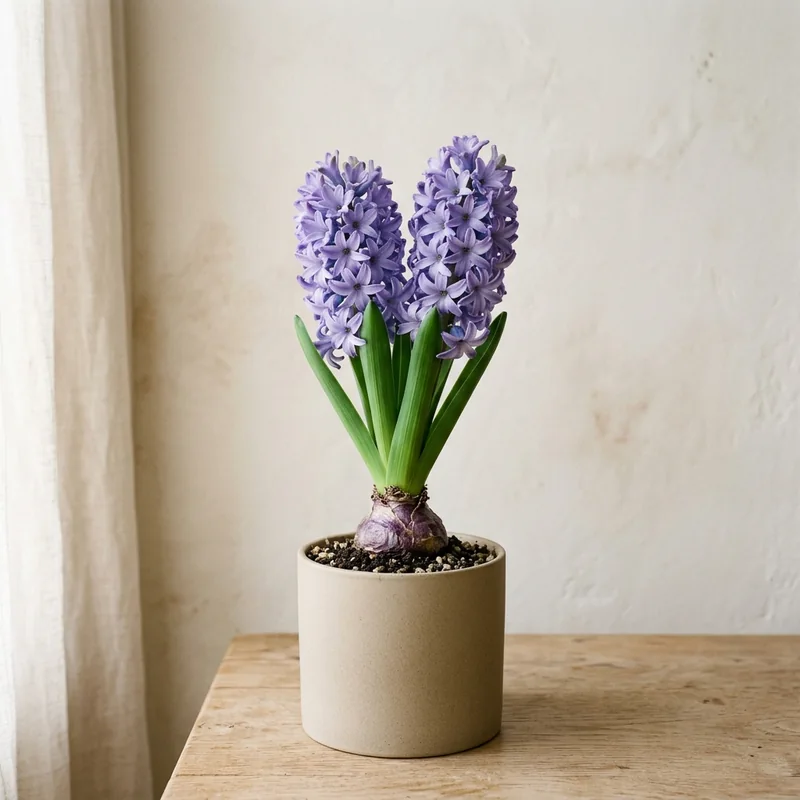
Intensely fragrant spring bulb sending up dense waxy floral spires framed by glossy strap leaves. Loves cool bright light, careful rim watering and strict pet isolation.
Essential care to help it thrive
Light and placement
Place in bright cool daylight or mild morning sun so sturdy flower stems stay compact; low light stretches heavy top-heavy spikes toward glass quickly.
Climate and season
Hardy outdoors down to -10 °C (RHS H4); cool 12–18 °C indoor rooms stretch fragrant blooms far longer than hot heated living rooms.
Soil and repotting
Grit-lightened porous potting soil with one-third coarse perlite or sand, leaving the bulb tip slightly exposed.
Conditions vary with pot, season and location. Always check the mix and your plant's response.
Common hyacinth (Hyacinthus): when to check the soil
Check the upper 2–3 cm every 5–8 days during bloom and water lightly along the pot rim—never splashing exposed bulb shoulders—then dry completely once leaves die back.
This plant is not watered in a pot
Its watering routine does not fit a soil-check interval: follow the care sheet.
Let Grovia remind you when to check your Common hyacinth (Hyacinthus)Save the plant, get watering reminders and adjust the rhythm as the seasons change. Free on iPhone and Android.
How to identify it
Stout papery bulb topped with channeled glossy strap-shaped leaves surrounding a heavy upright cylindrical spike packed with fragrant waxy tubular star blooms.
Botanical sheet
- Family
- Asparagaceae
- Origin
- Eastern Mediterranean · Turkey · Levant
- Size
- 20–30 cm bulb spike
- Climate
- 8–20 °C · min -10 °C
What's wrong with your plant?
Pet safety Toxic to pets
ASPCA lists this species as toxic to cats and dogs. Keep pets from chewing it; contact a veterinarian if ingestion is suspected.
Toxic principles and clinical signs quoted from the ASPCA database.
See the ASPCA entryCommon questions
Should you wear gloves when potting Hyacinth bulbs?
Yes: dry hyacinth bulb tunics contain calcium oxalate needles that trigger mild itchy contact dermatitis ('hyacinth itch'), so wear gloves and avoid rubbing eyes.
Is Hyacinth toxic around household cats and dogs?
Yes: ASPCA classifies Hyacinthus orientalis as toxic to dogs, cats and horses—toxins concentrate heavily in bulbs, causing severe vomiting, drooling and diarrhea.
Can potted forced hyacinth bulbs be saved to bloom next year?
Yes: snip only the faded flower stem, water lightly until green leaves yellow naturally, dry store through summer and plant outdoors in autumn garden soil.