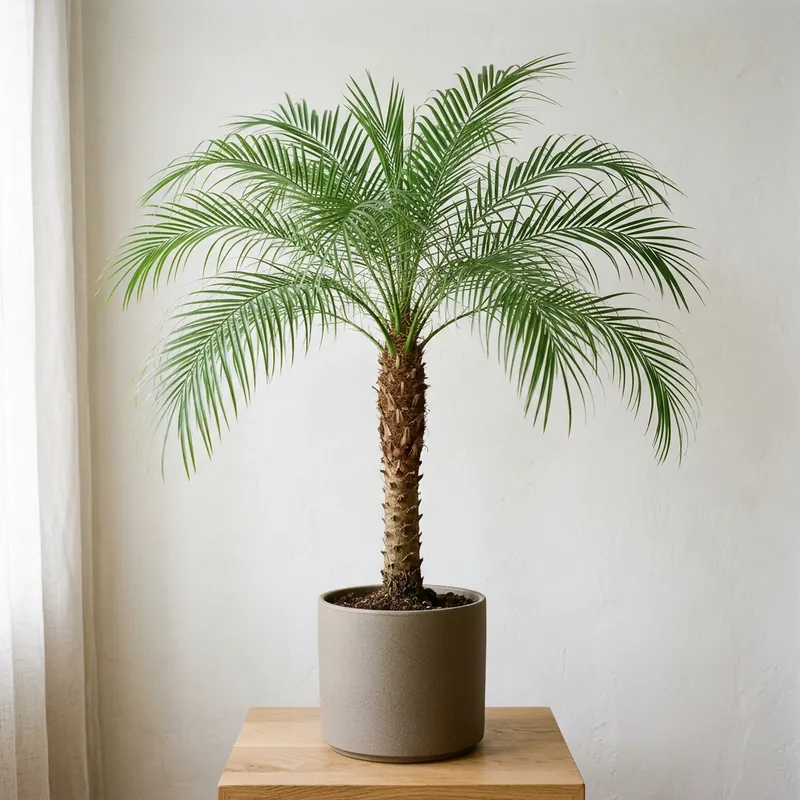
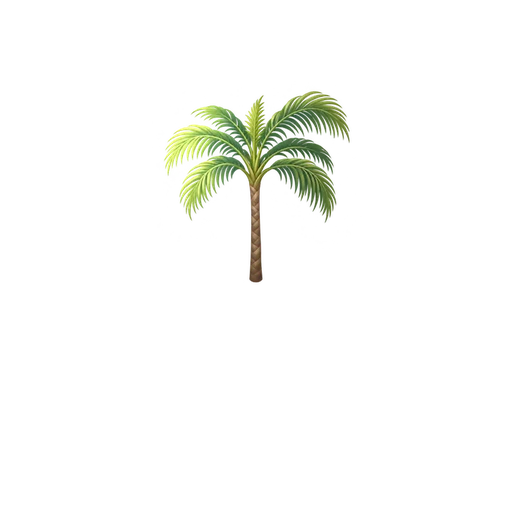
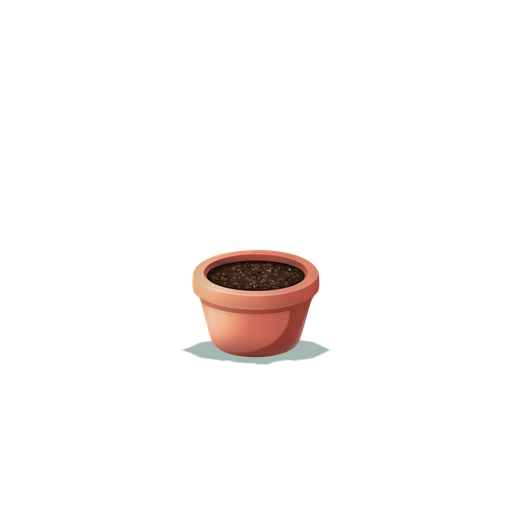
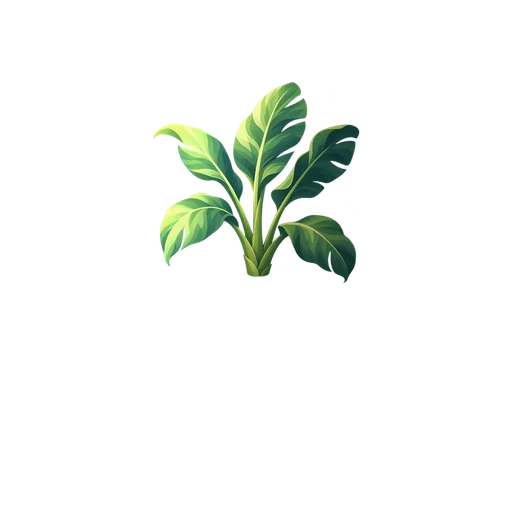
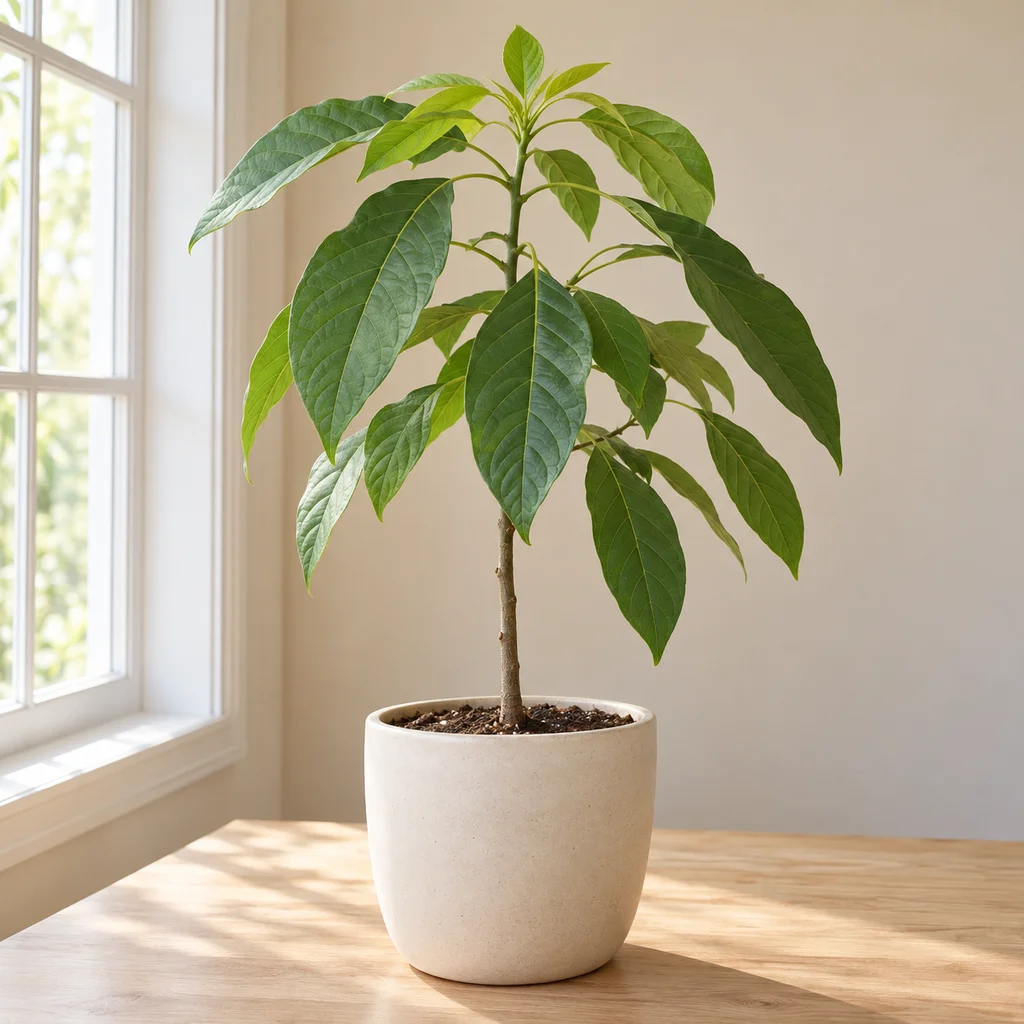
Coconut palm
Cocos nuciferaUpdated
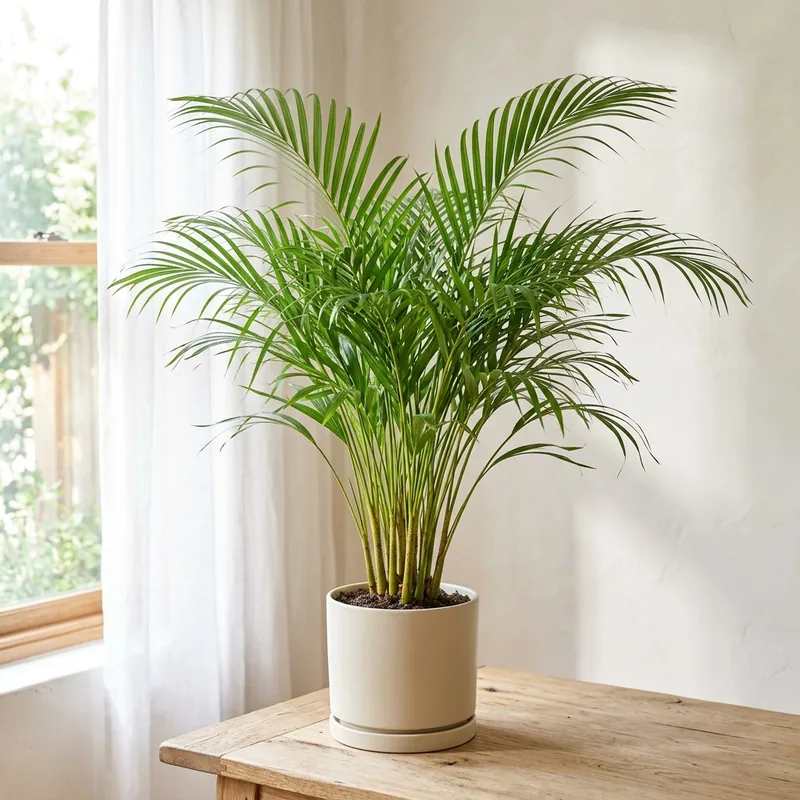
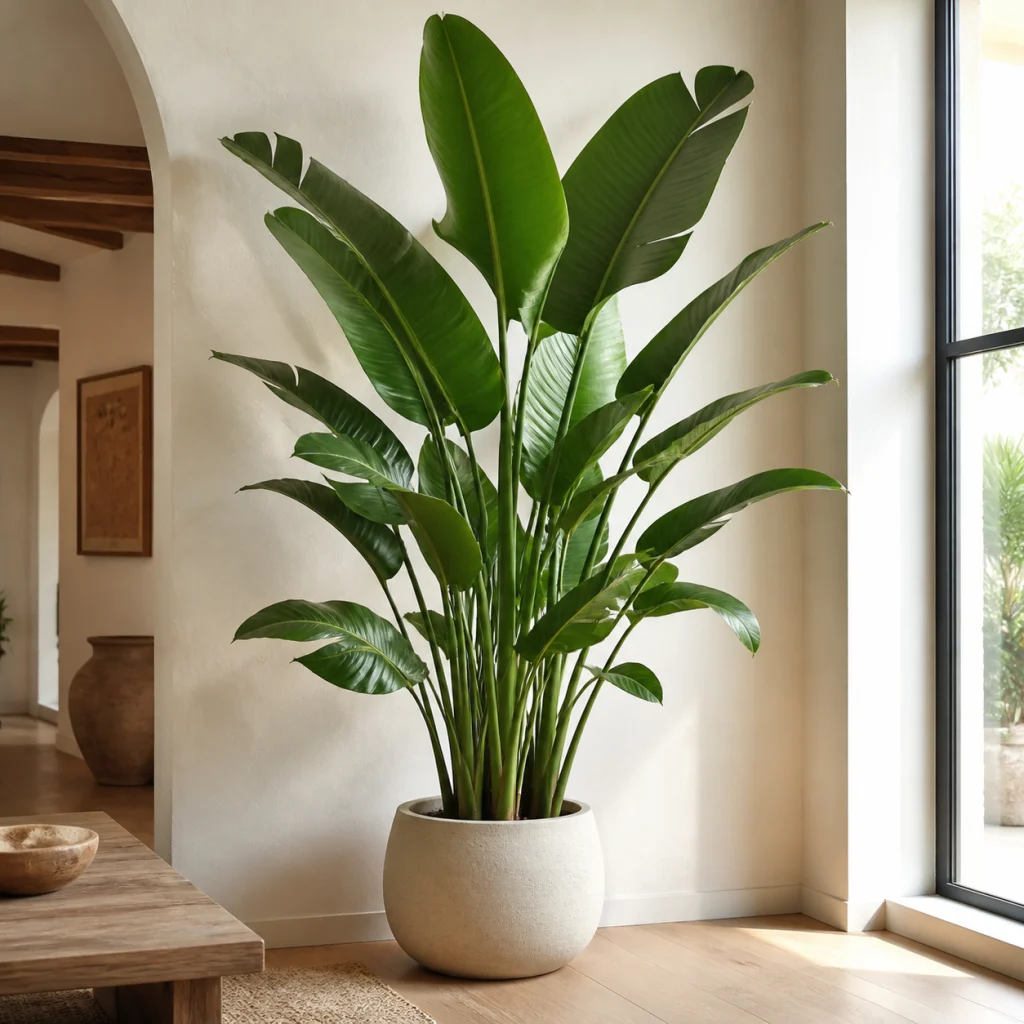
Coconut palm (Cocos nucifera): it needs very strong light and room for increasingly large fronds. Keep regular moisture with drainage.
Essential care to help it thrive
Light and placement
It needs very strong light and room for increasingly large fronds.
Climate and season
It needs tropical warmth and humidity, hard to reproduce in temperate homes.
Soil and repotting
Use a draining mix with room for roots, without leaving the pot base in water. During active growth use suitable fertiliser as labelled; check dry air, light and water before feeding.
Conditions vary with pot, season and location. Always check the mix and your plant's response.
Coconut palm: when to check the soil
Keep regular moisture with drainage; avoid both prolonged drought and standing water.
Let Grovia remind you when to check your Coconut palmSave the plant, get watering reminders and adjust the rhythm as the seasons change. Free on iPhone and Android.
See table by pot size
| Ø | Summer | Winter |
|---|---|---|
| 10 cm | 5–7 days | 10–13 days |
| 15 cm | 6–8 days | 12–17 days |
| 25 cm | 8–11 days | 16–22 days |
How to identify it
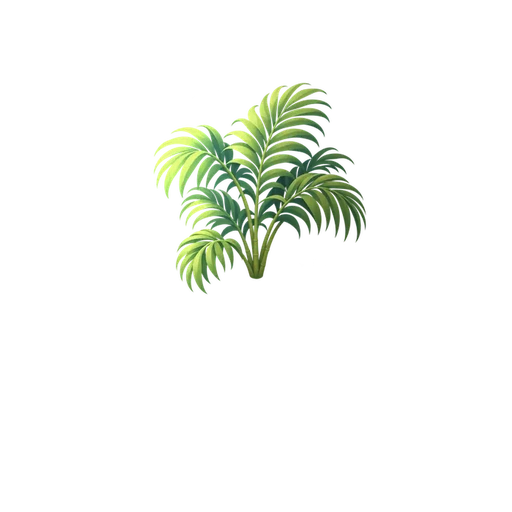
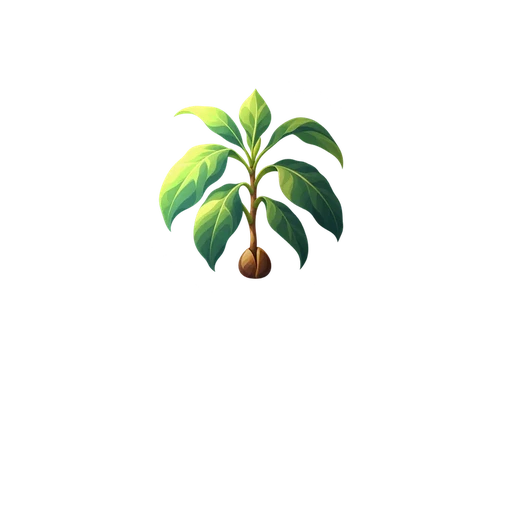
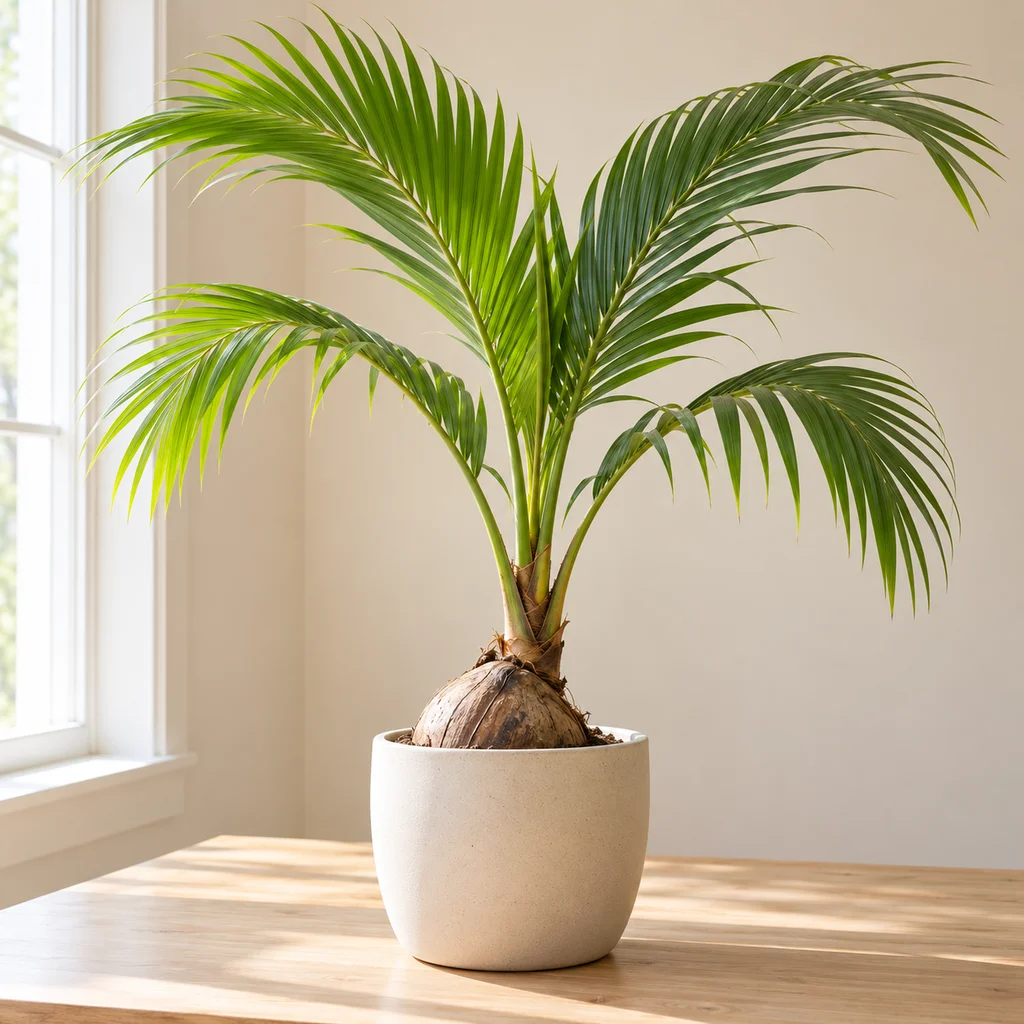
A tropical palm whose seedling may emerge from a visible nut; do not confuse it with a kentia.
Botanical sheet
- Family
- Arecaceae
- Origin
- Malesia · SW Pacific
- Size
- 1–1,5 m
- Climate
- 20–28 °C · ≥ 16 °C
What's wrong with your plant?
Pet safety Toxicity unverified
There is no species-specific toxicity verification for this plant on ASPCA. Check with your veterinarian or search the ASPCA directory before keeping it within reach of pets.
Open the toxicity checkerCommon questions
Is it an easy indoor palm?
Usually not in temperate climates: light, warmth and humidity are limiting factors.