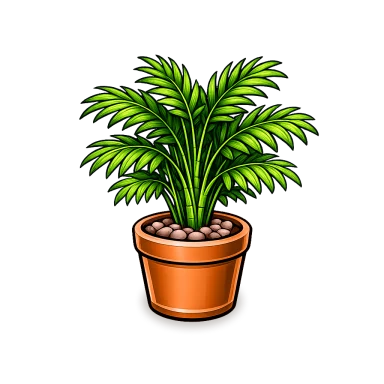
Pygmy date palm
Phoenix roebeleniiUpdated
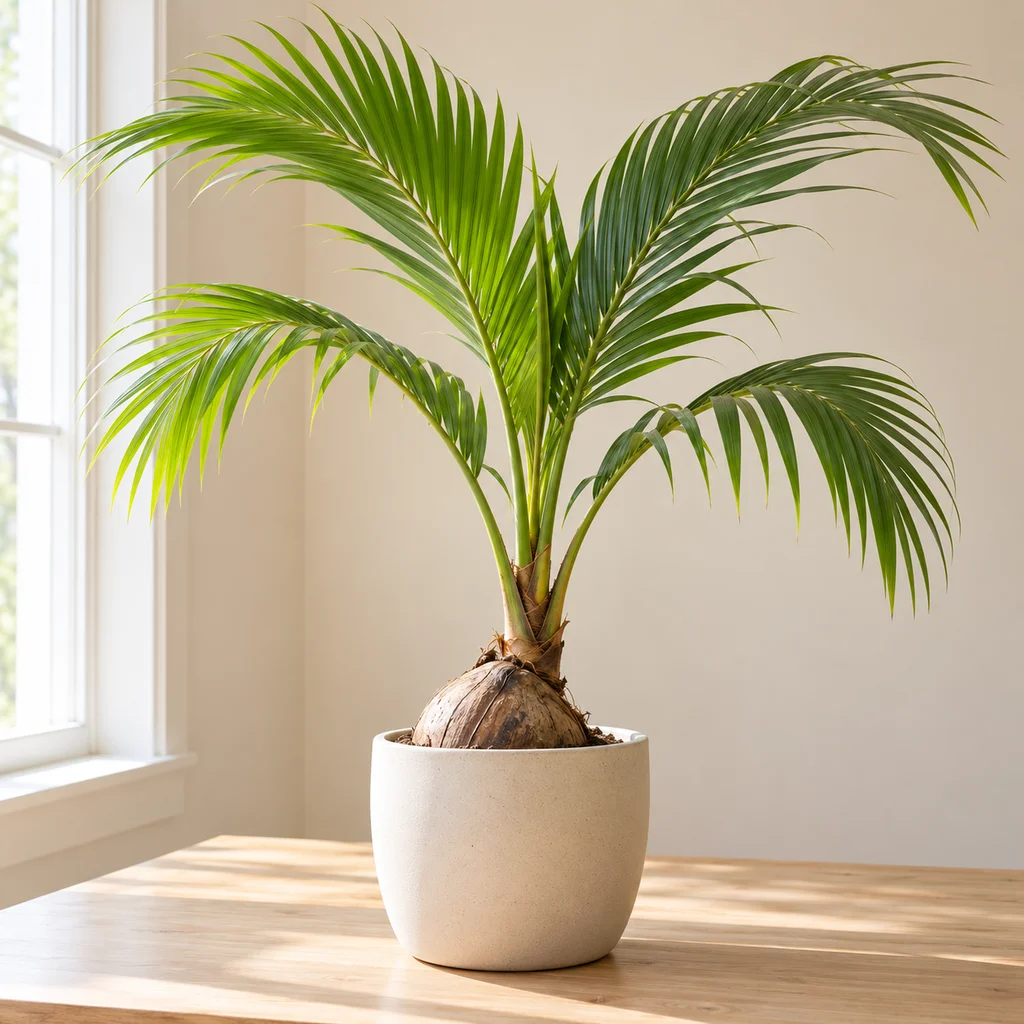
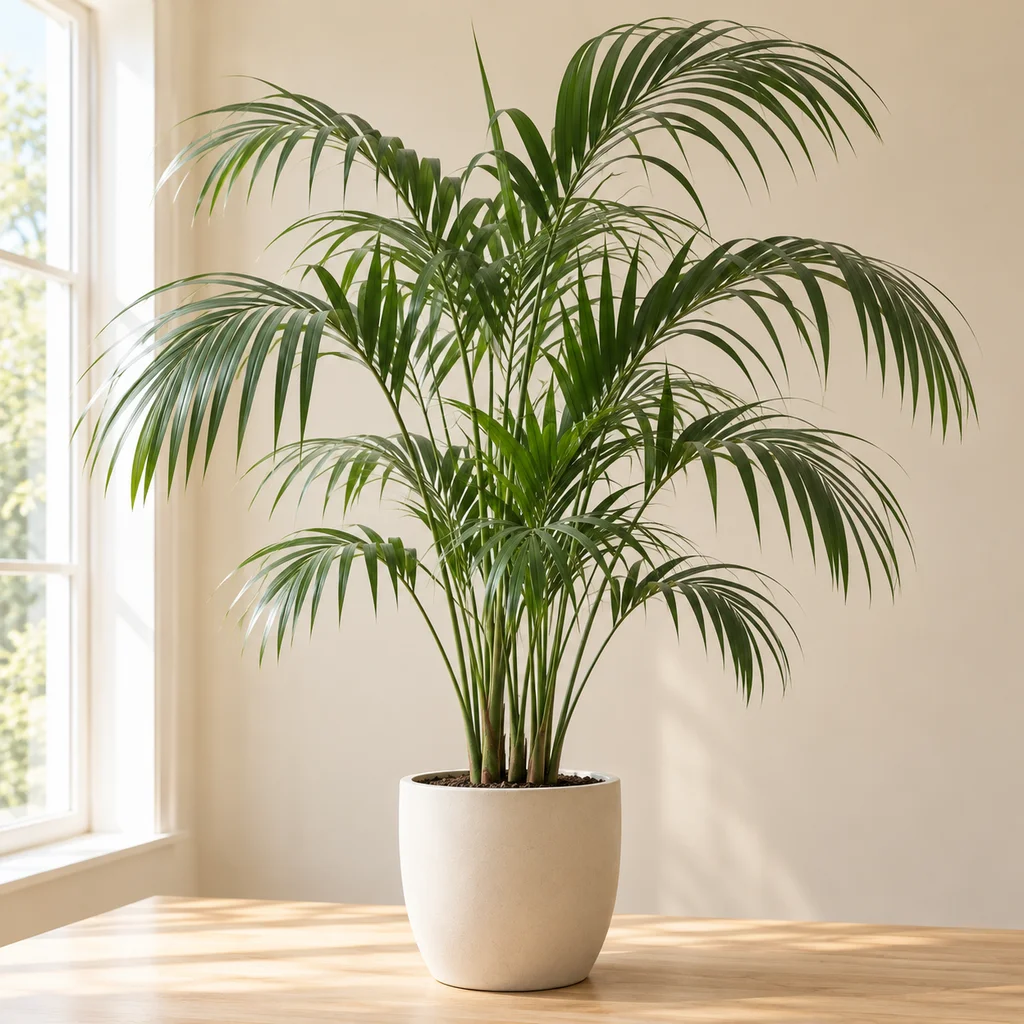
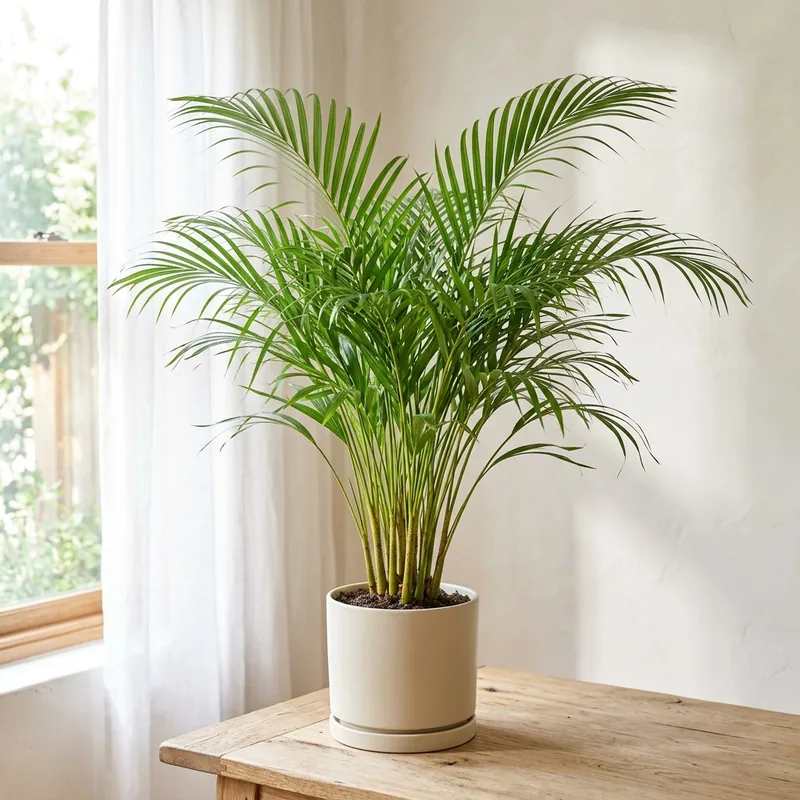
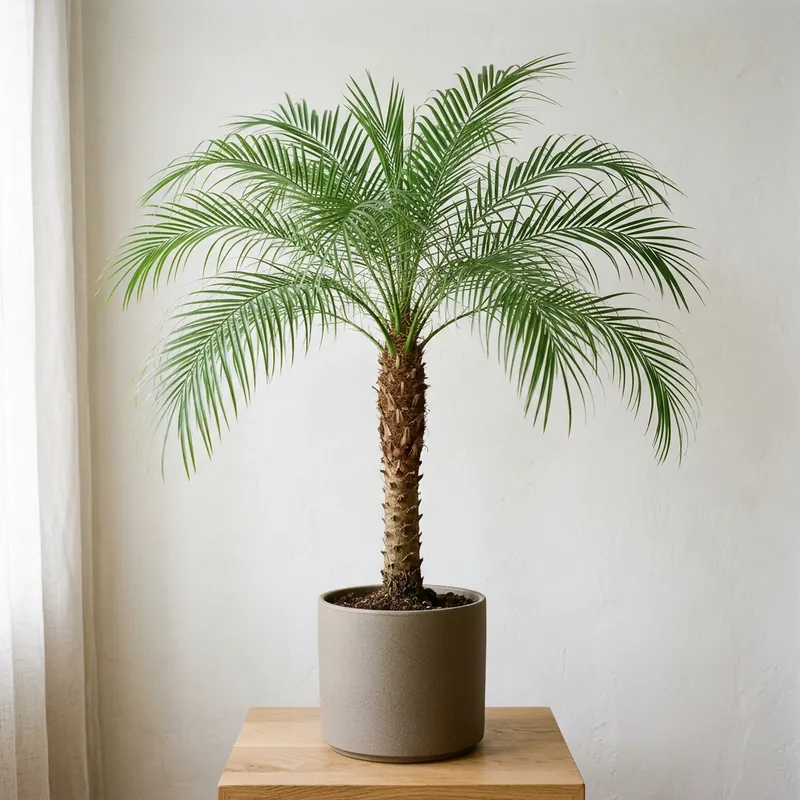
Graceful pet-safe palm pairing a slim textured trunk with an arching umbrella of feathery bright-green fronds. Loves bright light, moderate water and frost-free warmth.
Essential care to help it thrive
Light and placement
Give noticeably brighter light than low-light parlour palms—bright filtered daylight or soft morning sun keeps arching fronds lush instead of pale and sparse.
Climate and season
Thrive indoors or on warm summer patios above 10 °C with moderate humidity and clean airflow, well away from drying heating vents or scorching air conditioning.
Soil and repotting
Deep loose palm blend with fibrous coir, bark and coarse perlite or grit for steady drainage.
Conditions vary with pot, season and location. Always check the mix and your plant's response.
Pygmy date palm: when to check the soil
Check the upper third every 5–8 days in warm seasons and water deeply once slightly dry; drain excess thoroughly and never let the rootball turn bone-dry.
Let Grovia remind you when to check your Pygmy date palmSave the plant, get watering reminders and adjust the rhythm as the seasons change. Free on iPhone and Android.
See table by pot size
| Ø | Summer | Winter |
|---|---|---|
| 10 cm | 5–7 days | 10–13 days |
| 15 cm | 6–8 days | 12–17 days |
| 25 cm | 8–11 days | 16–22 days |
How to identify it
Slender solitary or clustered woody trunk marked with diamond leaf scars, topped by arching pinnate fronds carrying narrow glossy leaflets and stiff spines near each petiole base.
Botanical sheet
- Family
- Arecaceae
- Origin
- Laos · Vietnam · Southern China
- Size
- 1.5–2.5 m tall
- Climate
- 16–28 °C · min 10 °C
What's wrong with your plant?
Pet safety Pet-friendly
ASPCA lists this species as non-toxic to cats and dogs. Even so, prevent heavy chewing or ingestion of potting mix or fertiliser.
See the ASPCA entryCommon questions
If it is pet-safe, why watch the frond stems closely?
While ASPCA rates Phoenix roebelenii non-toxic to dogs, cats and horses, sharp rigid spines sit near the base of every frond and can prick hands or curious pets.
Should yellowed bottom fronds be pruned off right away?
Wait until lower fronds turn fully brown so the palm finishes recycling nutrients before cutting cleanly at the trunk without tearing green fibers.
Does Pygmy Date Palm prefer narrow deep containers?
Yes: palms grow downward anchoring roots, so use a sturdy tall container with crisp drainage holes and avoid disturbing roots needlessly.