Areca palm
Chrysalidocarpus lutescensUpdated
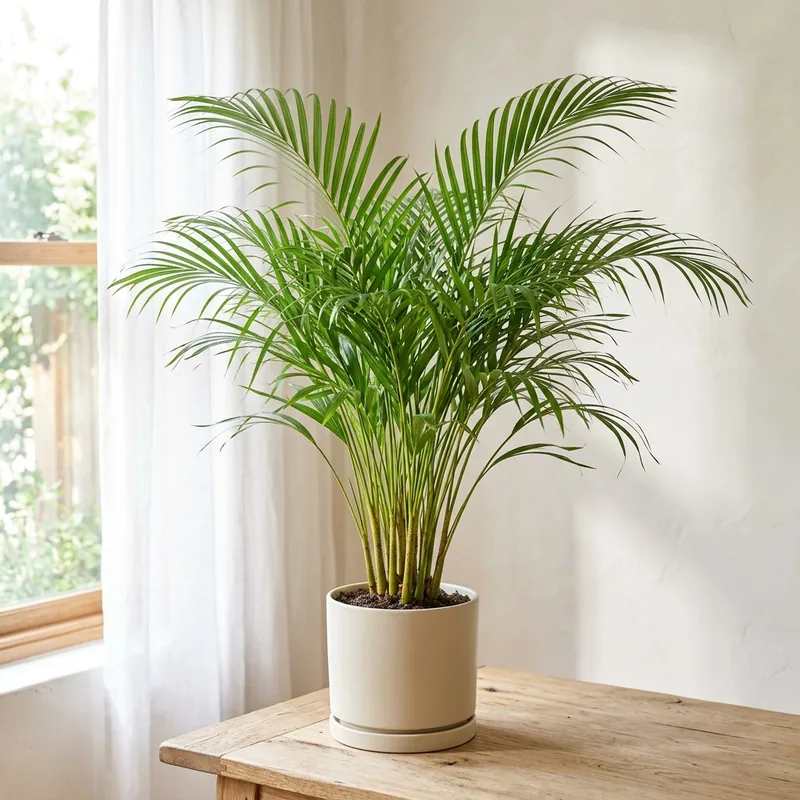
Graceful clustering palm with yellow-green ringed stems and feathery arching fronds. Thrives indoors with bright filtered light, even moisture and safe pet appeal.
Essential care to help it thrive
Light and placement
Give bright indirect daylight near an east or curtained south window. Direct midday sun scorches leaflets yellow, while dim corners slow new spear growth.
Climate and season
Provide steady warmth above 15 °C and moderate to high humidity. Shield from cold drafts, hot radiator blasts and high-mineral tap water.
Soil and repotting
Choose a deep pot with drainage holes and a peat-free loam-based potting mix lightened with perlite or sharp grit so water moves freely around roots.
Conditions vary with pot, season and location. Always check the mix and your plant's response.
Areca palm: when to check the soil
Check until the top third to half feels dry, roughly every 6–9 days in summer and every 12–16 days in winter; water moderately and never leave water in the saucer.
Let Grovia remind you when to check your Areca palmSave the plant, get watering reminders and adjust the rhythm as the seasons change. Free on iPhone and Android.
See table by pot size
| Ø | Summer | Winter |
|---|---|---|
| 10 cm | 5–7 days | 10–13 days |
| 15 cm | 6–8 days | 12–17 days |
| 25 cm | 8–11 days | 16–22 days |
How to identify it
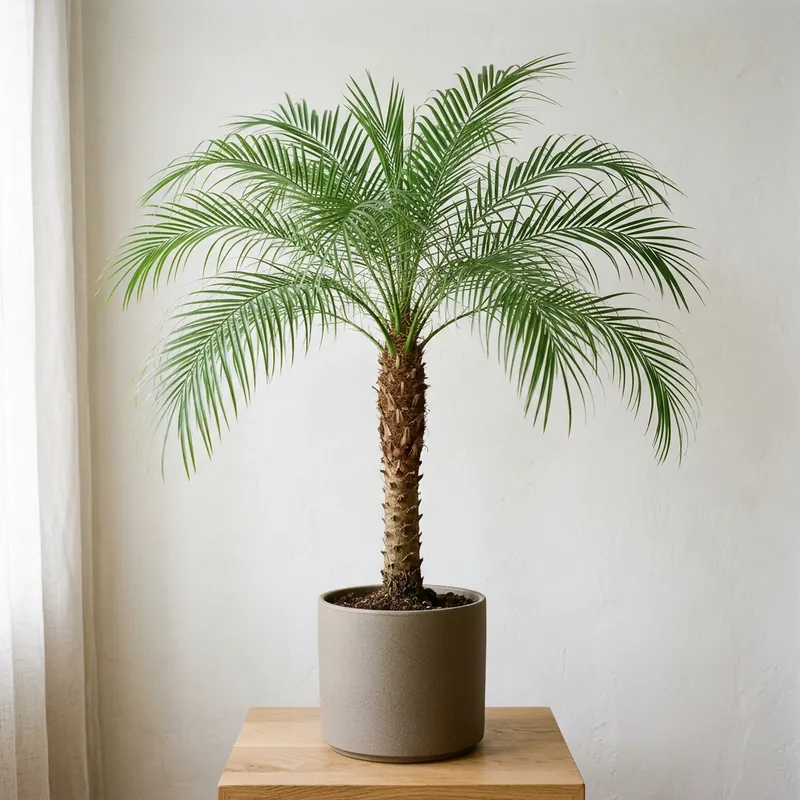
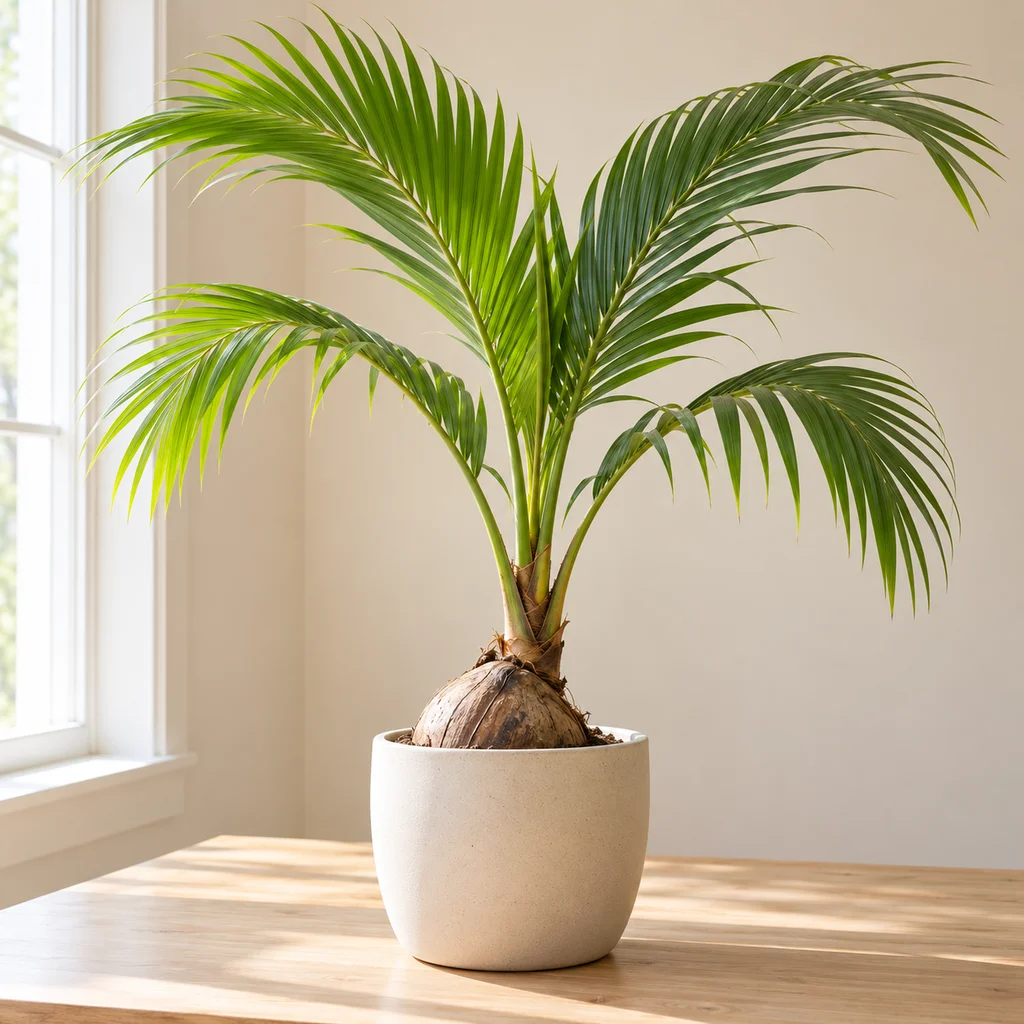
Clump-forming bamboo-like canes bearing long, arching pinnate fronds. Accepted as Chrysalidocarpus lutescens, though still widely labelled Dypsis lutescens.
Botanical sheet
- Family
- Arecaceae
- Origin
- Madagascar
- Size
- 1.5–2.5 m indoors (4–8 m)
- Climate
- 18–26 °C · min. 15 °C
What's wrong with your plant?
Pet safety Pet-friendly
ASPCA lists this species as non-toxic to cats and dogs. Even so, prevent heavy chewing or ingestion of potting mix or fertiliser.
See the ASPCA entryCommon questions
Why are the leaf tips on my areca palm turning brown?
Dry indoor heating and tap-water minerals quickly scorch delicate leaflet tips; trim only the brown edge and switch to filtered or rainwater.
Are tiny black spots on the green stems a disease?
No, harmless small dark flecks on the yellow-green canes are a natural hallmark of Chrysalidocarpus lutescens.
Is the areca palm non-toxic to cats and dogs?
Yes. ASPCA lists Dypsis lutescens as non-toxic to cats, dogs and horses.