Sago palm (Cycas)
Cycas revolutaUpdated
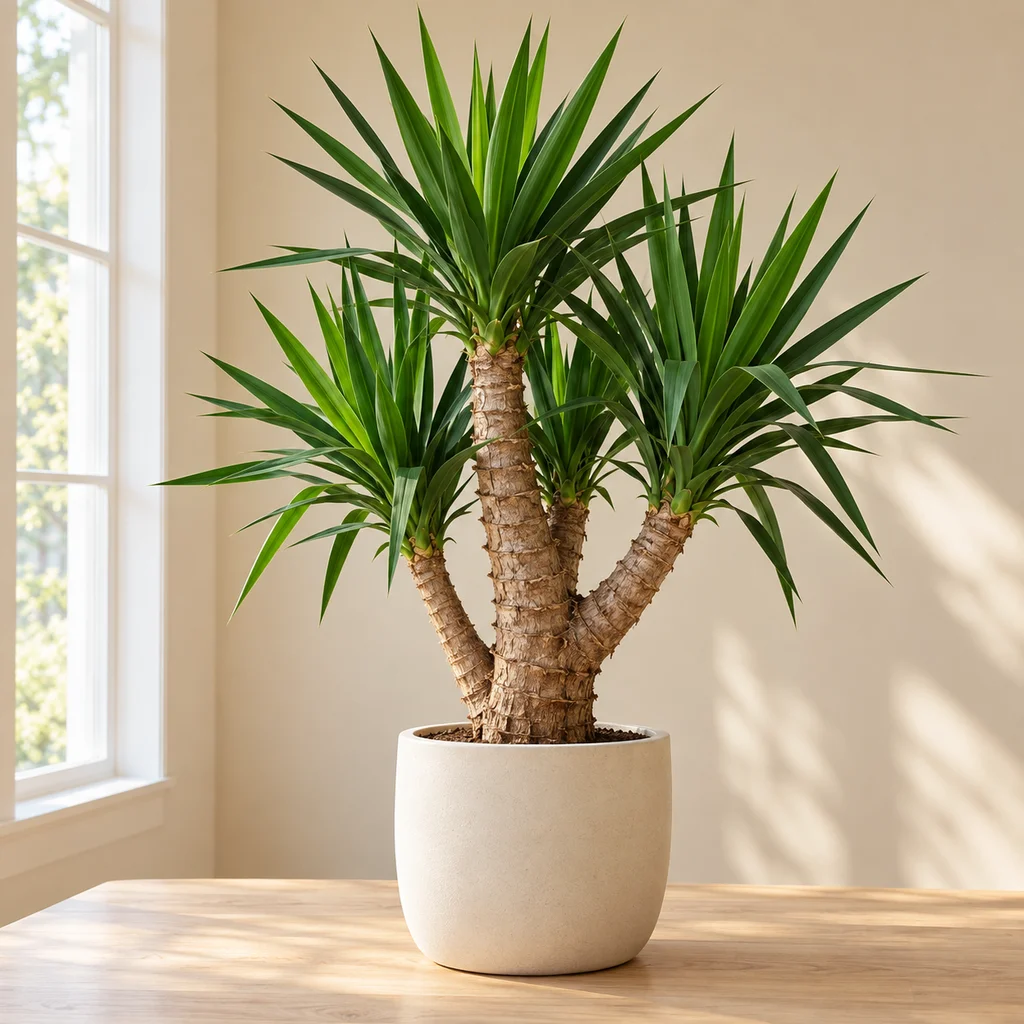
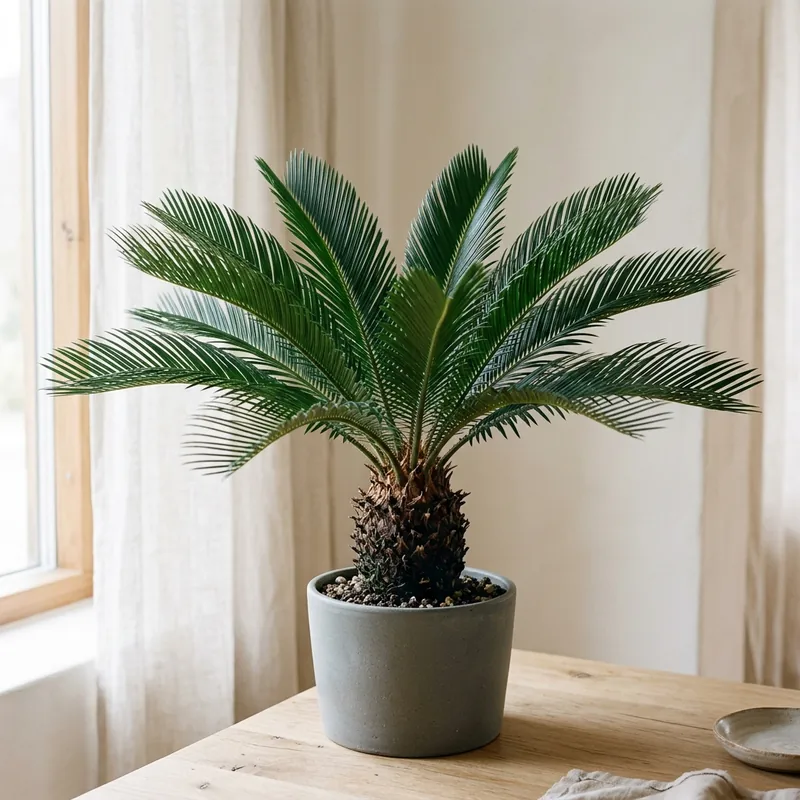
Architectural prehistoric cycad with a shaggy pineapple trunk and symmetrical rosette of stiff glossy fronds. Needs bright light, sandy drainage and strict pet exclusion.
Essential care to help it thrive
Light and placement
Provide bright daylight with mild direct sun; indoors keep near your sunniest window, shielding only soft new flushes from harsh midday glare. Dim light stretches fronds.
Climate and season
Very slow-growing; hardy down to -5 °C briefly when dry, yet happiest between 10–28 °C. Wear gloves against stiff leaflets and keep completely out of pet reach.
Soil and repotting
Pot in a deep container with open drainage and a sandy, humus-rich peat-free potting mix plus coarse grit or pumice so the thick trunk never sits wet.
Conditions vary with pot, season and location. Always check the mix and your plant's response.
Sago palm (Cycas): when to check the soil
Check until the upper half feels dry, around every 7–10 days in summer and every 14–21 days in cool winter; pour onto soil only, never into the crown center.
Let Grovia remind you when to check your Sago palm (Cycas)Save the plant, get watering reminders and adjust the rhythm as the seasons change. Free on iPhone and Android.
See table by pot size
| Ø | Summer | Winter |
|---|---|---|
| 10 cm | 5–7 days | 10–13 days |
| 15 cm | 6–8 days | 12–17 days |
| 25 cm | 8–11 days | 16–22 days |
How to identify it
Stout scaly trunk crowned by stiff dark-green pinnate leaves with sharp leaflet tips. Despite its name, it is a primitive cycad closer to conifers than true palms.
Botanical sheet
- Family
- Cycadaceae
- Origin
- Southern Japan
- Size
- 1–1.5 m (very slow)
- Climate
- 10–28 °C · min. -5 °C
What's wrong with your plant?
Pet safety Toxic to pets
ASPCA lists this species as toxic to cats and dogs. Keep pets from chewing it; contact a veterinarian if ingestion is suspected.
See the ASPCA entryCommon questions
Why is sago palm so dangerous for dogs and cats?
Every part—especially seeds and fronds—contains cycasin, which ASPCA warns causes rapid liver failure and high fatality in pets; seek emergency vet care on ingestion.
How fast does Cycas revoluta produce new fronds?
It grows very slowly, usually sending up a single symmetrical flush of new leaves once or twice each spring and summer.
Should I prune yellow lower leaves off right away?
Wait until lower fronds turn fully brown and crisp so the plant reabsorbs nutrients, then trim cleanly while wearing gloves.